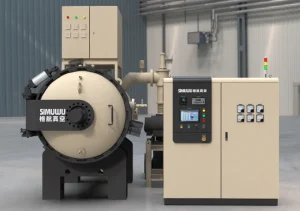
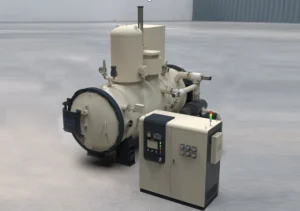
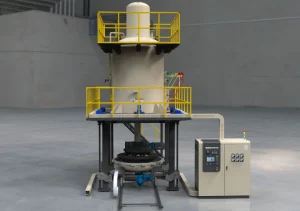
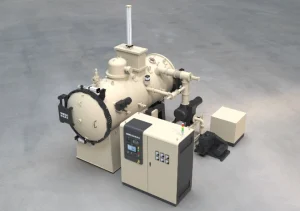
All maintenance and repairs must be performed only after the power is disconnected and the furnace body has cooled; maintenance on energized or hot equipment is strictly prohibited.
Quarterly maintenance is a more comprehensive preventive maintenance stage designed to maintain the long-term stability and accuracy of the vacuum furnace system. This maintenance period focuses on key components that directly influence vacuum performance, cooling efficiency, heating conditions, measurement accuracy, and mechanical operation. Regular quarterly inspections help reduce equipment degradation and ensure reliable furnace performance during continuous production.
1. Replace mechanical pump oil and oil mist filter elements; shorten the replacement interval if operating conditions are poor.
The mechanical pump is an important component of the vacuum system, and the condition of the pump oil directly affects pumping performance and equipment reliability. During quarterly maintenance, the mechanical pump oil should be replaced according to the recommended maintenance schedule to ensure proper lubrication, sealing performance, and stable operation.
The oil mist filter element should also be inspected and replaced when necessary. A saturated or contaminated oil mist filter may reduce exhaust efficiency and affect the working environment around the vacuum pump. If the furnace operates under harsh conditions, such as frequent processing cycles, high contamination loads, or processes that generate more volatile substances, the replacement interval of the pump oil and oil mist filter elements should be shortened to maintain reliable vacuum system performance.
2. Clean the diffusion pump and cooling water circuits; perform acid cleaning to remove scale and ensure cooling efficiency.
The diffusion pump requires regular cleaning and inspection to maintain effective vacuum generation. During quarterly maintenance, the diffusion pump should be cleaned according to the equipment maintenance requirements to remove accumulated contaminants that may affect pumping performance.
The cooling water circuits connected to the diffusion pump and related components should also be inspected and cleaned. Over time, mineral deposits and scale may accumulate inside cooling channels, reducing water flow and heat transfer efficiency. Acid cleaning can be performed when necessary to remove scale deposits and restore proper cooling performance. Maintaining clean cooling circuits helps prevent overheating and ensures stable operation of vacuum system components.
3. Perform deep cleaning of the hot zone; remove metal vapor deposits from the surfaces of heat shields and ceramic insulators.
The hot zone is exposed to high temperatures during furnace operation, and metal vapor, process residues, or other contaminants may gradually accumulate on heat shields and ceramic insulation components. These deposits can influence heat transfer conditions, insulation performance, and the cleanliness of the furnace environment.
During quarterly maintenance, a deep cleaning of the hot zone should be carried out to remove accumulated metal vapor deposits from the surfaces of heat shields and ceramic insulators. Careful cleaning helps maintain stable heating performance, reduce contamination risks, and extend the service life of internal furnace components.
4. Calibrate vacuum gauges and thermocouples; verify the accuracy of temperature control and vacuum parameters.
Accurate measurement of temperature and vacuum levels is essential for maintaining consistent process results. Over extended operation, vacuum gauges and thermocouples may experience measurement deviations due to aging, contamination, or repeated thermal cycling.
Quarterly maintenance should include calibration of vacuum gauges and thermocouples to verify measurement accuracy. The temperature control system and vacuum parameters should also be checked to confirm that actual operating conditions match the specified requirements. Regular calibration helps maintain process reliability, improve repeatability, and ensure that furnace operation remains within the required control range.
5. Maintain pneumatic valves and transmission mechanisms; apply specialized grease.
Pneumatic valves and transmission mechanisms are responsible for reliable mechanical movement and system control during furnace operation. Continuous operation may cause wear, reduced lubrication, or increased friction in moving parts.
During quarterly maintenance, pneumatic valves and transmission mechanisms should be inspected for proper movement, sealing condition, and mechanical performance. Specialized grease should be applied to the appropriate components to reduce friction, support smooth operation, and prevent premature wear. Proper maintenance of these mechanisms helps ensure stable furnace operation and reduces the risk of mechanical failures.
Related Reading:
Vacuum Furnace Manufacturer’s Guide to Furnace Maintenance: Daily
Vacuum Furnace Manufacturer’s Guide to Furnace Maintenance: Weekly
Vacuum Furnace Manufacturer’s Guide to Furnace Maintenance: Monthly
Vacuum Furnace Manufacturer’s Guide to Furnace Maintenance: Annual
Vacuum Furnace Manufacturer’s Guide to Furnace Maintenance: Long-term Shutdown
-
Machining of Precision Automotive Components: Application of High-Pressure Vacuum Gas Quenching
2026-10-16
-
How to Enhance the Surface Brightness of Vacuum Tempered Workpieces
2026-10-13
-
Production of High-Pressure Die-Casting Molds: Application of Vacuum Gas-Quenching Furnaces
2026-10-08
-
RVGQ-557 vacuum gas-quenching furnace with an air-duct structure
2026-09-30
-

The Role of Nitrogen Partial Pressure in Vacuum Furnaces
2026-09-25