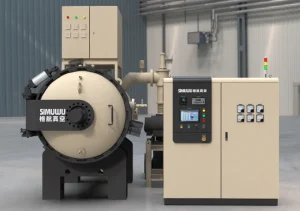
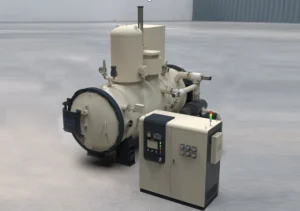
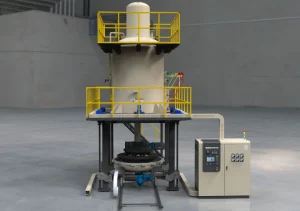
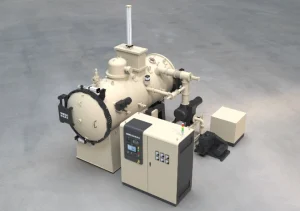
All maintenance and repairs must be performed only after the power is disconnected and the furnace body has cooled; maintenance on energized or hot equipment is strictly prohibited.
Monthly maintenance involves a more comprehensive inspection of the vacuum furnace sealing system, vacuum equipment, electrical connections, and cooling system. These inspections help identify gradual performance degradation, prevent minor defects from developing into equipment failures, and maintain stable furnace operation over long production cycles.
1. Inspect O-rings and flanges across the entire unit; perform a basic pressure-hold leak test to identify micro-leaks.
The sealing system is critical for maintaining the required vacuum level during furnace operation. During monthly maintenance, all O-rings, flange connections, and sealing areas across the vacuum furnace should be inspected carefully for signs of aging, deformation, contamination, wear, or damage.
A basic pressure-hold leak test should also be performed to evaluate the sealing condition of the furnace system. This test helps identify small vacuum leaks that may not be immediately visible during normal operation. Detecting micro-leaks at an early stage allows maintenance personnel to address sealing issues before they affect vacuum performance, process stability, or product quality.
2. Clean the vacuum pump inlet filter element; check the pump’s operating condition.
The vacuum pump inlet filter element prevents particles, process residues, and contaminants from entering the pump system. Over time, accumulated contaminants may restrict airflow, reduce pumping efficiency, and increase the operating load of the vacuum pump.
During monthly maintenance, the inlet filter element should be removed and cleaned according to the equipment maintenance procedure. At the same time, the overall operating condition of the vacuum pump should be checked, including operating noise, temperature, vibration, and vacuum performance. These inspections help confirm that the pump continues to provide stable pumping capacity for the vacuum furnace system.
3. Tighten high-current electrical terminals and binding posts to prevent arcing or overheating.
High-current electrical connections are continuously exposed to thermal cycles and mechanical stress during vacuum furnace operation. Over time, terminals and binding posts may become loose, increasing electrical resistance at the connection points.
During monthly maintenance, high-current electrical terminals and binding posts should be inspected and tightened when necessary. Secure electrical connections help maintain stable current transmission and reduce the risk of electrical problems such as arcing, excessive heat generation, or localized overheating. Regular inspection also helps protect heating components and improve overall furnace reliability.
4. Test cooling water quality to prevent scaling and clogging in the piping.
Cooling water quality directly affects the performance and service life of water-cooled components in a vacuum furnace. Poor water quality or excessive mineral content can lead to scale formation inside cooling channels and piping, reducing water flow and lowering heat transfer efficiency.
During monthly maintenance, cooling water should be tested to verify that its condition meets the equipment requirements. Any signs of contamination, scaling tendency, or abnormal water quality should be addressed to prevent blockage and maintain effective cooling performance. Proper cooling water management helps protect critical furnace components from overheating and supports stable long-term operation.
Related Reading:
Vacuum Furnace Manufacturer’s Guide to Furnace Maintenance: Daily
Vacuum Furnace Manufacturer’s Guide to Furnace Maintenance: Weekly
Vacuum Furnace Manufacturer’s Guide to Furnace Maintenance: Quarterly
Vacuum Furnace Manufacturer’s Guide to Furnace Maintenance: Annual
Vacuum Furnace Manufacturer’s Guide to Furnace Maintenance: Long-term Shutdown
-
How to Enhance the Surface Brightness of Vacuum Tempered Workpieces
2026-10-13
-
Production of High-Pressure Die-Casting Molds: Application of Vacuum Gas-Quenching Furnaces
2026-10-08
-
RVGQ-557 vacuum gas-quenching furnace with an air-duct structure
2026-09-30
-

The Role of Nitrogen Partial Pressure in Vacuum Furnaces
2026-09-25
-
Factors Affecting the Quality of Vacuum Heat Treatment
2026-09-22