Choosing the optimal heat treatment equipment is a critical engineering decision that dictates processing capabilities, part quality, and overall production efficiency. When deciding between a hot wall vs cold wall vacuum furnace, engineers must carefully evaluate maximum process temperatures, required cooling rates, and specific metallurgical applications.
1. Fundamental Design Differences
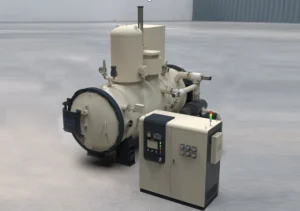
The foundational architecture of a hot wall vacuum furnace relies on a heat-resistant alloy retort placed inside an externally heated chamber. This specific configuration means the retort itself acts as the vacuum boundary, while the heating elements remain outside in a standard ambient or protective atmosphere. Consequently, thermal energy must transfer through the physical retort wall to reach the internal workload, which significantly influences both the heating efficiency and the ultimate structural limits of the furnace.
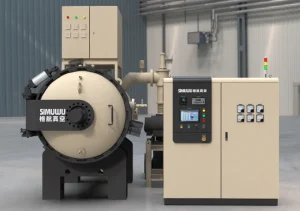
Conversely, a cold wall vacuum furnace features a water-cooled outer vacuum vessel that houses the heating elements and thermal insulation internally. Continuous water circulation keeps the outer steel shell at near-ambient temperatures during operation, which ensures a safer factory environment and prevents structural degradation of the vessel. Because the heating elements are directly exposed to the workload inside the vacuum environment, this advanced design facilitates direct radiation heating for faster cycles and substantially higher operating temperatures.
2. Temperature Capabilities of a Hot Wall vs Cold Wall Vacuum Furnace
Maximum operating temperature represents the most restrictive distinguishing factor between these two distinct furnace technologies. A hot wall furnace is fundamentally limited in maximum operating temperature by the high-temperature creep strength of the alloy retort material. Because the retort must withstand atmospheric pressure from the outside while under vacuum on the inside at elevated temperatures, structural integrity generally restricts these systems to a maximum of approximately 1100°C.
For metallurgical applications requiring temperatures above this 1100°C threshold, migrating to a cold wall vacuum furnace becomes an absolute engineering necessity. Cold wall furnaces completely eliminate the pressure-differential issue on hot components by maintaining a cool outer pressure vessel. This allows the internal hot zone, typically constructed from graphite or refractory metals like molybdenum, to routinely and safely operate at temperatures reaching 1315°C, with specialized designs exceeding 2000°C for refractory metal processing.
3. Cooling Rates and Quenching Capabilities
Cooling performance dictates the types of metallurgical transformations a furnace can successfully achieve. Hot wall furnaces inherently suffer from extremely slow cooling rates because the massive thermal inertia of both the retort and the external furnace structure must dissipate heat simultaneously. Heat removal occurs primarily through slow radiation in a vacuum environment, meaning a standard charge of material might require several hours to cool down sufficiently for safe removal.
Cold wall furnaces revolutionized the vacuum heat treatment industry precisely because of their rapid thermal response and advanced quenching capabilities. The extremely low thermal mass of the internal hot zone insulation allows for rapid forced gas quenching using circulated inert gases like nitrogen or argon at elevated pressures. If your specific application requires true hardening and martensitic transformation of steel alloys, you will invariably require a Vacuum Gas Quenching Furnace or a similar cold wall design to achieve the critical cooling velocity.
4. Typical Applications for Each Furnace Type
Understanding the appropriate use cases for each technology is vital for matching the equipment to your specific production demands. Hot wall vacuum furnaces remain highly reliable and economical for lower-temperature operations that do not require rapid thermal cycling. Typical engineering applications include the low-temperature annealing of non-ferrous metals like copper strip, moderate-temperature degassing, and the stress relieving of various materials where slow, controlled cooling is actually desired to prevent distortion.
Cold wall furnaces handle a much broader and more demanding spectrum of high-value industrial processes due to their superior thermal versatility. The most prominent applications include the hardening of tool steels, bright annealing of stainless alloys, high-temperature vacuum brazing, and thermochemical treatments like carburizing. According to data from ASM International, the ability to process fully machined parts with minimal distortion makes the cold wall design the industry standard for aerospace, automotive, and medical component manufacturing.
5. Capital Costs and Economic Considerations
Financial evaluation must extend beyond the initial purchase price to include the total cost of ownership and production throughput. Hot wall furnaces generally present lower initial capital costs because their construction is simpler and they often utilize standard external heating technologies. They serve as an economical entry point into vacuum processing for facilities that only handle basic annealing or degassing operations on an intermittent basis.
While cold wall furnaces represent a significantly higher initial capital investment, their operational economics often justify the premium in high-volume production environments. The higher hourly operating cost is rapidly offset by substantially faster heating and cooling cycles, which drastically increases daily production throughput. Furthermore, the elimination of post-treatment finishing operations and reduced scrap rates associated with excellent distortion control result in a lower actual cost per part over the equipment’s lifecycle.
6. FAQ
Why can’t a hot wall furnace be used for hardening tool steel?
Hardening tool steel requires a rapid drop in temperature to bypass the formation of softer microstructures and achieve a fully martensitic structure. A hot wall furnace relies on natural radiant cooling, which is far too slow to hit the required cooling rates, making forced gas quenching in a cold wall furnace necessary.
Does the water cooling system in a cold wall furnace consume a lot of water?
Modern cold wall vacuum furnaces utilize closed-loop recirculating water cooling systems with heat exchangers or cooling towers. This means that while a large volume of water flows through the jacket to remove heat, the actual water consumption is minimal, limited only to minor evaporation losses in the tower.
Which furnace type offers better temperature uniformity?
Cold wall furnaces generally provide superior temperature uniformity during the heating cycle, especially when equipped with convective heating assist. By utilizing internal elements completely surrounding the workload and advanced control algorithms, they minimize thermal gradients far better than externally heated retorts.
Choosing between a hot wall vs cold wall vacuum furnace ultimately comes down to your maximum temperature requirements and necessary cooling rates. If you need assistance matching our equipment to your specific heat treatment cycles, explore our full range of vacuum technology or consult with our engineering team today.
-
Production of High-Pressure Die-Casting Molds: Application of Vacuum Gas-Quenching Furnaces
2026-10-08
-
RVGQ-557 vacuum gas-quenching furnace with an air-duct structure
2026-09-30
-

The Role of Nitrogen Partial Pressure in Vacuum Furnaces
2026-09-25
-
Factors Affecting the Quality of Vacuum Heat Treatment
2026-09-22
-
Application of RVGQ-557 Vacuum Gas Quenching Furnace—Gas Quenching and Tempering
2026-09-18