Deciding between horizontal vs vertical vacuum furnaces is a critical engineering step for manufacturing facilities aiming to optimize their heat treatment and metallurgical processes. By understanding the distinct structural and thermal characteristics of each orientation, technical managers can accurately align equipment capabilities with strict production requirements. This comparative analysis explores the core differences, loading advantages, and ideal applications for both furnace configurations. For rapid troubleshooting and common queries, refer directly to our FAQ section.
1. Understanding Horizontal vs Vertical Vacuum Furnaces
The fundamental architecture of a vacuum furnace dictates its thermal performance, load capacity, and operational efficiency within specific industrial environments. Both horizontal and vertical configurations utilize a cold-wall design to maintain structural integrity under extreme heat and high vacuum conditions. This water-cooled external design minimizes internal degassing issues and ensures that the outer shell remains structurally stable during high-temperature operations. By evaluating the orientation of the heating chamber, engineers can effectively align equipment capabilities with their specific metallurgical demands.
2. Horizontal Vacuum Furnaces: Design and Applications
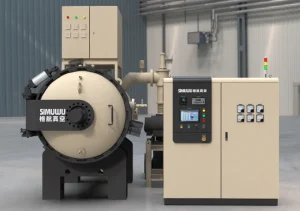
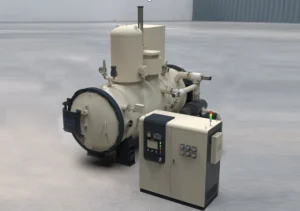
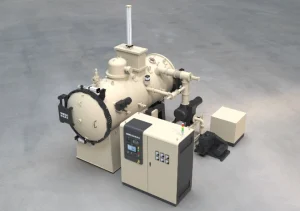
Horizontal vacuum furnace designs position the cylindrical heating chamber parallel to the facility floor, allowing for straightforward front-loading access. This configuration is widely regarded as the industry standard for general-purpose batch processing and semi-continuous heat treatment operations. Operators can efficiently load complex fixtures and heavy parts utilizing standard industrial forklifts or automated roller hearth systems. Because of this high accessibility, horizontal models remain the dominant choice in high-volume, multi-purpose manufacturing environments.
2.1 Advantages of Horizontal Configurations
The primary strength of horizontal vacuum furnaces lies in their exceptional versatility regarding load handling and integration with automated production workflows. Manufacturers can seamlessly incorporate a Vacuum Gas Quenching Furnace into existing factory lines without requiring specialized overhead lifting infrastructure. Furthermore, horizontal designs readily accommodate integrated oil quench baths directly beneath the primary heating zone. This dual-chamber capability allows for rapid, controlled cooling of steel components, which is essential for achieving precise hardness specifications.
2.2 Limitations in Horizontal Processing
Despite their immense versatility, horizontal orientations present specific thermal and mechanical challenges when processing exceptionally long or heavy materials. At peak operating temperatures, horizontal support structures such as hearth rails are highly susceptible to creep and physical distortion under massive workloads. Additionally, horizontal configurations can develop minor convection eddies in the insulation layers that may slightly degrade absolute temperature uniformity compared to vertical designs. Facilities must also account for the significantly larger floor space footprint required by the horizontal furnace body and its loading mechanisms.
3. Vertical Vacuum Furnaces: Precision and Gravity Alignment
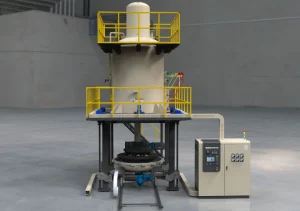
Vertical vacuum furnaces orient the heating chamber perpendicular to the floor, utilizing either a top-loading bell design or a bottom-loading elevator mechanism. This structural approach is specifically engineered to address the physical limitations of horizontal processing by leveraging gravity to stabilize tall or slender workloads. Suspending long components vertically entirely prevents the structural bending or sagging that frequently occurs when these same parts are supported horizontally at elevated temperatures. Consequently, this precise vertical alignment is indispensable for processing critical aerospace shafts, extended drill tubes, and specialized industrial broaches.
3.1 Advantages of Vertical Configurations
The most significant engineering advantage of a vertical orientation is its inherently superior temperature uniformity driven by a highly symmetrical, axisymmetric geometry. Because the heating elements circumferentially surround the suspended workload, radiant heat transfer remains exceptionally consistent across all component surfaces. This absolute thermal uniformity makes systems like the Vertical Type Vacuum Gas Quenching Furnace ideal for meeting the strict tolerances required by aerospace and defense sectors. Moreover, vertical furnaces consume significantly less floor space per unit of hot zone volume, making them highly suitable for advanced facilities with constrained layouts but adequate vertical clearance.
3.2 Limitations and Operational Constraints
The primary constraints of vertical vacuum furnaces involve stringent facility height requirements and highly complex material handling procedures. Facilities must possess substantial ceiling clearance and heavy-duty overhead crane infrastructure to accommodate top-loading or bottom-lifting mechanisms safely and efficiently. While they excel in high-pressure gas cooling, vertical designs are rarely equipped with integrated oil quenching baths due to the logistical hazards of vertically transferring massive hot loads into liquid media. Maintenance procedures also tend to be more labor-intensive, as accessing the hot zone often requires significant vertical disassembly of the pressure vessel.
4. Comparative Analysis for Engineering Selection
Selecting the optimal orientation requires a comprehensive engineering analysis of workpiece geometry, thermal processing standards, and available facility infrastructure. The final purchasing decision directly impacts not only product quality but also long-term operational efficiency, energy consumption, and maintenance overhead. By systematically comparing key performance metrics, technical managers can accurately map these equipment capabilities to their highly specific metallurgical requirements.
4.1 Temperature Uniformity and Thermal Dynamics
Thermal dynamics within the heating chamber differ significantly between the two orientations strictly due to their structural geometry. Vertical furnaces naturally suppress internal convection currents and provide uniform radiant exposure, easily achieving the tight temperature tolerances required for an advanced High Temperature Vacuum Brazing Furnace. Horizontal furnaces require sophisticated multi-zone temperature control systems to compensate for end-loss heat dissipation, achieving uniformity tolerances of ± 5 °C depending on the specific model. However, with modern digital control technology and optimized radiation shields, both designs can reliably meet rigorous industry standards for uniform heating.
4.2 Workpiece Geometry and Load Support
The physical dimensions of the manufactured components heavily dictate the required furnace orientation to actively prevent high-temperature distortion. Wide, flat, or bulky parts are overwhelmingly best suited for horizontal loading, where they can be evenly distributed across a robust horizontal hearth plate inside a Vacuum Resistance Sintering Furnace. Conversely, excessively long and slender components demand a vertical orientation to utilize gravity as a stabilizing tensile force rather than a bending factor. Attempting to process extended shafts horizontally often results in unacceptable bowing, thereby necessitating costly and time-consuming post-process straightening operations.
5. Selection Criteria
| Criterion | Horizontal | Vertical |
| Workpiece geometry | Favorable for wide, flat, or short parts | Favorable for long, slender parts |
| Temperature uniformity | Can achieve AMS 2750 standards with multi-zone control | Inherently better due to axisymmetric design |
| Quenching method | Oil and gas quenching readily integrated | Primarily gas quenching |
| Floor space | Larger footprint required | Smaller footprint but greater height |
| Loading/unloading | Easier, can be automated with conveyors | May require overhead handling |
| Crystal growth | Not suitable | Essential for Czochralski and VGF |
| Production volume | Well-suited to batch and semi-continuous processing | Primarily batch processing |
| Capital cost | Generally lower per unit volume | Higher for specialized designs |
6. FAQ
Can horizontal vacuum furnaces effectively process long components?
While horizontal furnaces can technically physically fit long components, doing so at peak high temperatures risks material sagging and distortion due to gravity acting perpendicular to the part. If long components must be processed horizontally, they require extensive, custom-designed molybdenum fixturing to provide adequate support across their entire length. This additional supportive tooling unfortunately increases the total thermal mass, which ultimately reduces the overall energy efficiency of the heating cycle.
Why do vertical vacuum furnaces theoretically provide better temperature uniformity?
Vertical vacuum furnaces highly benefit from an axisymmetric cylindrical design that naturally promotes perfectly even radiant heat distribution. This specific geometry physically minimizes the minor convection eddies and end-loss thermal gradients that are vastly more prevalent in horizontally oriented chambers. As a direct result, operators can consistently achieve the stringent temperature uniformity requirements mandated by strict aerospace and medical device specifications.
Which orientation is considered better for vacuum brazing applications?
The choice for vacuum brazing largely depends on the specific assembly’s shape and the desired capillary flow direction of the liquid braze alloy. Horizontal furnaces are generally preferred for flat assemblies because they easily accommodate wide loading trays and multiple stacking layers. Conversely, vertical orientations are strategically selected when operators need to leverage gravity to draw the braze filler into deep, vertical joints securely and evenly.
Selecting the correct equipment between horizontal vs vertical vacuum furnaces is absolutely foundational to achieving consistent, high-quality metallurgical results. Whether you require the high-volume versatility of a horizontal system or the precise, distortion-free processing of a vertical unit, understanding these core engineering principles is critical to your operational success. For further technical guidance on international heat treating standards, you can consult authoritative resources provided by ASM International. Contact our technical engineering team today to deeply discuss your specific application requirements and seamlessly discover the ideal vacuum processing solution for your modern facility.
-
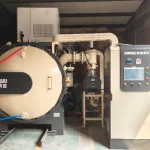
RVGQ-557 vacuum gas-quenching furnace with an air-duct structure
2026-09-30
-

The Role of Nitrogen Partial Pressure in Vacuum Furnaces
2026-09-25
-
Factors Affecting the Quality of Vacuum Heat Treatment
2026-09-22
-
Application of RVGQ-557 Vacuum Gas Quenching Furnace—Gas Quenching and Tempering
2026-09-18
-
The Role and Benefits of Equipping Vacuum Furnaces with Dew Point Meters
2026-09-15