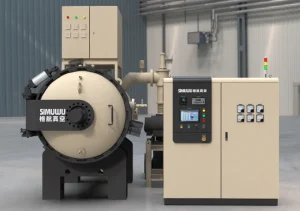
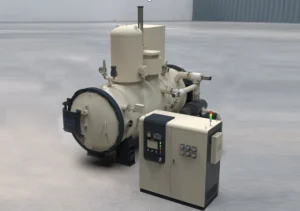
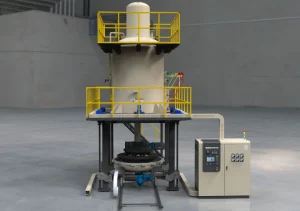
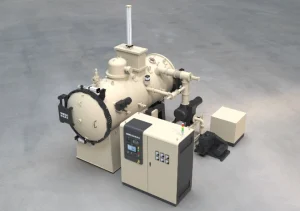
What vacuum furnace processes are used to meet aerospace material specifications like AMS and NADCAP?
Aerospace Vacuum Furnace Processes
The aerospace industry demands the highest levels of material integrity, dimensional precision, and repeatability in manufacturing. Aerospace vacuum furnace processes are central to meeting these requirements because they provide an inert, contamination-free environment at elevated temperatures. The two key frameworks governing these processes are Aerospace Material Specifications (AMS) — which define the technical requirements for materials and processing — and NADCAP, which certifies that suppliers consistently comply with those and other standards through rigorous auditing.
1. Vacuum Heat Treatment Fundamentals
In vacuum heat treatment, metals are processed in an evacuated chamber at pressures typically in the range of 10⁻⁴ to 10⁻⁵ torr. The vacuum environment prevents oxidation, decarburization, and other surface reactions that occur in conventional controlled-atmosphere furnaces, because there is essentially no residual oxygen, water vapor, or other reactive gases present. The vacuum also promotes outgassing — the removal of dissolved gases (e.g., hydrogen, oxygen) from the metal, which improves ductility and toughness.
The key benefits of vacuum heat treatment for aerospace include:
• Bright, clean surfaces free of scale and intergranular oxidation, eliminating costly post-treatment cleaning.
• Minimal distortion due to uniform radiation heating and absence of mechanical handling of hot parts; parts can be processed in the fully machined condition, holding tight tolerances.
• Improved mechanical properties — Improved wear resistance and dimensional stability can extend component service life compared with conventional heat treatment methods.
• Superior repeatability, essential for compliance with AMS specifications and NADCAP audit requirements.
2. Vacuum Furnace Processes for Aerospace
2.1 Vacuum Hardening and Tempering
Vacuum hardening followed by tempering is widely used for aerospace-grade tool steels (e.g., H13, A, D, T grades), martensitic stainless steels (e.g., 410, 420), and precipitation-hardening steels (e.g., 17-4 PH, 17-7 PH). The process involves:
• Preheating in stages (e.g., 590–680°C and 815–860°C) to ensure temperature uniformity and minimize thermal stresses.
• Austenitizing at the target temperature (e.g., 1030°C for H13 tool steel) with controlled soak time.
• High-pressure gas quenching (HPGQ) using inert gases such as nitrogen or helium at pressures up to 20 bar, providing effective cooling performance with reduced distortion and avoiding the surface contamination associated with liquid quenching.
• Tempering in vacuum or inert gas, typically in multiple cycles, to achieve the desired hardness and stress relief.
For aerospace applications, the temperature uniformity requirement is typically ±5°C or better, and workload thermocouples must be placed at critical locations to monitor and record temperature differences between surface and core. These requirements are directly aligned with AMS 2750 (Pyrometry) and NADCAP heat-treating audit criteria.
2.2 Vacuum Solution Treatment and Aging
Many aerospace alloys — including precipitation-hardening stainless steels (17-4 PH, 15-5 PH, 13-8 Mo), nickel-based superalloys (Inconel 718, Waspaloy), and titanium alloys (Ti-6Al-4V, Ti-5553) — require solution treatment followed by aging.
Solution treatment involves heating the alloy to a temperature above the solvus line to dissolve precipitates into solid solution, followed by rapid cooling (quenching) to retain a supersaturated solid solution. For example, 17-4 PH stainless steel is solution treated at ~1040–1050°C followed by air cooling or gas quenching.
Aging (precipitation hardening) is then performed at a lower temperature (e.g., 480°C for H900 condition in 17-4 PH) to precipitate fine strengthening phases (e.g., Cu-rich particles, Ni₃Ti, Ni₃Al).
Vacuum furnaces are ideally suited for these processes because they prevent oxidation of the highly reactive alloy surfaces during heating and maintain the required surface finish for critical aerospace components. For high-strength β-titanium alloys such as Ti-5Al-5V-5Mo-3Cr (Ti-5553), used in landing gear and flap tracks, vacuum heat treatment with controlled cooling rates is essential to achieve the desired microstructure and mechanical properties.
2.3 Vacuum Annealing and Stress Relieving
Vacuum annealing is used extensively in aerospace for:
• Bright annealing of stainless steels (austenitic, ferritic, martensitic) and nickel/cobalt superalloys.
• Annealing of titanium alloys where the elimination of surface contamination (oxygen-enriched alpha case) is critical.
• Stress relieving of complex welded assemblies and machined components.
The process parameters — temperature, vacuum level, and cooling rate — are selected based on the specific AMS specification for the material being processed. For example, vacuum annealing of titanium alloys is performed at temperatures and vacuum levels that prevent oxygen pickup and maintain ductility.
2.4 Vacuum Brazing
Vacuum furnace brazing is one of the most important joining processes in aerospace manufacturing. It is used extensively for:
• Gas turbine components — turbine blades, vanes, combustion chambers, and compressor components.
• Complex pipe work for oil and air distribution systems in gas turbines.
• Aircraft hydraulic and pneumatic systems.
• Instrument assemblies and de-icing valves.
In vacuum brazing, the high vacuum environment (typically 10⁻⁴ torr) provides several advantages:
• Flux is not required, eliminating the risk of flux inclusions and corrosive residues.
• Oxides on the metal surfaces are dissociated and removed at the brazing temperature, promoting excellent wetting and flow of the filler metal.
• Nickel and cobalt-base superalloys, which are difficult to braze conventionally, can be successfully joined.
• Complex assemblies with multiple joints can be brazed in a single furnace cycle.
Filler metals used include copper, nickel-based alloys (e.g., AMS 4777), and gold-palladium alloys. Components containing elements with high vapor pressure (e.g., cadmium, zinc in silver alloys) are generally avoided for vacuum brazing.
2.5 Vacuum Carburizing (Low-Pressure Carburizing)
Vacuum carburizing, also known as low-pressure carburizing (LPC), is a case-hardening process used for aerospace gears and bearings. The process is performed in a vacuum furnace using acetylene (C₂H₂) as the carburizing gas, introduced in pulses alternated with diffusion periods.
Key advantages for aerospace:
• No intergranular oxidation — a common problem with conventional gas carburizing.
• No grain boundary oxidation — critical for fatigue performance of heavily loaded gears.
• Excellent process control — the carburizing profile is determined by the number and duration of acetylene pulses, temperature, and diffusion time, all controlled by software.
• High-pressure gas quenching (up to 20 bar) in nitrogen or helium follows carburizing, providing distortion control superior to oil quenching.
For example, AMS 6308 (Pyrowear 53) steel used in aerospace gearboxes is vacuum carburized and gas quenched to achieve effective case depths of 0.9–1.2 mm with compressive residual stresses at the surface, enhancing fatigue life.
2.6 Vacuum Sintering and Powder Metallurgy Processing
Vacuum sintering is used in powder metallurgy (PM) production of aerospace components, including titanium alloys and nickel superalloys. The vacuum environment prevents oxidation of the reactive powder surfaces and promotes densification. For example, binary Ti-Cu and Ti-Mn alloys produced by PM are vacuum sintered at temperatures up to 1250°C and subsequently heat-treated (solution treatment + aging) to achieve mechanical properties comparable to wrought alloys.
3. Compliance with AMS and NADCAP Standards
3.1 AMS (Aerospace Material Specifications) Compliance
AMS specifications relevant to vacuum furnace processes include:
AMS 2750 — Pyrometry: Defines requirements for temperature sensors (thermocouples), instrumentation, furnace uniformity surveys (TUS), and system accuracy tests (SAT). Vacuum furnaces used for aerospace must be calibrated and certified to meet these requirements.
AMS 2759 — Heat Treatment of Steel Parts: Covers general requirements for heat treatment of ferrous alloys, including hardening, tempering, and stress relieving.
AMS 2770 — Heat Treatment of Wrought Titanium Alloys: Specifies requirements for solution treatment and aging of titanium alloys.
AMS 2774 — Heat Treatment of Wrought Nickel Alloys: Covers solution and aging treatments for nickel-based superalloys.
AMS 2630 — Ultrasonic Inspection: Required for material quality verification before and after heat treatment.
Vacuum furnace processes must be qualified to meet the specific AMS requirements for each material, including precise temperature ranges, heating and cooling rates, atmosphere (vacuum level), and quenching media.
3.2 NADCAP Compliance
NADCAP is an industry-managed accreditation program that provides a standardized approach to quality assurance for special processes, including heat treating. The NADCAP Heat Treating standard (AC 7102) requires:
Written procedures that define all process parameters, including furnace specifications, temperature control, vacuum level, quenching method, and material handling.
Furnace qualification — including temperature uniformity surveys (TUS) per AMS 2750, system accuracy tests (SAT), and vacuum leak-up rate tests.
Process control documentation — including load thermocouple records, furnace charts, and process logs for each heat treatment cycle.
Personnel qualification — operators and inspectors must be trained and certified to perform their assigned tasks.
Periodic audits — NADCAP conducts regular audits of the facility to verify compliance with all applicable standards and customer requirements.
The use of modern vacuum furnaces with dynamic gas quenching capabilities, programmable temperature controls, and data logging systems greatly facilitates NADCAP compliance by providing the necessary documentation and process traceability.
4. Furnace Design Features for Aerospace Compliance
To meet AMS and NADCAP requirements, vacuum furnaces for aerospace applications must incorporate specific design features:
Cold-wall construction with water-jacketed stainless steel shells to maintain vacuum integrity and operator safety.
Graphite or refractory metal heating elements (molybdenum, tungsten) capable of achieving temperatures up to 1300–1400°C with uniformity of ±5°C or better.
High-pressure gas quench systems (10–20 bar) with directional and dynamic quenching capability to control cooling rates and minimize distortion.
Multiple thermocouple inputs for workload temperature monitoring, as required by AMS 2750.
Automated process control with programmable logic controllers (PLCs) and data acquisition systems for complete traceability.
Vacuum pumping systems comprising mechanical pumps, blowers, and diffusion pumps capable of achieving and maintaining pressures in the 10⁻⁴ to 10⁻⁵ torr range.
-

The Role of Nitrogen Partial Pressure in Vacuum Furnaces
2026-09-25
-
Factors Affecting the Quality of Vacuum Heat Treatment
2026-09-22
-
Application of RVGQ-557 Vacuum Gas Quenching Furnace—Gas Quenching and Tempering
2026-09-18
-
The Role and Benefits of Equipping Vacuum Furnaces with Dew Point Meters
2026-09-15
-
How to Bake Out a Vacuum Furnace After Shutdown? A Complete Restart Guide
2026-09-11