What Is the Purpose of Quenching and Tempering?
Quenching and tempering (Q&T) is a combined heat treatment process—consisting of quenching followed by high-temperature tempering—that serves as the most common method for strengthening structural components. Many mistakenly believe that Q&T is merely a way to “harden” a material; in reality, its primary objective is not to achieve maximum hardness, but rather to attain an optimal balance between strength and toughness. This ensures a comprehensive set of mechanical properties—encompassing strength, plasticity, and impact toughness—thereby preventing the component from becoming too brittle and failing due to fracture under cyclic loading. This is illustrated below using two widely used medium-carbon steels: 45 steel and 40Cr.
Quenching and Tempering 45 Steel: Property Improvements
45 steel is a high-quality carbon structural steel. In its untreated state, it has a tensile strength of approximately 600 MPa and a hardness of only about HB 197; while it possesses decent plasticity, its load-bearing capacity is insufficient. Following a quenching and tempering process (quenching at 840°C with water cooling, followed by high-temperature tempering at 580–620°C), its tensile strength increases to 750–850 MPa, its hardness stabilizes at HB 220–250, and its impact toughness (Aku) reaches ≥40 J. After Q&T, the internal microstructure of 45 steel transforms into tempered sorbite, characterized by refined grain size. Compared to normalized parts, Q&T-treated components exhibit a yield strength increase of over 30% and significantly improved fatigue resistance, making them well-suited for standard shafts, gears, and connecting flanges. If the material were quenched without subsequent tempering, its hardness could exceed HRC 55; however, it would become extremely brittle—prone to cracking under even minor impacts—and would be entirely unsuitable for practical use.
Quenching and Tempering 40Cr Steel: Benefits for High Loads
40Cr is a chromium-alloyed steel designed for quenching and tempering. By adding chromium (Cr) to the base composition of 45 steel, its hardenability is enhanced. Subjected to a similar Q&T process (quenching at 850°C in oil, followed by tempering at 500–560°C), 40Cr achieves a tensile strength of 900–1100 MPa, a hardness of HB 240–280, and an impact toughness (Aku) of ≥50 J. The hardenability of 40Cr is significantly superior to that of 45 steel. For workpieces with a diameter of 50 mm or less, 45 steel is difficult to harden through to the core during quenching and tempering, resulting in poor core properties. In contrast, when 40Cr is oil-quenched, it achieves uniform cross-sectional properties for diameters up to 60 mm, ensuring that the core also meets the required specifications for quenched and tempered parts. Consequently, 40Cr is the preferred choice for components subjected to alternating impact loads, such as heavy-duty shafts, bolts, and connecting rods.
How Does Quenching and Tempering Balance Strength and Toughness?
The engineering significance of quenching and tempering lies in addressing the fundamental challenges inherent in structural components. During operation, parts are often subjected to a combination of torsional, bending, and impact-fatigue loads; excessive hardness can lead to brittle fracture, while insufficient hardness may result in plastic deformation. The tempered sorbite microstructure—achieved through quenching and tempering—consists of fine, granular cementite particles uniformly distributed within a ferrite matrix. This structure provides both the strength necessary to resist deformation and the plasticity required to cushion against impact.
What Are the Limitations of Quenching and Tempering?
It should be noted that quenching and tempering is not a universal solution. It is typically employed as either a preparatory treatment or a final heat treatment; for instance, it can be followed by surface hardening to achieve a “tough core, hard surface” configuration. However, if the thickness of a workpiece exceeds the material’s hardenability limit, the core of a large cross-section will fail to meet design requirements, even after quenching and tempering. 45 steel is well-suited for small-to-medium cross-section parts under light loads, whereas 40Cr is better suited for medium-to-large cross-sections operating under higher loads.
Key Benefits of Quenching and Tempering
In summary, the essence of quenching and tempering is to alter the matrix microstructure through quenching, followed by high-temperature tempering to eliminate internal quenching stresses, thereby balancing strength and toughness. By undergoing this process, both 45 steel and 40Cr exhibit significantly enhanced mechanical properties, ensuring the long-term, stable performance of mechanical components. It remains one of the most cost-effective strengthening processes in mechanical manufacturing.
-
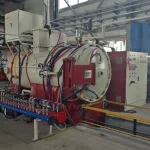
Vacuum Carburizing & Oil Quenching: Key Factors Influencing Distortion in Gear Steels
2026-10-23
-
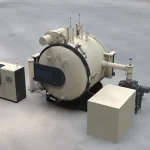
RVGQ-7710 Vacuum Gas Quenching Furnace with Top-and-Bottom Opposing Gas Flow Structure
2026-10-20
-
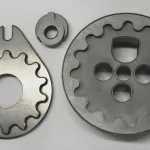
Machining of Precision Automotive Components: Application of High-Pressure Vacuum Gas Quenching
2026-10-16
-
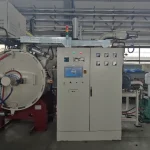
How to Enhance the Surface Brightness of Vacuum Tempered Workpieces
2026-10-13
-
Production of High-Pressure Die-Casting Molds: Application of Vacuum Gas-Quenching Furnaces
2026-10-08