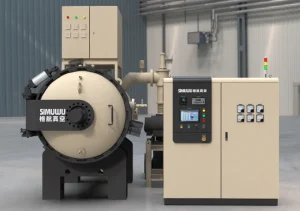
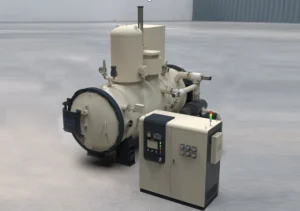
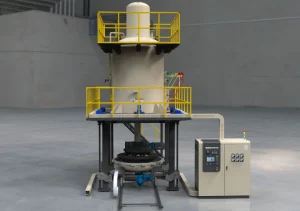
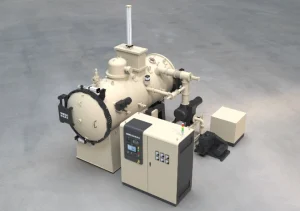
Modern vacuum heat treatment furnaces are designed to provide precise atmosphere control, uniform heating, and stable thermal processing performance for advanced metal components. With the development of complex alloys and precision manufacturing requirements, traditional vacuum heating methods based only on thermal radiation may not always meet production demands.
An advanced vacuum furnace integrates technologies such as partial pressure control and convection heating systems to improve heat treatment quality. These technologies help prevent alloy element evaporation, enhance heating efficiency, and achieve better temperature uniformity for complex workpieces.
By controlling process gases and heat transfer methods, modern vacuum furnaces provide reliable solutions for applications including vacuum hardening, brazing, annealing, sintering, and other high-temperature heat treatment processes.
Vacuum Furnace Partial Pressure Technology for Alloy Protection
What Is Partial Pressure Control in a Vacuum Furnace?
Vacuum furnace partial pressure technology is a process method that introduces a controlled amount of high-purity inert gas, such as argon or nitrogen, into the furnace chamber after achieving a high vacuum level.
Unlike atmospheric pressure heating, partial pressure control maintains the furnace at a specific pressure range below atmospheric pressure. Through precise gas regulation, the vacuum furnace process control system can adjust chamber pressure according to different material requirements.
Modern vacuum heat treatment furnaces usually use automatic partial pressure control systems equipped with precision valves, pressure sensors, and control software. These systems allow operators to maintain stable gas pressure throughout the heating cycle.
How Vacuum Furnace Partial Pressure Prevents Alloy Element Evaporation
During high-temperature vacuum heat treatment, some alloying elements have relatively high vapor pressure and may evaporate from the workpiece surface.
Typical elements affected include:
- • Zinc (Zn)
- • Magnesium (Mg)
- • Manganese (Mn)
- • Aluminum (Al)
- • Chromium (Cr)
- • Copper (Cu)
The loss of these elements may change the surface composition of the material, reduce mechanical properties, and affect final product performance.
In addition, evaporated metal vapor can condense on colder furnace components, including:
- • Heat insulation layers
- • Furnace chamber walls
- • Furnace doors
- • Internal fixtures
This contamination may reduce furnace cleanliness and increase maintenance requirements.
By introducing inert gas partial pressure, the vapor pressure difference between the material surface and furnace atmosphere is reduced. This helps suppress alloy evaporation and protects the chemical composition of the workpiece.
For this reason, vacuum furnace partial pressure control is widely applied in heat treatment processes where material stability and surface quality are critical.([LinkedIn][2])
Partial Pressure Control System and Process Gas Management
An advanced vacuum furnace uses an automatic partial pressure control system to precisely manage process gases during heating.
The system typically includes:
- • Gas inlet valves
- • Pressure sensors
- • Flow control devices
- • Temperature monitoring system
- • Furnace control software
The controller adjusts inert gas input according to programmed parameters, maintaining stable furnace pressure.
Besides preventing alloy evaporation, partial pressure gas can provide additional process benefits:
Removing Residual Impurities
The introduction of process gas helps remove residual contaminants and improve furnace atmosphere cleanliness.
Surface Oxide Reduction
For specific applications, controlled reactive gases such as hydrogen may be used to assist oxide reduction and improve surface quality.
Vacuum Furnace Convection Heating System for Improved Temperature Uniformity
What Is Convection Heating in a Vacuum Furnace?
Under normal vacuum conditions, heat transfer mainly occurs through thermal radiation because there is very little gas inside the furnace chamber.
Although radiation heating is effective at high temperatures, heat transfer efficiency is limited during low-temperature heating stages, especially when processing:
- • Large workpieces
- • Dense loads
- • Components with deep holes
- • Complex geometric structures
A vacuum furnace convection heating system solves this problem by introducing inert gas into the furnace and using a high-speed circulation fan to create forced gas movement.
The circulating gas transfers heat more efficiently to all surfaces of the workpiece, improving heating performance.
Vacuum Furnace Convection Heating for Complex Workpieces
The main advantage of convection heating in vacuum furnaces is improved heat transfer uniformity.
Compared with pure radiation heating, forced convection provides:
- • Faster low-temperature heating
- • More uniform temperature distribution
- • Reduced thermal gradients
- • Lower risk of deformation
- • Shorter processing cycles
This technology is particularly suitable for complex parts where some areas may receive insufficient radiant heat, such as:
- • Deep cavities
- • Internal channels
- • Large cross-section components
- • Closely packed furnace loads
By circulating heated inert gas throughout the chamber, convection heating helps eliminate cold spots and improves overall temperature consistency.
For many industrial applications, convection heating can significantly improve heating speed and temperature uniformity during the initial heating stage.([PubMed Central (PMC)][3])
When Should Convection Heating Be Used in a Vacuum Heat Treatment Furnace?
Convection heating is mainly used during the low-temperature heating stage, generally below approximately 750–800°C.
At higher temperatures, thermal radiation becomes the dominant heat transfer method, and the furnace usually switches to:
- • High vacuum heating
- • Partial pressure heating
- • Radiation heating mode
This combination allows the vacuum furnace to achieve both:
- • Efficient heating at low temperatures
- • Stable material protection at high temperatures
Partial Pressure vs Convection Heating: Different Functions in Advanced Vacuum Furnaces
Although both technologies involve process gas control, their purposes are different.
| Technology | Main Purpose | Typical Application |
| Vacuum furnace partial pressure | Protect material composition | Prevent alloy evaporation, improve atmosphere control |
| Convection heating system | Improve heat transfer | Increase heating speed and temperature uniformity |
Partial pressure technology focuses on material protection, while convection heating focuses on heat transfer improvement.
Together, these technologies expand the capability of advanced vacuum furnaces and allow manufacturers to process more demanding materials and complex components.
Advanced Vacuum Furnace Technology for Better Heat Treatment Performance
The combination of vacuum furnace partial pressure control and convection heating technology represents an important development direction in modern vacuum heat treatment equipment.
By precisely controlling furnace atmosphere and improving heat transfer efficiency, advanced vacuum furnaces can achieve:
- • Better temperature uniformity
- • Reduced material evaporation
- • Improved surface quality
- • Higher process reliability
- • Shorter heating cycles
For industries requiring precision thermal processing, including aerospace, tooling, medical devices, powder metallurgy, and advanced alloys, these technologies provide a reliable solution for achieving consistent heat treatment results.
-
Factors Affecting the Quality of Vacuum Heat Treatment
2026-09-22
-
Application of RVGQ-557 Vacuum Gas Quenching Furnace—Gas Quenching and Tempering
2026-09-18
-
The Role and Benefits of Equipping Vacuum Furnaces with Dew Point Meters
2026-09-15
-
How to Bake Out a Vacuum Furnace After Shutdown? A Complete Restart Guide
2026-09-11
-
Top-and-Bottom Blast Vacuum Gas Quenching Furnace
2026-09-08