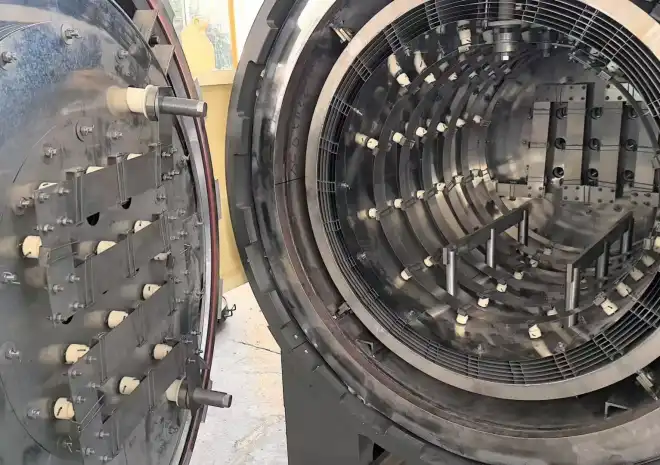
Thermocouples in vacuum furnaces are critical temperature-sensing components. Characterized by excellent sealing, low outgassing, and high-temperature resistance, they are designed to withstand the rigorous conditions of vacuum furnaces—namely oxygen-free, high-temperature, and low-pressure environments. They directly influence temperature control precision, product quality, and operational safety. The following is a brief overview of their primary classifications, as well as key points regarding daily inspection, maintenance, and troubleshooting.
1. Main Classifications
(A) Classification by Material
- K-type Thermocouples: A standard industrial model for medium-temperature ranges, offering a favorable cost-performance ratio and broad applicability. Suitable for long-term use in vacuum environments up to 1150°C, they are commonly used in standard medium-temperature equipment for processes such as vacuum quenching, tempering, and annealing, serving as the primary temperature sensors for mass-production vacuum furnaces.
- N-type Thermocouples: An upgraded version of the K-type, offering superior high-temperature stability and resistance to thermal drift and creep. Suitable for temperatures up to 1250°C and long-term continuous high-temperature operation, they are frequently used in precision aging and specialized vacuum furnace applications.
- Platinum-Rhodium Thermocouples (Types S, R, and B): Characterized by low outgassing, high precision, and zero contamination, these can withstand temperatures up to 1300°C. They are suited for high-vacuum, precision applications—such as aerospace brazing and ceramic sintering—though they come at a relatively higher cost.
- Tungsten-Rhenium Thermocouples (Type C): Specialized models for ultra-high temperatures, suitable only for vacuum or inert atmospheres. Capable of measuring temperatures up to 2400°C, they are widely used in ultra-high-temperature sintering furnaces for powder metallurgy, cemented carbides, and graphite.
(B) Classification by Structure and Function
- Structurally, they are categorized into flange-sealed, armored/protected, and movable insertion types, suited respectively for large fixed furnace bodies, complex corrosive environments, and flexible workpiece temperature monitoring
- Functionally, they are classified as main control thermocouples, workpiece monitoring thermocouples, and over-temperature protection thermocouples, each serving specific roles in furnace temperature regulation, actual workpiece temperature measurement, and equipment safety protection.
2. Key Points for Daily Inspection
- Visual Inspection: Daily checks should be performed on the thermocouple protection tube and ceramic sheath to detect any cracking, deformation, or blackening/corrosion. Any damage requires immediate replacement to prevent gas leaks or sensor failure.
- Vacuum Integrity Check: Monitor the equipment’s pumping speed and pressure-holding performance; if the vacuum level drops abnormally, prioritize checking for slow leaks at thermocouple sealing fittings and flange connections.
- Circuit and Signal Check: Inspect compensating leads for aging or damage and ensure terminals are tight and free of oxidation to prevent temperature fluctuations or signal instability caused by poor contact.
- Temperature Measurement Conditions Check: Observe the temperature curves during heating and holding phases to ensure stability; verify that the probe is not obstructed by the workpiece or directly exposed to heat sources, ensuring accurate and valid temperature data.
3. Periodic Maintenance
- Cleaning and Descaling: Regularly remove carbon deposits and metal vapor residues from the probe surface to prevent accumulation from reducing temperature sensitivity and response speed.
- Drying and Degassing: Before restarting the equipment after a long shutdown, bake the thermocouple at a low temperature to remove moisture, preventing insulation degradation and signal interference.
- Periodic Calibration: Calibrate medium-temperature furnaces every six months and high-temperature furnaces (operating above 1200°C) every three months to correct temperature drift and ensure process stability.
- Seal Replacement: For frequently used equipment, replace flange seals and sealing packing annually to eliminate potential vacuum leaks at the source.
4. Common Faults and Operational Precautions
- Temperature deviations are usually caused by thermocouple wire aging or contamination; if calibration fails, direct replacement is required.
- Signal fluctuations often stem from loose wiring or moisture-compromised insulation; ensure connections are tight and implement moisture-proofing and shielding.
- Abnormal vacuum levels generally indicate seal failure or a cracked protection tube; perform leak detection and replace parts promptly.
- During operation, strictly avoid substituting standard atmospheric thermocouples with vacuum-specific models to prevent outgassing from contaminating the furnace chamber or compromising the vacuum.
- Do not rapidly insert or withdraw the thermocouple while at high temperatures to prevent the protection tube from shattering due to thermal shock; ensure the thermocouple model matches the compensating lead to avoid system measurement errors.
-
Application of RVGQ-557 Vacuum Gas Quenching Furnace—Gas Quenching and Tempering
2026-09-18
-
The Role and Benefits of Equipping Vacuum Furnaces with Dew Point Meters
2026-09-15
-
How to Bake Out a Vacuum Furnace After Shutdown? A Complete Restart Guide
2026-09-11
-
Top-and-Bottom Blast Vacuum Gas Quenching Furnace
2026-09-08
-
Vacuum Furnace Thermocouple Calibration Guide
2026-09-03