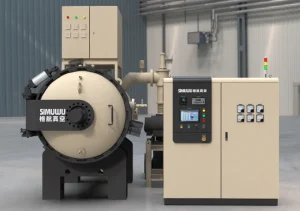
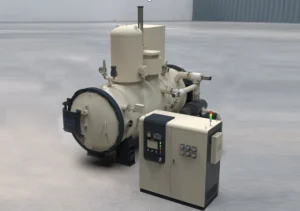
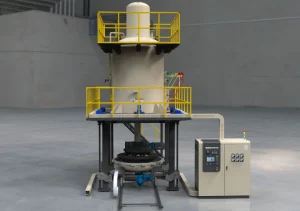
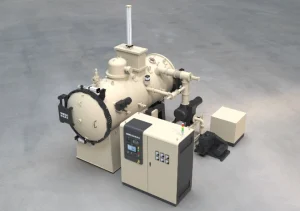
Vacuum heat treatment furnaces are specialized equipment used to process metals and alloys under sub-atmospheric pressures without atmospheric contamination. They provide a pristine, controlled environment that effectively prevents surface oxidation, decarburization, and other unwanted chemical reactions during high-temperature cycles. Understanding the main types of vacuum heat treatment furnaces is strictly essential for metallurgical engineers and procurement managers when designing processing lines. By accurately categorizing these systems based on thermal design, structural configuration, and quenching methods, decision-makers can select the exact equipment required for their specific material applications.
1. Main Types of Vacuum Heat Treatment Furnaces by Thermal Design
The most fundamental classification of vacuum heat treatment furnaces is based on the specific thermal design of the vessel wall.
1.1 Hot-Wall Vacuum Furnaces
In hot-wall vacuum furnaces, the specialized heating elements are located completely outside the sealed vacuum retort. The internal retort is typically manufactured from advanced heat-resistant alloys such as stainless steel, and heat securely transfers through this solid wall via radiation and convection. Because the entire internal retort reaches the maximum required process temperature, the outer vacuum vessel naturally becomes extremely hot during standard operation. These older systems are generally limited in both physical size and maximum operating temperature due to the structural limitations of the heated retort collapsing under external atmospheric pressure.
1.2 Cold-Wall Vacuum Furnaces
Cold-wall furnaces represent the absolute dominant modern design utilized across the global metallurgical industry. In this highly efficient configuration, the heating elements and required thermal insulation are strategically placed directly inside the main vacuum chamber. The outer containment vessel features a robust water-cooled jacket, meticulously ensuring its exterior surface remains at or near normal room temperature during high-temperature operations. This advanced structural design allows for rapid heating and cooling cycles because of its exceptionally low thermal mass, making it highly efficient for continuous industrial production environments.
2. Furnace Configurations: Horizontal vs. Vertical
The physical orientation of the heating chamber drastically affects loading procedures, temperature distribution, and required factory floor space.
2.1 Horizontal Vacuum Furnaces
Horizontal furnaces feature a primary chamber oriented parallel to the facility floor, where workloads are seamlessly loaded onto a sliding hearth tray. These reliable systems are the most common and versatile configuration found in modern industrial heat treatment facilities globally. They consistently excel in the batch processing of a wide variety of manufactured parts, including complex tool steels and high-temperature alloys, accessed through a convenient front-loading door. The internal heating zone typically utilizes a precisely engineered cylindrical or rectangular cross-section to guarantee completely uniform thermal radiation across the entire workload.
2.2 Vertical Vacuum Furnaces
Vertical vacuum furnaces intentionally orient the processing chamber upright, allowing dense workloads to be safely loaded from either the top or the bottom structural access points. This specific vertical design is primarily utilized for long, slender components like aerospace shafts and industrial tubes that absolutely require vertical suspension to prevent severe physical distortion during thermal expansion. They are also exceptionally beneficial for handling massive, heavy structural components that strictly necessitate overhead crane assistance for safe and controlled loading. Depending on specific facility height constraints, these versatile units can be purposely designed as pit-type furnaces installed entirely below floor level to maximize available vertical workspace.
3. Classification by Quenching Method
The integrated quenching method dictates exactly which specific metal alloys can be successfully hardened and processed within the controlled vacuum environment.
3.1 Vacuum Radiative Cooling
Vacuum radiative cooling is the most basic thermal reduction approach, executed by simply shutting off electrical power and allowing the workload to slowly cool against the water-cooled outer walls. This exceptionally slow cooling technique is exclusively suitable for standard annealing processes and basic stress-relieving operations where rapid structural metallurgical transformation is not required. It relies entirely on natural thermal radiation without the introduction of any external cooling mediums or forced circulation mechanisms. To achieve actual material hardening in complex steel alloys, much more aggressive and controlled cooling techniques must be integrated into the furnace architecture.
3.2 Gas Quenching Systems
Gas quenching strictly relies on forced thermal convection by purposefully introducing highly pressurized inert gases like nitrogen, argon, or helium directly into the active hot zone. A massive high-capacity industrial blower forcefully circulates this pressurized gas through a specialized internal heat exchanger and directly across the heated metal workload. Advanced high-pressure gas quenching systems can routinely operate at extreme cooling pressures up to 20 bar, achieving exceptional cooling rates that closely rival traditional liquid quenching methods. This rapid and controlled heat extraction enables the successful, distortion-free hardening of numerous air-hardening materials and complex low-alloy tool steels.
3.3 Oil Quenching Systems
Vacuum furnaces equipped for oil quenching feature a completely dedicated internal liquid oil bath utilizing specially formulated low-vapor-pressure quenching oils. After the high-temperature metallurgical soaking phase successfully completes, an automated internal handling mechanism swiftly transfers the glowing workpieces directly into the quench chamber for immediate total immersion. This precise mechanism provides the absolute highest and most aggressive cooling rates physically available in vacuum environments, permitting the successful hardening treatment of standard oil-hardening steel grades. By strictly utilizing a Dual-chamber Vacuum Oil Quenching Furnace, operators completely eliminate the dangerous fire hazards and heavy surface oxidation issues traditionally associated with open atmospheric oil quench tanks.
4. Heating Element and Hot-Zone Materials
The deliberate selection of specific internal heating elements directly determines the maximum safe operating temperature limits and allowable internal processing atmospheres.
4.1 Graphite Hot Zones
Graphite is an exceptionally popular and cost-effective material choice for both internal heating elements and surrounding thermal insulation due to its highly efficient thermal properties. It reliably provides an extremely high emissivity rating that approaches ideal theoretical black-body conditions, guaranteeing excellent and repeatable temperature uniformity across complex and dense workloads. Modern graphite cloth elements easily accommodate natural thermal expansion and contraction during extreme heating cycles without suffering from mechanical cracking or sudden structural failure. However, reactive graphite can occasionally cause unintended trace carbon pickup in highly sensitive stainless steel components and is strictly incompatible with any oxygen-containing atmospheres at elevated processing temperatures.
4.2 Refractory Metal Hot Zones
Refractory metal hot zones deliberately utilize advanced metallic materials like molybdenum, tungsten, and tantalum for highly critical aerospace, medical, and defense applications. These pure metallic heating elements are strictly mandatory when absolute carbon contamination must be entirely avoided, such as during the precise processing of advanced medical-grade titanium alloys. Solid tungsten elements offer the highest theoretical temperature capability, operating safely and continuously at temperatures exceeding 2000°C according to specific industry baseline data. These advanced specialized hot zones typically employ multiple consecutive layers of thin metallic radiation shields to highly efficiently reflect escaping thermal energy straight back toward the central workpiece.
5. Specialized Vacuum Heat Treatment Configurations
Beyond standard heating and cooling configurations, specialized vacuum furnaces specifically cater to highly complex thermochemical surface treatments.
5.1 Vacuum Carburizing Furnaces
A modern Vacuum Carburizing Furnace dynamically operates by repeatedly injecting highly precise amounts of specific hydrocarbon gases at sub-atmospheric pressures directly into a heated cold-wall chamber. This advanced thermochemical methodology allows for significantly higher safe carburizing temperatures compared to traditional atmospheric gas carburizing systems operating at standard ambient pressures. As a direct mathematical result of these elevated processing temperatures, manufacturers consistently achieve much shorter overall production cycle times while maintaining vastly superior control over the final carbon case depth. This technology completely eliminates intergranular surface oxidation, producing remarkably clean and highly precise metallurgical components ready for immediate downstream assembly.
6. FAQ
Why choose a cold-wall vacuum furnace over a hot-wall design?
Cold-wall furnaces offer remarkably superior heating and cooling speeds due to their inherently low thermal mass. They can safely reach much higher operating temperatures and directly incorporate advanced high-pressure gas or oil quenching systems that hot-wall designs cannot physically support.
Can a single-chamber vacuum furnace perform oil quenching?
Standard single-chamber furnaces generally utilize slow vacuum cooling or forced gas quenching mechanisms. For proper vacuum oil quenching, a multi-chamber design is strictly required to effectively isolate the heated melting zone from the volatile liquid oil bath.
Selecting the right types of vacuum heat treatment furnaces requires a deep understanding of your specific material grades, desired cooling rates, and overall production volume. Whether you require the rapid liquid cooling of a dual-chamber oil quench system or the distortion-free precision of high-pressure gas quenching, properly matching the furnace architecture to your metallurgical goals is crucial. Contact our engineering team today to learn more about configuring the perfect vacuum thermal processing equipment for your manufacturing facility.
-
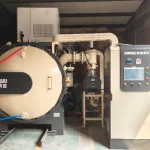
RVGQ-557 vacuum gas-quenching furnace with an air-duct structure
2026-09-30
-

The Role of Nitrogen Partial Pressure in Vacuum Furnaces
2026-09-25
-
Factors Affecting the Quality of Vacuum Heat Treatment
2026-09-22
-
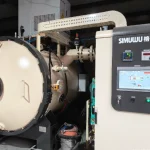
Application of RVGQ-557 Vacuum Gas Quenching Furnace—Gas Quenching and Tempering
2026-09-18
-
The Role and Benefits of Equipping Vacuum Furnaces with Dew Point Meters
2026-09-15