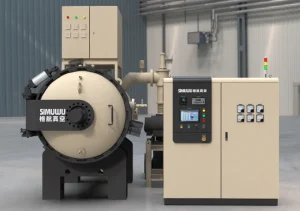
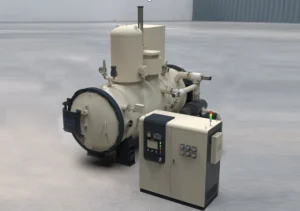
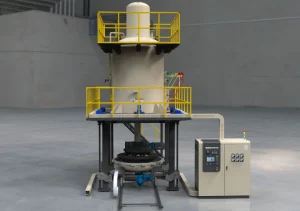
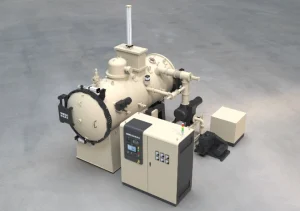
All maintenance and repairs must be performed only after the power is disconnected and the furnace body has cooled; maintenance on energized or hot equipment is strictly prohibited.
Annual maintenance is also the major overhaul period for vacuum heat treatment equipment. During this stage, a comprehensive inspection, cleaning, calibration, and replacement of critical components are carried out throughout the entire system. The purpose of the annual overhaul is to restore equipment performance, identify and eliminate potential long-term failure risks, and ensure reliable and stable operation during the next service period.
1. Perform helium mass spectrometry leak detection on the entire system; completely eliminate leak points and replace all aged seals.
The vacuum integrity of the entire furnace system directly affects achievable vacuum levels, process stability, and product quality. During annual maintenance, helium mass spectrometry leak detection should be performed on the complete vacuum system to accurately identify potential leakage points that may not be detectable through normal operation inspections.
All detected leak sources should be completely eliminated, including issues related to sealing surfaces, flange connections, valves, and vacuum components. At the same time, all aged, hardened, damaged, or degraded sealing components should be replaced to restore reliable sealing performance. Comprehensive leak inspection and seal replacement help maintain stable vacuum conditions and prevent vacuum loss during future production cycles.
2. Thoroughly inspect heating elements, insulation components, and thermocouples; replace aged or damaged parts in batches.
The heating system and insulation components are continuously exposed to high temperatures and thermal cycling, which may gradually cause material degradation, deformation, or performance reduction. During the annual overhaul, heating elements, insulation materials, and thermocouples should be thoroughly inspected to evaluate their operating condition.
Components showing signs of aging, cracking, damage, or reduced performance should be replaced in batches according to their condition. A planned replacement approach helps maintain stable heating performance while reducing the risk of unexpected failures caused by aging components. Proper inspection and replacement also support temperature uniformity, energy efficiency, and reliable process control.
3. Disassemble and clean vacuum piping and pump bodies; service wear parts such as vacuum pump bearings and oil seals.
Long-term operation may cause contamination, deposits, and residues to accumulate inside vacuum piping and pump components. These contaminants can affect pumping efficiency, increase system load, and reduce the stability of the vacuum system.
During major overhaul, vacuum piping and pump bodies should be disassembled and thoroughly cleaned to remove accumulated contaminants. Wear components inside the vacuum pump, such as bearings and oil seals, should also be inspected and serviced or replaced when necessary. Maintaining clean vacuum components and replacing worn parts helps restore pumping performance, reduce equipment noise, and extend the service life of the vacuum system.
4. Perform deep descaling and passivation of the cooling system; replace aged piping components.
The cooling system is essential for maintaining safe operating temperatures of vacuum furnace components. Over long-term operation, scale deposits and corrosion products may accumulate inside cooling channels and piping, reducing cooling efficiency and potentially causing insufficient heat removal.
During annual maintenance, the cooling system should undergo deep descaling and passivation treatment to remove deposits and improve corrosion resistance. A detailed inspection of cooling pipes and related components should also be performed, and aged or damaged piping components should be replaced when required. Proper cooling system maintenance ensures effective heat transfer, prevents overheating risks, and improves the reliability of the furnace during continuous operation.
5. Verify all electrical and safety protection devices (over-temperature, water flow failure, interlocks, emergency stop).
Safety protection systems are essential for preventing equipment damage and ensuring safe furnace operation. During the annual overhaul, all electrical protection functions and safety devices should be fully inspected and verified.
The inspection should include over-temperature protection, water flow failure protection, safety interlocks, emergency stop functions, and other related protective mechanisms. Each device should be tested to confirm that it responds correctly under abnormal conditions. Regular verification of safety systems ensures that protective functions remain reliable and helps prevent equipment damage or operational risks caused by system failures.
Related Reading:
Vacuum Furnace Manufacturer’s Guide to Furnace Maintenance: Daily
Vacuum Furnace Manufacturer’s Guide to Furnace Maintenance: Weekly
Vacuum Furnace Manufacturer’s Guide to Furnace Maintenance: Monthly
Vacuum Furnace Manufacturer’s Guide to Furnace Maintenance: Quarterly
Vacuum Furnace Manufacturer’s Guide to Furnace Maintenance: Long-term Shutdown
-
RVGQ-7710 Vacuum Gas Quenching Furnace with Top-and-Bottom Opposing Gas Flow Structure
2026-10-20
-
Machining of Precision Automotive Components: Application of High-Pressure Vacuum Gas Quenching
2026-10-16
-
How to Enhance the Surface Brightness of Vacuum Tempered Workpieces
2026-10-13
-
Production of High-Pressure Die-Casting Molds: Application of Vacuum Gas-Quenching Furnaces
2026-10-08
-
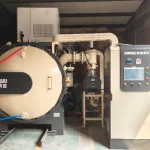
RVGQ-557 vacuum gas-quenching furnace with an air-duct structure
2026-09-30