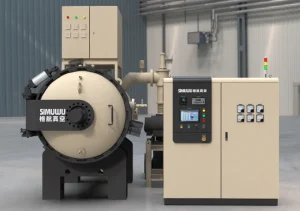
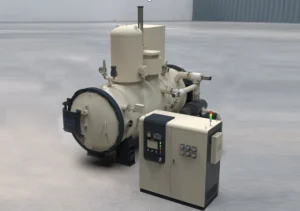
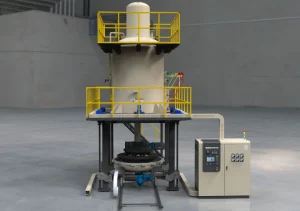
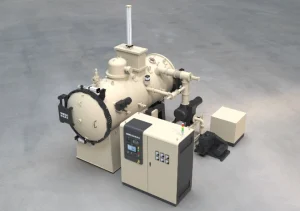
All maintenance and repairs must be performed only after the power is disconnected and the furnace body has cooled; maintenance on energized or hot equipment is strictly prohibited.
Long-term Shutdown Maintenance (≥7 Days)
When a vacuum furnace is expected to remain out of service for seven days or longer, proper shutdown maintenance is required to protect the vacuum system, cooling system, electrical components, and internal furnace environment. Correct long-term storage procedures help prevent moisture absorption, contamination accumulation, corrosion, and component degradation, ensuring that the furnace can return to normal operation smoothly after the shutdown period.
1. Evacuate the furnace chamber to high vacuum for sealed storage; strictly prohibit leaving it open for extended periods.
Before a long-term shutdown, the furnace chamber should be evacuated to a high vacuum condition and maintained in a sealed state for storage. Keeping the chamber under vacuum helps reduce exposure to atmospheric moisture, dust, and contaminants that may enter the furnace and affect internal components.
The furnace chamber should not be left open to the atmosphere for extended periods, as prolonged exposure may cause moisture absorption by insulation materials, oxidation of internal metal components, and contamination of sealing surfaces. Proper vacuum storage helps maintain furnace cleanliness and reduces preparation work before restarting the equipment.
2. Drain all cooling water to prevent scaling and freeze-cracking of pipes.
Before long-term shutdown, all cooling water inside the furnace cooling system and related pipelines should be completely drained. Residual water left inside cooling circuits may gradually cause mineral deposits, corrosion, or other contamination issues during storage.
In low-temperature environments, remaining water may also freeze and expand, creating a risk of pipe cracking or damage to cooling components. Complete drainage helps protect the cooling system, maintain unobstructed water channels, and prevent unnecessary repair work when the furnace is restarted.
3. Change vacuum pump oil and seal the pump; apply dust protection to the entire unit.
Before storing the furnace for an extended period, the vacuum pump oil should be replaced to ensure that the pump is protected with clean and stable lubrication during shutdown. Contaminated or degraded oil may affect pump performance and increase the risk of internal corrosion or mechanical problems during storage.
After oil replacement, the vacuum pump should be properly sealed according to maintenance requirements. Dust protection should also be applied to the entire furnace unit, including external surfaces, electrical cabinets, and exposed components. This prevents dust accumulation and helps maintain equipment cleanliness during the shutdown period.
4. Briefly power on and evacuate the system weekly to prevent moisture-induced electrical leakage.
During a long-term shutdown period, the furnace should be briefly powered on and the vacuum system should be operated weekly when conditions permit. This periodic operation helps remove accumulated moisture and maintain the condition of electrical components.
Moisture accumulation inside electrical insulation materials or internal furnace areas may reduce insulation performance and increase the risk of electrical leakage. Regular short-duration evacuation and operation help maintain a dry internal environment and reduce moisture-related electrical problems when the furnace returns to service.
Critical Prohibitions (Key Points)
1. Do not load workpieces containing oil, water, or excessive impurities into the furnace; minimize volatile contamination and chromium vapor deposition.
2. Avoid rapid heating or cooling at high temperatures to prevent deformation or damage to heating elements and heat shields.
3. Do not apply excessive vacuum silicone grease; prevent high-temperature volatilization from contaminating the furnace chamber.
4. Promptly replace insulating ceramics that have accumulated metal deposits to eliminate arcing and short circuits.
Related Reading:
Vacuum Furnace Manufacturer’s Guide to Furnace Maintenance: Daily
Vacuum Furnace Manufacturer’s Guide to Furnace Maintenance: Weekly
Vacuum Furnace Manufacturer’s Guide to Furnace Maintenance: Monthly
Vacuum Furnace Manufacturer’s Guide to Furnace Maintenance: Quarterly
Vacuum Furnace Manufacturer’s Guide to Furnace Maintenance: Annual
-
Vacuum Carburizing & Oil Quenching: Key Factors Influencing Distortion in Gear Steels
2026-10-23
-
RVGQ-7710 Vacuum Gas Quenching Furnace with Top-and-Bottom Opposing Gas Flow Structure
2026-10-20
-
Machining of Precision Automotive Components: Application of High-Pressure Vacuum Gas Quenching
2026-10-16
-
How to Enhance the Surface Brightness of Vacuum Tempered Workpieces
2026-10-13
-
Production of High-Pressure Die-Casting Molds: Application of Vacuum Gas-Quenching Furnaces
2026-10-08