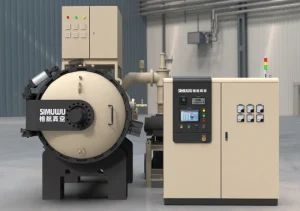
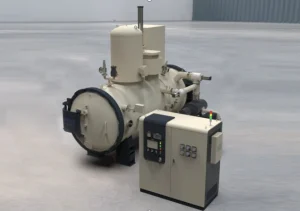
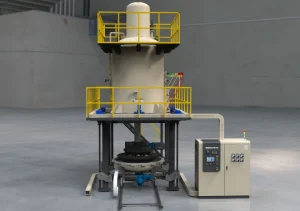
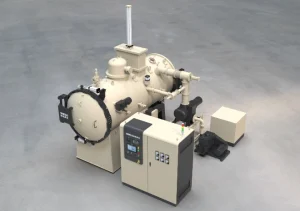
Vacuum heat treatment is an advanced technique widely used in the processing of metal materials. Compared to conventional air furnaces, vacuum furnaces effectively minimize oxidation, decarburization, and contamination of workpieces during heating, resulting in cleaner surfaces and stable microstructural properties. However, in actual production, relying solely on a high-vacuum environment cannot fully meet the requirements of all heat treatment processes. Consequently, the controlled introduction of nitrogen into the vacuum furnace—and the regulation of its partial pressure—serves as a crucial method for adjusting the furnace atmosphere, enhancing heat transfer, and improving the quality of the heat treatment.
Nitrogen Partial Pressure for Surface Protection
Nitrogen partial pressure plays a vital protective role. At high temperatures, metal workpieces are prone to reacting with residual gases such as oxygen and water vapor; even in a vacuum, these gases cannot be entirely eliminated. Introducing an appropriate amount of high-purity nitrogen mitigates the impact of residual oxidizing gases on the workpiece surface, thereby reducing oxidation, discoloration, and surface contamination. For materials such as mold steel, high-speed steel, and certain stainless steels, properly controlling nitrogen partial pressure helps maintain surface cleanliness and enhances surface quality after heat treatment.
Nitrogen Partial Pressure and Decarburization
Nitrogen partial pressure influences the decarburization behavior of steel at high temperatures. When steel is heated, a decarburized layer may form if carbon diffuses outward from the surface and reacts with residual oxygen or moisture in the furnace. Decarburization reduces surface hardness and adversely affects wear resistance, fatigue performance, and service life. Adequate nitrogen protection improves the furnace atmosphere, thereby reducing the tendency for decarburization in certain situations. However, it should be noted that nitrogen is not a gas specifically used for controlling carbon potential; therefore, simply increasing nitrogen pressure does not guarantee the complete prevention of decarburization. Actual results depend on various factors, including material composition, temperature, holding time, vacuum level, and the content of residual gases in the furnace.
Effect on Heat Transfer
Nitrogen partial pressure significantly affects the heat transfer process within the vacuum furnace. In a high-vacuum state, the number of gas molecules is low, resulting in weak convective heat transfer; consequently, workpieces rely primarily on radiation to absorb heat. As a result, the heating rate of the workpiece may be slow in certain situations, and temperature uniformity across different locations within the furnace may also be affected. Introducing nitrogen at a specific pressure into the furnace enhances gas-based heat conduction and convection, thereby improving heat exchange between the workpiece and the furnace atmosphere and ensuring more uniform heating. In practical production, this effect is crucial for increasing heat treatment efficiency.
Nitrogen Pressure for Gas Quenching
Nitrogen partial pressure is equally important during the cooling phase of vacuum furnace operations. Many vacuum heat treatment furnaces utilize high-pressure nitrogen as the cooling medium. Once the heating and soaking stages are complete, high-purity nitrogen is rapidly injected to raise the furnace pressure; this significantly intensifies heat exchange between the nitrogen and the workpiece, enabling rapid cooling. Cooling rates directly influence the phase transformation process of the steel and its final microstructure. For instance, in quenching processes, appropriate nitrogen pressure enhances cooling capacity, allowing the workpiece to achieve the desired martensitic structure while minimizing the contamination and distortion risks associated with oil quenching. Consequently, high-pressure nitrogen cooling has become a key feature of modern vacuum heat treatment equipment.
Why Higher Nitrogen Pressure Is Not Always Better
It is important to note that higher nitrogen partial pressure is not always better. Excessively low pressure offers limited benefits regarding heat transfer and the protective atmosphere, whereas excessively high pressure can alter heat exchange dynamics, increase gas consumption, and impose more stringent requirements on the equipment’s heating, sealing, and cooling systems. Therefore, in practical applications, nitrogen pressure must be selected based on factors such as material type, heating temperature, soaking time, target microstructure, and cooling requirements. Furthermore, the nitrogen must be of sufficiently high purity to prevent impurities like oxygen and moisture from entering the furnace and compromising the protective effect.
Nitrogen Partial Pressure Control in Vacuum Furnaces
Nitrogen partial pressure plays a multifaceted role in vacuum furnaces, including protecting the workpiece surface, mitigating oxidation and decarburization risks, improving high-temperature heat transfer, and enhancing cooling capacity. Properly controlling nitrogen partial pressure not only boosts heat treatment efficiency but also improves the microstructure and properties of the workpiece. With advancements in vacuum heat treatment and intelligent control technologies, precise regulation of nitrogen pressure, temperature, and vacuum levels will further enhance process stability and product quality.
-
Production of High-Pressure Die-Casting Molds: Application of Vacuum Gas-Quenching Furnaces
2026-10-08
-
RVGQ-557 vacuum gas-quenching furnace with an air-duct structure
2026-09-30
-
Factors Affecting the Quality of Vacuum Heat Treatment
2026-09-22
-
Application of RVGQ-557 Vacuum Gas Quenching Furnace—Gas Quenching and Tempering
2026-09-18
-
The Role and Benefits of Equipping Vacuum Furnaces with Dew Point Meters
2026-09-15