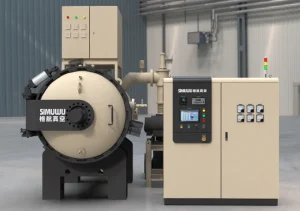
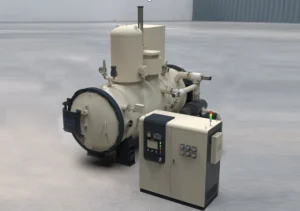
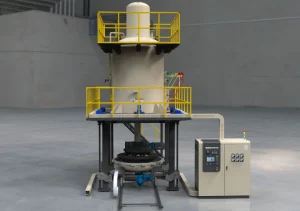
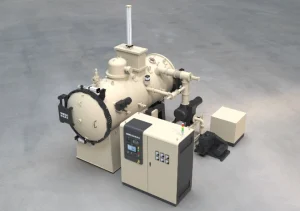
Modern manufacturing demands stringent tolerances and exceptional surface integrity, making thermal processing environments a critical factor for success. Engineers and technical managers increasingly use vacuum furnaces for high-quality products to overcome the limitations of traditional atmospheric heating. By completely removing reactive gases from the heating chamber, this advanced technology prevents surface degradation and ensures reliable metallurgical outcomes. Understanding the mechanisms behind these benefits allows manufacturers to optimize their processes for aerospace, automotive, and medical applications.
1. Eliminating Surface Oxidation and Decarburization
When components are heated in conventional open-air or poorly controlled atmospheres, oxygen and water vapor react with the metal surface to form scale and cause decarburization. These reactions deplete the surface carbon content, significantly reducing the fatigue strength and hardness of critical tools. Operating in a high-vacuum environment, typically at pressures below 10⁻³ torr, eliminates these gaseous reactants entirely.
The absence of oxygen ensures that parts emerge with a bright, clean finish, completely eliminating the need for expensive post-treatment pickling or mechanical descaling. This preservation of surface chemistry is vital for high-speed steels and complex dies where any loss of carbon compromises performance. Ensuring these conditions is a primary reason why manufacturers transition away from legacy atmospheric systems.
2. Achieving Exceptional Dimensional Precision
Distortion during quenching is a primary concern when heat treating precision gears, splines, and thin-walled components. Traditional liquid quenching methods often induce severe thermal shock, leading to asymmetrical cooling and unpredictable warping. Utilizing high-pressure gas quenching allows for a highly controlled and uniform cooling rate that closely matches the material’s continuous cooling transformation requirements.
By adjusting the gas pressure and fan speed dynamically, engineers can minimize internal stresses. Comparing heat treatment distortion in vacuum furnaces vs. other furnaces reveals that step gas quenching techniques can reduce the distortion of hypoid ring gears by over 50%. A modern Vacuum Gas Quenching Furnace ensures that intricate parts remain within strict dimensional tolerances, frequently allowing manufacturers to skip final grinding operations.
3. Ensuring Microstructural Repeatability and Purity
Beyond surface protection, vacuum processing actively removes dissolved gases like hydrogen and nitrogen from the metal matrix through degassing. These trapped gases often cause embrittlement and initiate micro-cracking under stress. The low-pressure environment forces these impurities to diffuse out of the material, substantially improving the overall toughness and fatigue life of the alloy.
This microstructural purity is essential for advanced bonding and joining techniques. Contaminant-free surfaces ensure optimal capillary action and joint strength when joining dissimilar metals or aerospace superalloys. The ability to consistently reproduce these pristine conditions across multiple batches guarantees that every product meets the highest engineering standards.
4. Optimizing Process Controls for High-Value Materials
Achieving superior product quality requires precise control over every variable in the thermal cycle. Advanced control systems continuously monitor the temperature uniformity, partial pressure levels, and gas flow rates within the chamber. These sophisticated diagnostics prevent localized overheating and ensure that complex geometries receive identical thermal treatment throughout the load.
When handling alloys with high-vapor-pressure elements like zinc or magnesium, technicians utilize partial pressure techniques to backfill the chamber with inert argon, successfully suppressing unwanted evaporation. Proper implementation of these parameters, guided by vacuum furnace design considerations, maximizes equipment efficiency. For comprehensive industry guidelines on thermal processing standards, engineers should refer to ASM International.
5. FAQ
How do vacuum furnaces prevent decarburization?
By removing all reactive gases, including oxygen and carbon dioxide, the vacuum environment prevents any chemical reaction that would strip carbon from the steel’s surface during high-temperature processing.
Can a vacuum furnace reduce post-machining costs?
Yes, because vacuum treatment minimizes distortion and produces scale-free surfaces, it frequently eliminates the need for post-hardening grinding, straightening, and chemical cleaning.
What materials benefit most from vacuum heat treatment?
High-alloy steels, tool steels, stainless steels, titanium alloys, and aerospace superalloys see the greatest improvements in fatigue life, surface integrity, and microstructural purity.
Is vacuum degassing effective for all metals?
Vacuum degassing is highly effective at removing hydrogen and oxygen from most structural metals, significantly reducing the risk of hydrogen embrittlement in high-strength steels and titanium.
To remain competitive in modern manufacturing, facilities must use vacuum furnaces for high-quality products that demand uncompromising precision and durability. This technology fundamentally eliminates surface defects, controls distortion, and provides the repeatability required for advanced engineering applications. To discover how our customized thermal processing solutions can elevate your manufacturing capabilities, contact us for a detailed technical consultation.
-
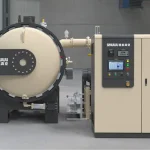
Production of High-Pressure Die-Casting Molds: Application of Vacuum Gas-Quenching Furnaces
2026-10-08
-
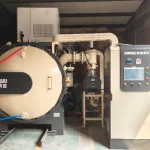
RVGQ-557 vacuum gas-quenching furnace with an air-duct structure
2026-09-30
-

The Role of Nitrogen Partial Pressure in Vacuum Furnaces
2026-09-25
-
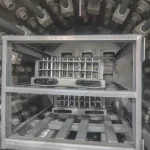
Factors Affecting the Quality of Vacuum Heat Treatment
2026-09-22
-
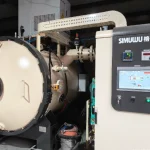
Application of RVGQ-557 Vacuum Gas Quenching Furnace—Gas Quenching and Tempering
2026-09-18