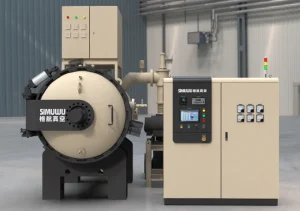
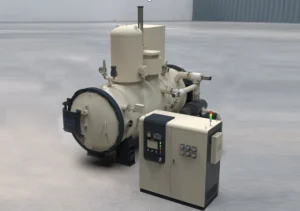
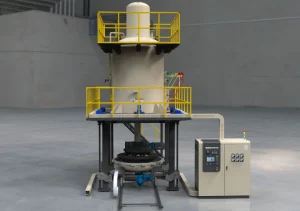
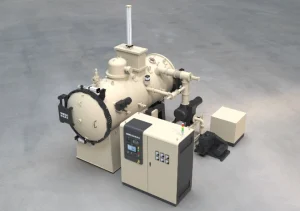
Advanced thermal processing relies on the precise integration of mechanical, thermal, and vacuum engineering. Successful Vacuum Furnace Design Considerations must address the critical balance between evacuation efficiency, hot zone uniformity, and structural integrity to ensure repeatable metallurgical results. This technical overview analyzes the core subsystems that technical managers and engineers must evaluate when selecting or designing industrial vacuum equipment.
1. Vacuum System and Pumping Train Configuration
The vacuum system serves as the primary functional core of the furnace, determining the purity of the processing atmosphere and the speed of the production cycle. Designers must calculate the pumping speed based on the chamber volume, desired working pressure, and anticipated outgassing rates from the workload. For standard industrial applications, a multi-stage approach is employed, typically pairing a mechanical rotary vane pump for roughing with a Roots/booster pump to handle higher gas loads during transitional phases.
Ultra-high vacuum (UHV) requirements necessitate the inclusion of diffusion pumps or turbomolecular pumps. In specialized systems such as ion nitriding furnaces, a combination of a mechanical booster pump and a specialized mechanical vacuum pump has proven effective for maintaining stable plasma conditions. Conductance remains a critical design factor; all piping, valves, and baffles must be sized to minimize flow resistance, as improper conductance sizing can lead to excessive evacuation times and reduced machining efficiency.
2. Furnace Vessel and Cold Wall Structural Design
Modern industrial vacuum furnaces predominantly utilize a “cold-wall” design to ensure operator safety and equipment longevity. In this configuration, the vacuum chamber wall is actively water-cooled, allowing the exterior to remain at near-ambient temperatures while the interior hot zone exceeds 1,000°C. Material selection for the vessel is restricted to alloys with low outgassing rates and high corrosion resistance, with Stainless Steel 304 or 316L serving as the industry standard.
Thermal management is achieved through an integral water jacket or copper tubing wrapped around the vessel. This system must dissipate radiated heat from the hot zone to prevent structural warping or seal failure. Sealing integrity is maintained using elastomer O-rings, such as Viton®, for standard operations, while metal gaskets are reserved for high-temperature or UHV applications where outgassing from polymers would compromise the vacuum level.
3. Hot Zone Engineering and Heating Elements
The hot zone is the most technologically sensitive subsystem in Vacuum Furnace Design Considerations. Its construction dictates energy efficiency and temperature precision. Heating elements are selected based on the maximum operating temperature: molybdenum is used up to ~1,700°C, while tungsten or tantalum is required for temperatures approaching 2,800°C. Graphite elements are frequently chosen for B2B manufacturing due to their high-temperature strength, lower cost, and ease of maintenance.
Thermal insulation within the hot zone typically utilizes either metallic radiation shields (molybdenum or stainless steel) or graphite felt/board. Multi-layer metallic shields are preferred for processes requiring high cleanliness, such as vacuum brazing, to avoid carbon contamination. Conversely, graphite powder and felt offer superior insulation for high-temperature sintering applications, often allowing stable operation above 2,500°C. Recent advancements include the use of metal-ceramic composite coatings with diamond protective layers to improve heat distribution and resistance in extreme environments.
4. Temperature Uniformity and Numerical Control
Achieving a uniform temperature profile across the work zone is vital for consistent metallurgical properties. Modern design methodology utilizes Finite Element Analysis (FEA) and Computational Fluid Dynamics (CFD) to simulate radiative heat transfer within the chamber. Tools like ANSYS allow designers to model the temperature field and optimize the placement of heating elements before physical manufacturing begins.
Control systems utilize high-precision thermocouples (Type K, S, R, or C) integrated with PID algorithms to manage power input. For large-scale furnaces, a multi-zone control strategy is often implemented, where different sections of the hot zone are powered independently to compensate for heat losses at the chamber ends. This ensures the furnace meets strict industry standards, such as AMS2750, for temperature uniformity.
5. Quenching and Cooling System Dynamics
Rapid cooling, or quenching, is required to achieve specific material hardness and microstructures. This process involves backfilling the vacuum chamber with an inert gas, such as Nitrogen or Argon, and circulating it through a heat exchanger via high-power blowers. The design of the gas circulation path is critical; high-pressure gas injection must be distributed evenly to avoid uneven cooling and part distortion.
The cooling rate is a function of gas pressure, gas type, and flow velocity. While Nitrogen is common, Helium is utilized for high-speed quenching due to its superior thermal conductivity. Systems like the Vacuum Gas Quenching Furnace are engineered to handle these high-pressure transitions while protecting the internal hot zone structures from thermal shock.
6. FAQ
Q: What materials are best for vacuum furnace heating elements?
A: Material selection depends on the process temperature and atmosphere. Graphite is cost-effective and strong at high temperatures, while Molybdenum and Tungsten are preferred for high-purity processes where carbon contamination must be avoided.
Q: Why is the cold-wall design preferred over hot-wall?
A: Cold-wall designs keep the vacuum vessel at a low temperature through water cooling, which enhances structural stability, improves seal life, and allows for much faster cooling cycles compared to hot-wall furnaces.
Q: How is temperature uniformity verified in a vacuum furnace?
A: Uniformity is typically verified using a Temperature Uniformity Survey (TUS), which involves a nine-point thermocouple test or numerical simulation models like ANSYS to map the heat distribution within the work zone
Q: What is the role of a Roots pump in the vacuum train?
A: A Roots pump, or mechanical booster, acts as an intermediate stage that significantly increases the pumping speed in the medium-vacuum range, bridging the gap between roughing pumps and high-vacuum pumps like diffusion pumps.
Q: Can vacuum furnaces be used for sintering at 2500°C?
A: Yes, specialized vacuum furnaces utilizing graphite insulation and heating elements can achieve stable temperatures above 2500°C, provided the materials have low gas evolution properties at those extremes.
Precision in vacuum furnace engineering directly impacts the quality of heat-treated components. For detailed specifications on vacuum heat treatment equipment, explore our technical documentation. For customized engineering support regarding your specific application, Contact us today. Learn more about our comprehensive Vacuum Furnace Solutions for global manufacturing.
-
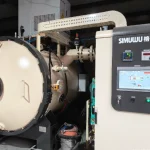
Application of RVGQ-557 Vacuum Gas Quenching Furnace—Gas Quenching and Tempering
2026-09-18
-
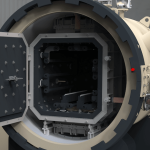
The Role and Benefits of Equipping Vacuum Furnaces with Dew Point Meters
2026-09-15
-
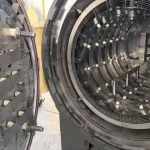
How to Bake Out a Vacuum Furnace After Shutdown? A Complete Restart Guide
2026-09-11
-
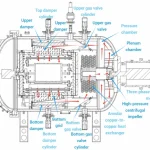
Top-and-Bottom Blast Vacuum Gas Quenching Furnace
2026-09-08
-
Vacuum Furnace Thermocouple Calibration Guide
2026-09-03