Normalizing, tempering, and annealing represent the core thermal processes used to manipulate the mechanical properties and microstructures of industrial metals. Selecting the correct heat treatment sequence determines the final hardness, ductility, and stability of a component. This technical guide explores the differences in thermal cycles and microstructural outcomes of normalizing vs tempering vs annealing to support engineering decision-making in B2B manufacturing.
1. Annealing: Softening and Stress Relief
Annealing is a heat treatment process characterized by heating a metal to a specific temperature, holding it (soaking), and cooling it at an extremely slow rate, usually within a controlled furnace environment. The primary mechanical objective of annealing is to minimize hardness, maximize ductility, and improve the machinability of the workpiece.
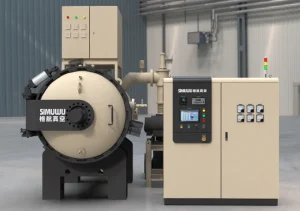
In industrial practice, vacuum annealing is preferred for maintaining surface integrity without oxidation. For hypoeutectoid steels, “Full Annealing” involves heating the material to approximately 30–50°C above the upper critical temperature (A3 line), followed by slow furnace cooling. This thermal cycle facilitates the nucleation of coarse pearlite or spheroidized carbides, depending on the carbon content.
Secondary variants like stress-relief annealing operate at lower temperatures (500–650°C) to reduce residual stresses from welding or casting without drastically altering the existing microstructure. Equipment like the Vacuum Annealing Furnace provides the precise temperature uniformity required for these delicate cycles.
2. Normalizing: Grain Refinement and Uniformity
Normalizing consists of heating the steel to 50–60°C above its upper critical temperature (A3 or Am), achieving a fully austenitic state, and kemudian cooling it in still air at room temperature. The intermediate cooling rate—faster than furnace cooling but slower than quenching—results in a significantly finer pearlite structure compared to annealing.
Research indicates that normalizing effectively refines grain size and enhances the homogeneity of the microstructure. In low-alloy wear-resistant steel castings, Hu and Yang demonstrated that increasing the normalizing temperature up to 970°C improves tensile strength. This process is often utilized to eliminate coarse-grained structures resulting from previous forging or casting operations.
For high-performance martensitic steels like P92, specific normalizing temperatures (e.g., 1040–1080°C) are critical for controlling prior austenite grain size (PAGS) and lath width. These structural adjustments directly correlate with the material’s yield strength and ultimate tensile strength.
3. Tempering: Achieving the Strength-Toughness Balance
Tempering is a post-hardening process that involves reheating quenched (martensitic) steel to a temperature below the lower critical temperature (A1), typically between 150°C and 700°C. Quenched steel is inherently hard but extremely brittle; tempering restores toughness and relieves internal quenching stresses by facilitating carbon precipitation.
The process occurs in distinct stages, beginning with the precipitation of transition carbides and culminating in the formation of tempered sorbite at higher temperatures (500–700°C). Hu and Yang found that the optimal mechanical properties for low-alloy wear-resistant steel were achieved by normalizing at 970°C followed by tempering at 500–550°C.
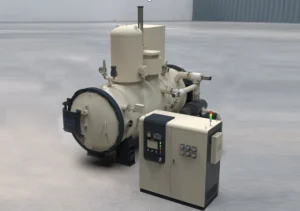
Modern engineering often utilizes a Vacuum Tempering Furnace to precisely control the cooling and heating rates, preventing surface discoloration. For P92 steel, the best combination of strength and ductility was found when normalizing at 1353 K (1080°C) and tempering at 1013 K (740°C).
4. Normalizing vs Tempering vs Annealing: Comparison Table
The following table summarizes the technical differences in parameters and outcomes for these three processes.
| Feature | Annealing | Normalizing | Tempering |
|---|---|---|---|
| Heating Temp | Above A3 or A1 | Above A3/Am by 50–60°C | Below A1 (150–700°C) |
| Cooling Rate | Furnace cooling (Slowest) | Air cooling (Intermediate) | Air cooling (Post-reheat) |
| Prior Treatment | None Required | None Required | Quenching (Hardening) |
| Hardness | Lowest | Medium | Adjustable (Temp-dependent) |
| Ductility | Highest | Medium–High | High (Increases with Temp) |
| Primary Goal | Softening / Machinability | Grain Refinement | Toughness Recovery |
5. Industrial Heat Treatment Sequences
Effective metallurgy rarely relies on a single process. Industrial sequences typically involve multiple stages to meet technical specifications. A standard workflow for high-stress components might include:
- 1. Annealing (post-casting) to allow for rough machining.
- 2. Normalizing to ensure microstructural uniformity.
- 3. Hardening (Quenching) to develop the martensitic base.
- 4. Tempering to reach the final hardness-toughness target.
Executing these steps in vacuum environments ensures the preservation of part dimensions and surface quality, which is vital for aerospace and precision tool manufacturing.
6. FAQ
Q: What is the main difference in cooling between annealing and normalizing?
A: Annealing utilizes furnace cooling, which is the slowest possible rate, whereas normalizing uses still-air cooling. The faster cooling in normalizing produces a finer grain structure and higher strength.
Q: Can tempering be performed without previous hardening?
A: No. Tempering is specifically designed to reduce the brittleness of martensite. It must be preceded by a hardening (quenching) process that converts the austenite into a hard, martensitic structure.
Q: Which process is best for improving the machinability of high-carbon steel?
A: Spheroidize annealing is the preferred method. By heating slightly below the critical temperature for extended periods, the cementite forms globular particles that significantly lower the material’s resistance to cutting tools.
Q: How does tempering temperature affect hardness?
A: Hardness and tempering temperature share an inverse relationship. Higher tempering temperatures (e.g., 500–700°C) result in lower hardness but significantly higher impact toughness and ductility.
Optimizing material performance requires a rigorous approach to thermal processing. For engineers and technical managers, selecting between normalizing, tempering, and annealing is a balance of mechanical requirements and cost-efficiency. To explore precision equipment for these processes, Contact us for specialized technical consulting. Learn more about our range of Vacuum Furnace Solutions to enhance your production quality.
-
How to Bake Out a Vacuum Furnace After Shutdown? A Complete Restart Guide
2026-09-11
-
Top-and-Bottom Blast Vacuum Gas Quenching Furnace
2026-09-08
-

Vacuum Furnace Thermocouple Calibration Guide
2026-09-03
-
Double Chamber Vacuum Oil Quenching Furnace for Metal Workpiece
2026-09-01
-
Vacuum Furnace Leak Detection
2026-08-28