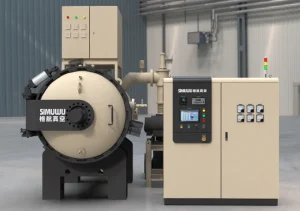
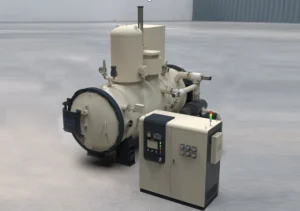
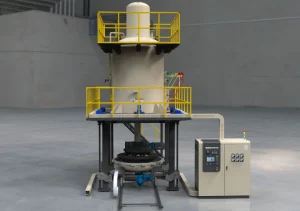
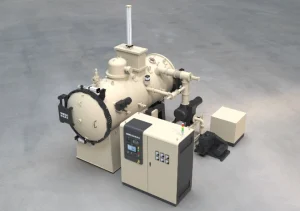
Optimizing the metallurgical properties of cutting tools requires precise control over thermal environments to prevent undesired microstructural alterations. Grain boundary diffusion in HSS vacuum treatment frequently presents challenges, a phenomenon that significantly degrades surface hardness and tool longevity. Understanding the mechanisms driving carbon depletion along these boundaries enables technical managers to establish robust pre-treatment protocols and select appropriate vacuum furnace configurations, ultimately ensuring consistent hardening responses across high-speed steel batches.
1. Mechanisms of Grain Boundary Diffusion in HSS Vacuum Treatment
Carbon migration along grain boundaries dictates the surface integrity of high-speed steel components during high-temperature thermal processing. Elevated austenitizing temperatures activate atomic mobility, allowing carbon atoms to diffuse rapidly outward through grain boundaries when a concentration gradient exists at the tool surface. This localized carbon depletion fundamentally alters the matrix composition, preventing the complete transformation of austenite into hard martensite during the subsequent quenching phase. Grain boundary diffusion outpaces bulk lattice diffusion significantly, making the surface layer highly susceptible to rapid decarburization if the local environment acts as a carbon sink.
Operating parameters within a vacuum heat treatment furnace directly influence the severity of this diffusion process. While a vacuum environment inherently lacks oxygen and prevents generalized oxidation, it cannot reverse pre-existing chemical gradients established by prior manufacturing steps. Carbon atoms preferentially migrate toward surface regions containing reducible oxides, accelerating the depletion of critical alloying elements from the functional tool edges. Managing this thermodynamic driving force is essential for maintaining the uniform carbide distribution required for optimal cutting performance.
2. Impact of Residual Oxide Scale on Carbon Loss
Residual oxide scale serves as the primary catalyst for accelerated surface carbon loss during the thermal cycling of tool steel blanks. High-speed steel materials often retain a microscopic oxide layer from previous hot rolling or annealing operations, which acts as a powerful oxygen source under high-temperature vacuum conditions. This scale reacts with the carbon diffusing from the steel matrix along the grain boundaries, forming carbon monoxide gas that is subsequently extracted by the vacuum pumps. The continuous removal of this reaction product sustains a steep concentration gradient, driving further carbon migration from the core to the surface.
Eliminating this oxygen source requires rigorous mechanical or chemical surface preparation before the components enter the heating chamber. Technical studies confirm that removing approximately 50–200 μm of material from the surface of HSS blanks effectively eradicates the residual oxide scale, neutralizing the driving force for carbon depletion. Implementing this standardized pre-cleaning step guarantees that the components achieve their theoretical maximum hardness when processed in a Vacuum Gas Quenching Furnace.
3. Evaluating Under-Hardening Defects in Small Diameter Tools
Small diameter HSS drills exhibit a pronounced sensitivity to grain boundary diffusion due to their high surface-area-to-volume ratios. When carbon loss occurs across the outer micrometers of these tools, the affected depth represents a significant fraction of the entire cross-section, severely compromising structural integrity. This under-hardening defect manifests as reduced torsional strength and premature edge wear, rendering the precision cutting tools unsuitable for demanding industrial machining applications. Technical evaluations frequently reveal that such drills fail to reach the target 64–66 HRC hardness range, consistently testing several points lower on the Rockwell scale.
Addressing dimensional stability alongside metallurgical integrity requires sophisticated equipment choices and process monitoring. While manufacturers focus heavily on minimizing heat treatment distortion in vacuum furnaces, they must simultaneously monitor process variables that influence elemental diffusion. Maintaining uniform heating rates and strict temperature uniformity across the tool load prevents localized overheating, which would otherwise exponentially increase the grain boundary diffusion coefficient.
4. Pre-Treatment and Vacuum Furnace Optimization Strategies
Establishing stringent surface pre-treatment protocols remains the most effective defense against diffusion-driven carbon depletion. Machining, centerless grinding, or deep chemical etching must be integrated into the manufacturing workflow to expose pristine, unoxidized base metal prior to any thermal processing. Once the blanks are thoroughly cleaned and degreased, they must be handled with care to prevent the reintroduction of contaminants that could vaporize and react during the austenitizing cycle. Adhering to ASM International guidelines for tool steel preparation provides a reliable baseline for these critical procedures.
Modern furnace technology offers programmable features designed to mitigate undesirable diffusion effects during complex thermal cycles. Utilizing SIMUWU vacuum heat treatment furnaces allows technicians to implement precise partial pressure controls using high-purity inert gases. Backfilling the chamber with argon or nitrogen to a controlled pressure level suppresses the vaporization of alloying elements and limits the kinetics of surface reactions.
5. FAQ
Q: What causes carbon loss in high-speed steel during vacuum treatment?
A: Carbon loss is primarily driven by grain boundary diffusion reacting with residual oxide scale on the steel’s surface. The oxides act as a carbon sink under high temperatures, forming CO gas and depleting the surface of carbon.
Q: How much surface material must be removed to prevent this diffusion issue?
A: Technical data indicates that removing 50–200 μm from the surface of HSS blanks prior to vacuum heat treatment is sufficient to eliminate the residual oxide layer and restore full hardenability.
Q: Why are small diameter HSS drills more susceptible to under-hardening?
A: Small diameter tools have a high surface-area-to-volume ratio, meaning that a shallow layer of carbon depletion represents a large percentage of their total cross-section, drastically affecting their overall strength and cutting performance.
Q: Does a higher vacuum level prevent grain boundary diffusion?
A: No, a higher vacuum level does not prevent carbon diffusion if internal oxides are present. In fact, it efficiently removes the resulting CO gas, which maintains the concentration gradient and drives further carbon depletion.
Resolving grain boundary diffusion in HSS vacuum treatment demands a comprehensive approach that combines rigorous mechanical pre-cleaning with advanced thermal processing controls. By eliminating residual surface oxides and optimizing partial pressure parameters, manufacturers can consistently achieve full hardenability and exceptional wear resistance in precision cutting tools. To explore how our advanced equipment can elevate your production standards, contact us for specialized engineering support or learn more about our industrial vaccum furance solutions.
-

RVGQ-557 vacuum gas-quenching furnace with an air-duct structure
2026-09-30
-

The Role of Nitrogen Partial Pressure in Vacuum Furnaces
2026-09-25
-

Factors Affecting the Quality of Vacuum Heat Treatment
2026-09-22
-

Application of RVGQ-557 Vacuum Gas Quenching Furnace—Gas Quenching and Tempering
2026-09-18
-

The Role and Benefits of Equipping Vacuum Furnaces with Dew Point Meters
2026-09-15