Preventing Oxidation and Decarburization
Vacuum environments prevent the formation of scale and decarburization by removing reactive gases like oxygen and water vapor from the heating zone. When metals reach high temperatures in atmospheric furnaces, they react with residual oxygen to form oxides, which often necessitates expensive secondary operations like pickling or machining. The vacuum heat treatment furnace maintains a residual oxygen content of approximately 0.01 ppm at 10⁻³ torr, ensuring that components emerge with bright, clean surfaces.
Maintaining Surface Carbon Integrity
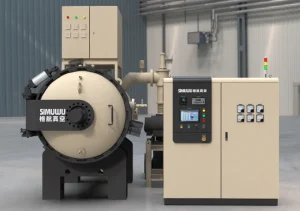
Maintaining surface carbon integrity is a primary technical advantage when processing high-alloy steels and tool materials. Research indicated that H13 tool steel treated in a vacuum exhibits a constant hardness profile from the surface to the core, whereas uncontrolled atmospheres lead to carbon loss and reduced fatigue strength. By utilizing advanced Vacuum Gas Quenching Furnace technology, manufacturers can achieve consistent metallurgical results without the risk of intergranular oxidation.
Reducing Distortion During Quenching
The controlled cooling mechanisms inherent in vacuum systems significantly reduce internal stresses and physical warping during the quenching phase. Conventional oil quenching often introduces thermal shocks that cause non-uniform contraction, whereas heat treatment distortion in vacuum furnaces is minimized through high-pressure gas quenching. Nitrogen or argon gas can be circulated at specific pressures to control the heat extraction rate, allowing for a precise match between the material’s TTT diagram and the actual cooling curve.
Ensuring Uniform Heating
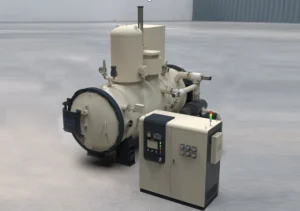
Uniform heating via radiation in a vacuum chamber prevents localized hotspots that contribute to dimensional inaccuracy. Unlike salt baths or open-flame furnaces, a Dual-chamber Vacuum Gas Quenching Furnace ensures that the load reaches the required temperature progressively and evenly. This predictability is vital for complex geometries where maintaining tight tolerances is more cost-effective than performing extensive post-hardening grinding.
Removing Dissolved Gases from Metal
Vacuum processing facilitates the removal of dissolved gases from the metal matrix, which enhances the overall mechanical performance and longevity of the component. Hydrogen, nitrogen, and oxygen trapped within the alloy can lead to embrittlement or internal voids if not properly managed during the heating cycle. The low-pressure environment encourages these gases to diffuse out of the material, a process particularly beneficial for titanium alloys and superalloys used in high-stress environments.
Cleaning Surface Contaminants
Surface contaminants and residual lubricants are vaporized and extracted by the vacuum pumps, preventing them from baking into the surface. This “self-cleaning” attribute contributes to superior bonding in subsequent processes like Vacuum Brazing or coating. Engineers favor this environment for critical aerospace components where even microscopic impurities can lead to catastrophic fatigue failure.
Supporting Complex Thermal Cycles
Modern vacuum systems offer unparalleled programmability, allowing for complex multi-stage thermal cycles that are difficult to replicate in traditional equipment. The ability to incorporate isothermal holds, varied heating rates, and specific quench pressures enables the optimization of microstructures for specific applications. For instance, a Vacuum Tempering Furnace provides the exact thermal environment needed to transform retained austenite without risking surface discoloration.
Real-Time Monitoring and Traceability
The integration of advanced sensors and PLC controls allows for real-time monitoring of the vacuum level, temperature uniformity, and gas flow. This data-driven approach ensures repeatability across batches, which is a core requirement for ISO and AS9100 certified manufacturing. One of the major industrial vacuum furnace benefits is the digital traceability of every thermal event, providing technical managers with the documentation needed for quality assurance.
Prevent Surface Depletion
Engineers must account for the vapor pressure of alloying elements to prevent surface depletion during high-temperature vacuum processing. Metals containing zinc, cadmium, lead, or magnesium can evaporate at low pressures, leading to a change in the surface chemistry of the part. To manage this, “partial pressure” techniques are employed, where the chamber is backfilled with an inert gas like nitrogen or argon to suppress vaporization while maintaining the protective atmosphere.
Considerations
Proper pre-treatment cleaning remains a prerequisite for successful vacuum processing despite the degassing benefits. All parts must be thoroughly degreased and dried, as residual dye penetrants or cutting fluids can condense on the cooler furnace walls or heat exchangers. Managing these technical nuances ensures that the vacuum furnace design considerations translate into consistent, high-quality production results.
FQA
Q: Can all metals be heat treated in a vacuum?
A: Most engineering alloys, including stainless steels, tool steels, and superalloys, are ideal for vacuum processing; however, alloys with high concentrations of high-vapor-pressure elements like zinc must be handled with partial pressure cycles to prevent evaporation.
Q: How does vacuum quenching compare to oil quenching?
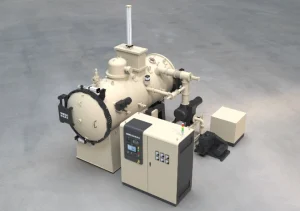
A: Vacuum gas quenching generally results in less distortion and cleaner surfaces than oil quenching, though oil quenching (often done in a Dual-chamber Vacuum Oil Quenching Furnace) provides a faster cooling rate necessary for certain low-alloy steels.
Q: Is vacuum heat treatment more expensive than atmospheric treatment?
A: While the initial equipment and hourly operating costs are higher, the total cost of ownership is often lower due to the elimination of secondary cleaning, straightening, and descaling operations.
Q: What vacuum level is required for bright annealing?
A: For most stainless steels, a vacuum level of 10⁻³ to 10⁻⁴ torr is sufficient to achieve a bright finish, provided the furnace leak rate is within technical specifications.
An industrial vacuum furnace is the preferred choice for heat treatment when surface quality, dimensional precision, and mechanical performance are paramount. By providing an inert, contaminant-free environment, it delivers bright, oxide-free surfaces, eliminates decarburization, and produces components with superior wear resistance.
-

The Role of Nitrogen Partial Pressure in Vacuum Furnaces
2026-09-25
-
Factors Affecting the Quality of Vacuum Heat Treatment
2026-09-22
-
Application of RVGQ-557 Vacuum Gas Quenching Furnace—Gas Quenching and Tempering
2026-09-18
-
The Role and Benefits of Equipping Vacuum Furnaces with Dew Point Meters
2026-09-15
-
How to Bake Out a Vacuum Furnace After Shutdown? A Complete Restart Guide
2026-09-11