Metallurgical Analysis of S7 Hardening Failure
I saw a post on a forum: S7 tool steel failed to exceed 45 HRC despite multiple attempts.
The shop wrapped a 1-1/4 inch thick piece of S7 steel in stainless steel heat treat foil (lined with paper to consume oxygen), preheated it at 1250°F, subsequently austenitized it at 1750°F for over an hour, and finally air-cooled it. Despite following standard procedures and even outsourcing the workpiece to a professional commercial heat treatment facility, the final hardness of the steel was consistently only 42 to 45 HRC, failing to reach the specified 50 to 52 HRC.
The operator used a handheld X-ray fluorescence (XRF) analyzer to verify that the alloy composition was indeed S7, which made the problem even more perplexing. Just a few days prior, the shop had successfully hardened another piece of S7 steel using the exact same heat treatment process. This situation indicates that routine shop-floor testing and traditional atmospheric heat treatment methods are often insufficient to diagnose and resolve inconsistent metallurgical performance.
In the discussion section, individuals familiar with metal processing and heat treatment raised several possibilities regarding this hardening failure.
- 1. Handheld X-ray fluorescence (XRF) analyzers present a major limitation when verifying tool steel grades: they cannot detect light elements such as carbon. Although XRF devices excel at identifying heavier alloying elements like chromium, molybdenum, and vanadium, they completely ignore carbon and silicon in actual measurements. The carbon content values displayed on the XRF screen are merely pre-programmed software estimations based on the detected metallic elements.
- 2. Material mislabeling by distributors or steel mills can also cause hardening failure. If low-carbon alloys or other steel grades are mistakenly mixed into inventory, standard XRF analyzers may still classify them as S7 steel due to similar heavy-element profiles. Carbon content is the critical factor determining martensitic transformation; without the correct carbon content, the steel cannot reach its design hardness regardless of the quenching speed.
- 3. Section thickness plays a critical role in the cooling rate required to achieve a complete transformation from austenite to fully hardened martensite. S7 tool steel is an air-hardening steel, but its air-hardening capability degrades significantly as the cross-sectional thickness increases. For a 1-1/4 inch thick steel block, this represents the critical limit of standard still-air cooling capacity; at this point, the cooling rate at the core of the material is too slow to bypass the pearlite/bainite transformation “nose” area on the continuous cooling transformation (CCT) curve.
- 4. When the cooling rate is too slow, the microstructure transforms into softer pearlite or bainite instead of hard martensite. This explains why thin-walled parts made from the same batch of steel can achieve ideal hardness, while thicker block workpieces fail to reach the expected hardness under identical cooling conditions. Overcoming this limitation requires a quenching medium with a heat transfer coefficient far higher than that of still air.
- 5. Decarburization during heat treatment can reduce surface carbon content, forming a soft skin that leads to low hardness readings. Even when using dedicated stainless steel heat treatment wrap with lining paper, oxygen can still penetrate the wrapping layer if the seal is not airtight. High temperatures promote the reaction of carbon on the steel surface with residual oxygen to generate carbon dioxide, leaving behind a carbon-depleted soft ferrite layer.
A hardness tester measures the indentation resistance at the immediate surface of the workpiece. If a decarburized layer exists, the hardness tester reading might only be 40 to 45 HRC, even if the core of the tool steel has been fully quenched to 55 HRC. It is necessary to grind away the outer 0.010 to 0.020 inches (approximately 0.25 to 0.5 mm) of the material to confirm whether the quenching failure is a surface-only phenomenon or an issue of poor overall through-hardening.
If the issue is not caused by misidentification but rather by the heat treatment process, traditional open-atmosphere furnaces and manual foil-wrapping processes cannot provide the precise environmental control required for high-performance tool steels. Manual wrapping is prone to human error, resulting in inconsistent heating rates and unpredictable delays during the transfer of parts from the furnace chamber to the quenching medium. To ensure consistent metallurgical results and eliminate surface defects, a controlled vacuum furnace heat treatment environment is a much more ideal choice.
Vacuum Heat Treatment Solutions for Tool Steels
Vacuum heat treatment completely eliminates oxygen, carbon dioxide, and water vapor from the atmosphere, thereby preventing oxidation and decarburization. In addition, advanced vacuum systems integrate computer-controlled gas and oil quenching functions, ensuring that even large cross-section workpieces obtain the precise cooling rates required to reach peak hardness.
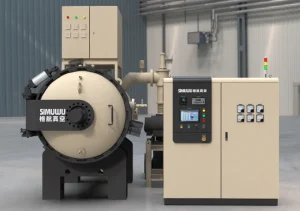
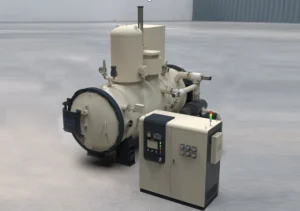
Vacuum gas quenching furnaces provide an advanced solution, combining high-vacuum heating with controlled high-pressure gas cooling technology. These furnaces utilize inert gases such as nitrogen or helium, pressurized to 10 or 15 bar, and circulated at high speeds through optimized nozzle arrays. This high-pressure gas flow achieves cooling rates comparable to liquid quenching while maintaining the extremely high dimensional stability unique to gas cooling.
Using a vacuum gas quenching furnace allows heat treaters to harden thick cross-sections of S7 steel without utilizing liquid quenching media. Precise control over gas pressure and fan speed ensures that the cooling rate is perfectly matched to the alloy’s CCT curve, thereby preventing thermal shock, cracking, and distortion.
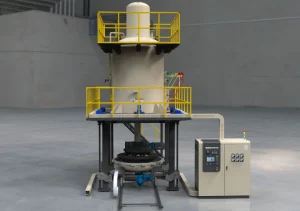
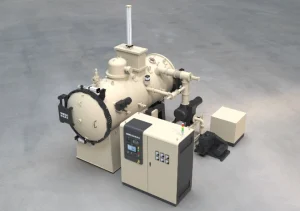
For thicker cross-sections or low-alloy steels that require faster cooling rates, dual-chamber vacuum oil quenching furnaces offer the ultimate quenching intensity. These systems feature a heating chamber maintained under high vacuum and an adjacent oil quenching chamber separated by a vacuum-sealed door. Once austenitization is complete, the workload is automatically and rapidly transferred into the oil bath under a protective atmosphere.
A dual-chamber vacuum oil quenching furnace ensures that the core of large parts cools quickly enough to achieve complete martensitic transformation. This process eliminates the surface contamination associated with open-air oil quenching while providing the maximum possible hardness for challenging steel grades and thick geometries.
Selecting the correct raw materials and pairing them with high-performance vacuum quenching equipment is an effective way to eliminate tool steel hardening failure. Relying on basic atmospheric furnaces or inaccurate material verification tools often leads to inconsistent hardness and scrapped parts. Maximize the precision and repeatability of your manufacturing process by utilizing SIMUWU’s high-quality customized vacuum furnaces.
If you want to upgrade your heat treatment capabilities or require a highly reliable vacuum furnace, contact our SIMUWU engineering team today.
-
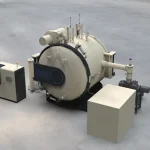
RVGQ-7710 Vacuum Gas Quenching Furnace with Top-and-Bottom Opposing Gas Flow Structure
2026-10-20
-
Machining of Precision Automotive Components: Application of High-Pressure Vacuum Gas Quenching
2026-10-16
-
How to Enhance the Surface Brightness of Vacuum Tempered Workpieces
2026-10-13
-
Production of High-Pressure Die-Casting Molds: Application of Vacuum Gas-Quenching Furnaces
2026-10-08
-
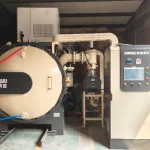
RVGQ-557 vacuum gas-quenching furnace with an air-duct structure
2026-09-30