Gas-cooled quenching in vacuum furnaces is a mainstream process in modern precision heat treatment. Compared to oil or water cooling, gas cooling offers advantages such as minimal workpiece deformation, the absence of surface contamination, and high process controllability. Industrial vacuum furnaces primarily utilize nitrogen and argon as cooling media; these two gases differ significantly in terms of physical heat transfer properties, high-temperature chemical stability, operating costs, and suitability for specific conditions—factors that directly impact heat treatment quality and production economics. This article presents a comprehensive comparative analysis of the two cooling gases, drawing on both physical property data and practical production experience.
1. Regarding physical cooling performance, nitrogen offers superior overall heat transfer efficiency compared to argon, making it better suited for rapid quenching operations.
In terms of fundamental physical properties, nitrogen has a specific heat capacity of 1.04 kJ/(kg·K)—far higher than argon’s 0.52 kJ/(kg·K)—and its lower molecular mass and higher molecular mobility facilitate better circulation within the furnace. Under standard operating conditions (identical temperature, pressure, and flow rate), nitrogen achieves an overall cooling rate 30% to 40% higher than argon; it rapidly dissipates heat accumulated in the workpiece, effectively shortening cooling cycles and boosting equipment throughput. Conversely, argon’s high density and slow molecular motion result in weaker convective heat transfer and a more gradual cooling rate; while it offers a slight advantage in cooling uniformity, it suffers from lower production efficiency.
2. High-temperature chemical stability represents the most critical distinction between the two gases and is a key factor when selecting the appropriate medium for high-end workpieces.
Argon is a monatomic inert gas with exceptional chemical stability; even in high-temperature, high-pressure vacuum environments exceeding 1300°C, it does not undergo oxidation or chemical reactions with metal materials, thereby ensuring a bright, pristine workpiece surface and preserving the integrity of the microstructure.
Nitrogen, while inert at lower temperatures, becomes highly reactive above 900°C. It readily undergoes nitriding reactions with materials such as titanium alloys, stainless steel, high-speed steel, and chromium-bearing alloys, forming a hard yet brittle nitride layer. This defect reduces surface toughness and increases the risk of cracking, significantly shortening the service life of precision components.
In terms of production costs and suitability for specific operating conditions, the two gases have established distinct application systems catering to different market segments—high-end versus standard. Cost data indicates that the usage cost of industrial high-purity argon is approximately four to five times that of nitrogen. Nitrogen can be generated on-site using factory nitrogen generators, achieving purity levels of 99.999% with minimal operation and maintenance costs; it is ideal for large-scale production and is primarily used in the quenching and tempering of conventional mold steels—such as carbon steel, structural steel, H13, and Cr12—across sectors like hardware, general machinery, and standard automotive parts. Conversely, argon is expensive and entails high supply costs, limiting its use to high-value-added components; it is suited for products with stringent requirements regarding surface quality and material properties, such as titanium alloys, superalloys, precision stainless steel, and medical or aerospace components.
In summary, nitrogen offers high cooling efficiency and exceptional cost-effectiveness, serving as a versatile vacuum heat treatment cooling medium that meets the demands of industrial mass production. Argon provides superior protective qualities without compromising material integrity, making it the specialized medium for high-end, precision heat treatment. In actual production, enterprises can flexibly select the gas based on the workpiece material and quality specifications: nitrogen is preferred for standard steels to control costs, whereas argon is essential for specialty precision alloys to ensure product performance; alternatively, a nitrogen-argon gas mixture process may be employed to balance production quality with economic efficiency.
-
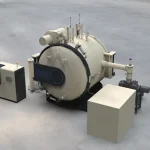
RVGQ-7710 Vacuum Gas Quenching Furnace with Top-and-Bottom Opposing Gas Flow Structure
2026-10-20
-

Machining of Precision Automotive Components: Application of High-Pressure Vacuum Gas Quenching
2026-10-16
-
How to Enhance the Surface Brightness of Vacuum Tempered Workpieces
2026-10-13
-
Production of High-Pressure Die-Casting Molds: Application of Vacuum Gas-Quenching Furnaces
2026-10-08
-
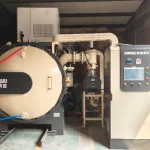
RVGQ-557 vacuum gas-quenching furnace with an air-duct structure
2026-09-30