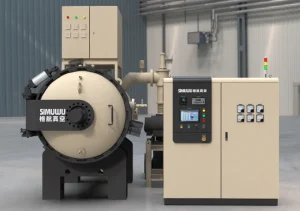
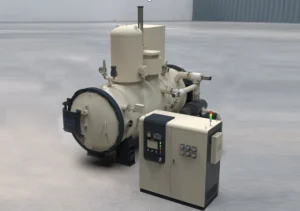
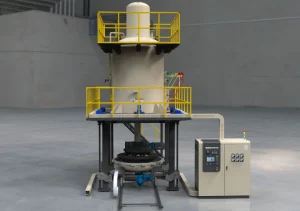
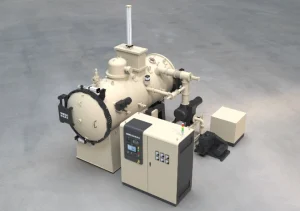
The application of vacuum heat treatment in medical device manufacturing fundamentally changes the fabrication of high-performance biomaterials. This technology links material processing to component performance, helping medical implants, surgical instruments, and life-critical electronic enclosures achieve the mechanical properties and chemical purity required in service.
1. Vacuum Heat Treatment for Medical Devices: Contamination Elimination
Vacuum heat treatment for medical device manufacturing enables metal processing in an environment that significantly reduces reactive atmospheric gases. Oxygen, nitrogen, and water vapor in conventional furnaces cause oxidation, nitriding, and decarburization of metal surfaces at elevated temperatures. Operating under vacuum conditions minimizes these surface reactions, helping fabricated parts emerge with bright, clean surfaces and minimal geometric distortion. Medical-grade austenitic and martensitic stainless steels processed through this method maintain precise alloy compositions without element degradation. Surgical instruments such as scalpels, forceps, and retractors rely on this precision to achieve superior hardness, wear resistance, and long-term viability under repeated sterilization.
2. Mechanical Optimization of Implants and Stents
2.1 Co-Cr Alloy Stent Processing
Controlled vacuum heat treatment optimizes the microstructure of Co-Cr-W-Ni alloy tubes used for balloon-expandable coronary stents. Processing these specific materials at 1373–1473 K under a suppressed argon environment controls the recrystallization of the cold-worked microstructures. This precise thermal cycle produces a face-centered cubic matrix with engineered grain sizes ranging from 5.8 to 34.1 μm. Reducing grain size within this range increases both strength and plastic elongation of the material. These thermally optimized stents consistently achieve an ultimate tensile strength exceeding 1200 MPa, meeting the requirements for next-generation small-diameter vascular applications.
2.2 Orthopedic Implant Alloy Refinement
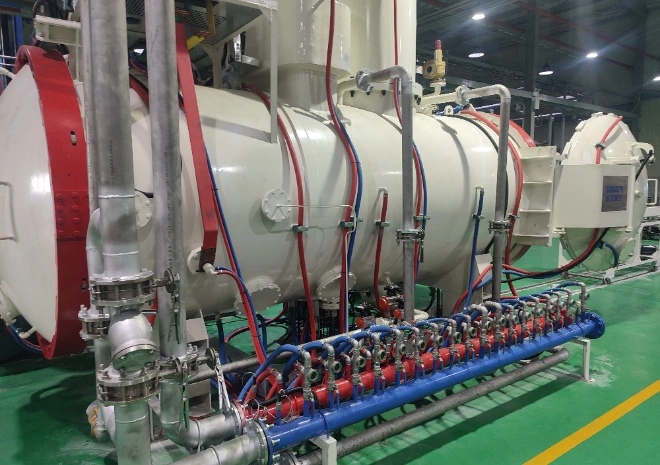
Vacuum heat treatment in a vacuum furnace plays a key role in the structural integrity of permanent orthopedic implants manufactured from advanced Ti and Co-Cr-Mo alloys. For nickel-free and carbon-free Co-Cr-Mo alloys used in surgical prostheses, heating between 1170°C and 1260°C effectively dissolves brittle interdendritic precipitates. This targeted thermal application suppresses undesirable athermal martensitic transformations during the necessary cooling phases. The resulting structural material exhibits improved ductility while maintaining the critical yield strength required for heavy load-bearing applications.
3. Post-Processing Additive Manufactured Implants
Vacuum furnaces provide essential stress-relieving and solution annealing cycles for advanced 3D-printed medical implants. Metal additive manufacturing processes, including laser powder bed fusion and electron beam variations, generate parts with severe residual stresses and microstructural heterogeneities. Solution annealing of 316L stainless steel at 1010–1120°C under vacuum effectively dissolves undesirable secondary phases formed during rapid cooling. This thermal process restores the intrinsic corrosion resistance of printed surgical components without inducing surface oxidation. Precipitation-hardening alloys undergo controlled vacuum aging to form strengthening phases while maintaining a sterile, oxide-free exterior.
4. Hermetic Sealing of Implantable Electronics
Vacuum furnace thermal processing protects sensitive microelectronics inside pacemakers and neurostimulators from moisture degradation. These implantable medical devices require strong protection from body fluids to support decades of reliable internal operation. Vacuum drying stations execute pre-drying protocols at 80°C under vacuum to eliminate residual moisture adsorbed on surfaces and absorbed by polymeric components. The system then elevates to 120°C, backfills with inert helium or argon, and executes hermetic solder sealing without atmospheric exposure. This vacuum process achieves an internal relative humidity below 0.1%, reducing the risk of electrochemical corrosion across the integrated circuits.
5. High-Density Biomaterial Fabrication
Vacuum hot pressing remains a related vacuum processing route for high-density biomaterial fabrication. It consolidates advanced biomaterials to near-full density at significantly lowered sintering temperatures. This method applies continuous uniaxial pressure together with powder metallurgy sintering within a controlled high-vacuum chamber. Processing Ti-3Al-2.5V alloys through this route using blended elemental powders yields relative material densities between 97.5% and 98.2%. The extreme affinity of titanium for oxygen, nitrogen, and carbon necessitates strict atmospheric control to prevent severe alloy embrittlement during consolidation. Resulting titanium structures display fine-grained lamellar microstructures that meet the flexural yield strengths specified for standard wrought medical devices.
6. FAQ
Q: Why is vacuum heat treatment used in medical device manufacturing?
A: It improves material cleanliness, microstructure control, and dimensional stability, helping medical components meet demanding performance requirements.
Q: What materials benefit from vacuum heat treatment in medical implants?
A: Titanium, Co-Cr, and stainless steel alloys often benefit from vacuum heat treatment because the process limits oxidation and supports stable mechanical properties.
Q: Why are vacuum furnaces important for surgical instruments?
A: They help maintain clean surfaces, consistent hardness, and dimensional stability, which are important for repeated sterilization and long-term use.
Q: Why is vacuum hot pressing often used for titanium dental implants?
A: Titanium reacts aggressively with atmospheric oxygen and nitrogen at elevated temperatures, causing severe structural embrittlement; vacuum pressing eliminates these reactive gases while achieving near-full material density.
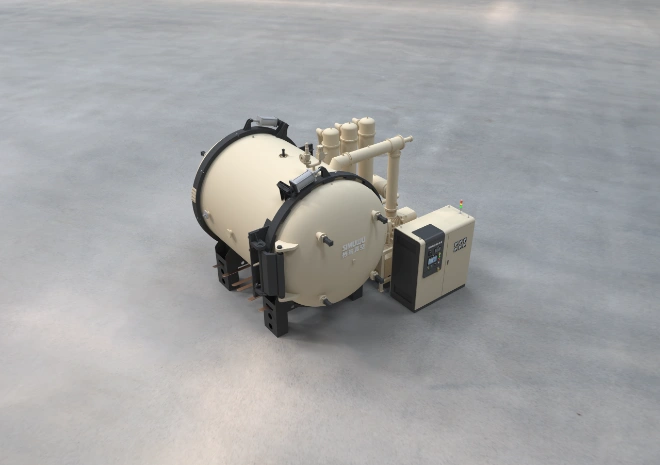
Implementing vacuum heat treatment for medical devices helps support compliance with global biocompatibility and structural performance standards. The same vacuum furnace technology used for implants, surgical instruments, and implantable electronics also supports controlled processing of other medical components. Specify exact furnace configurations to process critical healthcare parts safely and efficiently. Contact us to evaluate optimal thermal processing equipment, including Dual-chamber Vacuum Gas Quenching Furnaces, for your specific medical alloy applications.
-
Vacuum Carburizing & Oil Quenching: Key Factors Influencing Distortion in Gear Steels
2026-10-23
-
RVGQ-7710 Vacuum Gas Quenching Furnace with Top-and-Bottom Opposing Gas Flow Structure
2026-10-20
-
Machining of Precision Automotive Components: Application of High-Pressure Vacuum Gas Quenching
2026-10-16
-
How to Enhance the Surface Brightness of Vacuum Tempered Workpieces
2026-10-13
-
Production of High-Pressure Die-Casting Molds: Application of Vacuum Gas-Quenching Furnaces
2026-10-08