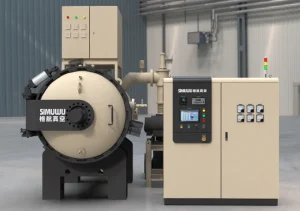
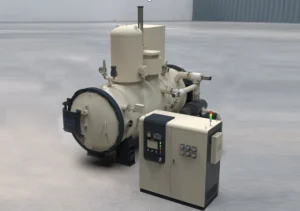
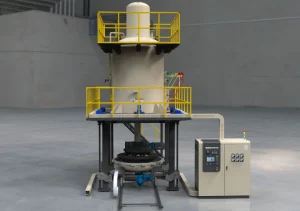
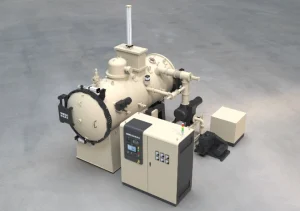
Upon completion of the workpiece heat-soaking phase in the high-temperature vacuum furnace, it is strictly prohibited to shut down the machine, open the door to release pressure, or initiate forced cooling immediately; instead, a staged, step-wise cooling protocol must be strictly followed. The cooling process is governed by the core principles of “initial pressure maintenance, subsequent slow cooling, low-temperature pressure release, and ambient-temperature handling.” Through precise temperature control and continuous protection, the process effectively prevents workpiece oxidation and deformation as well as damage to furnace components, eliminates equipment malfunctions and safety incidents, and ensures product quality and equipment longevity. The specific operational procedures and guidelines are as follows:
I. High-Temperature Natural Cooling
Immediately upon completion of the process cycle, turn off the heating system. Throughout the process, the vacuum unit and circulating water cooling system must remain in continuous operation without interruption. During the high-temperature phase, a high-vacuum environment must be maintained, relying entirely on the furnace’s natural heat dissipation to cool down, while strictly limiting the cooling rate to ≤2°C/min. Forced air cooling, opening the furnace door, or breaking the vacuum are strictly prohibited during this stage; an influx of air at high temperatures would rapidly oxidize and erode graphite insulation and heating elements, causing workpiece oxidation and scrapping, while severe thermal shock could cause cracking in furnace tubes and linings. Operators must remain on duty throughout, monitoring furnace temperature, vacuum levels, water cooling pressure, and water temperature in real-time to promptly address any anomalies and ensure stable equipment operation.
II. Controlled Cooling at Medium Temperatures
Once the furnace temperature drops to 800°C, the process may transition to the controlled, assisted cooling stage. At this point, depending on the workpiece’s process requirements, high-purity nitrogen or argon (inert protective gas) may be introduced into the furnace at a slow, low flow rate; high-flow, high-pressure gas blasts directly into the furnace chamber must be avoided. Once the gas flow stabilizes, activate the internal circulation fan to promote uniform temperature distribution within the furnace. Regulate the overall cooling rate to 3–5°C/min while strictly controlling temperature differentials—both vertically and horizontally—to within ±15°C to prevent localized uneven cooling or heating. A slight positive pressure must be maintained within the furnace at all times to effectively exclude external air, thereby preventing workpiece oxidation, discoloration, or defects, as the temperature is steadily lowered to 300°C.
III. Low-Temperature Slow Cooling and Shutdown
Once the temperature drops to 300°C, stop the active flow of inert gas and turn off auxiliary cooling equipment, allowing the furnace chamber to cool via natural convection. When the temperature reaches approximately 200°C, the furnace door may be opened slightly (5–10 cm) to facilitate ventilation; however, directing cold outside air onto the furnace chamber or workpiece is strictly prohibited to prevent thermal shock damage. Only after the temperature falls below 100°C should the intake valve be slowly opened to break the vacuum; the furnace door may be fully opened once the internal pressure returns to atmospheric levels. Personnel must wear high-temperature protective gear and use specialized long-handled tools to retrieve workpieces, thereby avoiding burns. After retrieval, allow the entire unit to cool thoroughly before sequentially shutting down the fans, vacuum system, and water-cooling system, and disconnecting the main power supply. Promptly clean dust and debris from the furnace chamber, inspect components such as door seals and water-cooling connections, and perform necessary maintenance.
IV. Key Precautions Throughout the Process
- – Prohibited Operations at High Temperatures: Opening the door, breaking the vacuum, or initiating forced rapid cooling at temperatures above 300°C is strictly prohibited. Interrupting water, power, or vacuum supply during the cooling process is forbidden to prevent the burning of equipment seals, deformation of furnace components, and scrapping of workpieces.
- – Specialized Protection for Equipment Components: Strictly isolate air at temperatures above 600°C to prevent the oxidation, pulverization, or detachment of graphite components. Quartz and corundum furnace tubes require slow cooling throughout the process to eliminate the risk of cracking or breakage caused by sudden temperature fluctuations.
- – Workpiece Quality Control: For specialized workpieces—such as precision alloys, ceramics, or vacuum-brazed parts—strictly adhere to staged cooling standards and precisely control cooling rates at each phase to prevent defects such as deformation, cracking, braze detachment, or weld failure.
- – Safety Protocols: If a flammable atmosphere process was used previously, the chamber must be thoroughly purged with inert gas before cooling begins. Ensure adequate ventilation during gas-filling operations in enclosed spaces and wear appropriate protective gear to mitigate safety risks such as high-temperature burns and oxygen-deprivation asphyxiation.
-
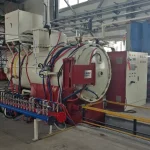
Vacuum Carburizing & Oil Quenching: Key Factors Influencing Distortion in Gear Steels
2026-10-23
-
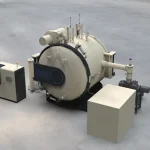
RVGQ-7710 Vacuum Gas Quenching Furnace with Top-and-Bottom Opposing Gas Flow Structure
2026-10-20
-
Machining of Precision Automotive Components: Application of High-Pressure Vacuum Gas Quenching
2026-10-16
-
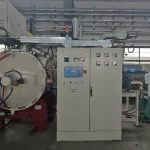
How to Enhance the Surface Brightness of Vacuum Tempered Workpieces
2026-10-13
-
Production of High-Pressure Die-Casting Molds: Application of Vacuum Gas-Quenching Furnaces
2026-10-08