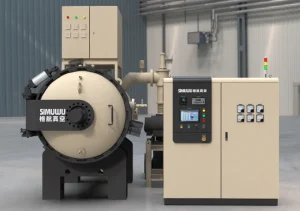
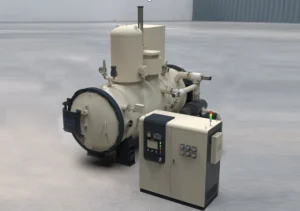
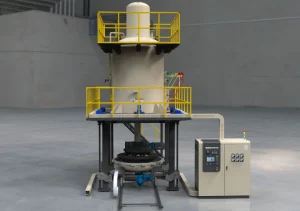
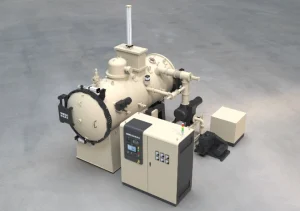
Vacuum gas quenching furnace faults and solutions part I focuses on early-stage operational failures in vacuum pumping, heating control, electrical stability, and gas quenching performance within a Vacuum Gas Quenching Furnace system, where process stability directly determines metallurgical consistency and component hardness distribution.
1. Vacuum evacuation and pressure instability
Vacuum system performance in a Vacuum Gas Quenching Furnace is primarily governed by sealing integrity, pumping efficiency, and contamination control. Insufficient vacuum level or slow evacuation typically indicates combined mechanical and process-related failures rather than a single fault point.
• Troubleshooting begins with the mechanical pumping system. Oil degradation in rotary vane pumps or Roots pumps introduces emulsification and reduced vapor handling capacity, which directly slows evacuation rates. This condition often correlates with backstreaming contamination and unstable ultimate vacuum.
• Leakage is another dominant factor. Aging O-rings in furnace doors, viewport flanges, and electrical feedthroughs create micro-leak paths that are not always audible but measurable through pressure rise tests. Valve assemblies such as vent valves and gas fill valves may also fail to fully seat due to particulate contamination or mechanical wear.
• Process-related outgassing must also be considered. Moisture adsorption on heat shields or residual cutting fluids on workpieces increases internal gas load during pump-down, prolonging evacuation time and reducing achievable vacuum level.
• Solutions focus on restoring sealing integrity and reducing gas load. Pump oil and filtration elements must be replaced to recover pumping performance. Elastomer seals require systematic replacement and sealing surface cleaning to restore compression efficiency. Valve lapping or replacement is required when mechanical closure degradation is present. Workpiece pre-drying and periodic high-temperature degassing cycles reduce internal moisture-driven outgassing.
2. Heating instability and temperature deviation
Temperature control instability in a Vacuum Gas Quenching Furnace is typically linked to combined electrical resistance variation, sensor drift, and control system parameter deviation. These faults directly affect microstructure uniformity during heat treatment.
• Graphite heating elements may loosen or fracture under thermal cycling stress, leading to non-uniform resistance distribution and localized overheating zones. This produces measurable temperature gradients across the hot zone.
• Water-cooled electrode oxidation or poor mechanical contact increases electrical resistance at connection interfaces. This condition generates localized heating and can trigger unstable power delivery into the heating circuit.
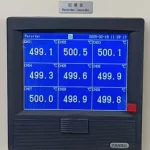
• Thermocouple drift is a critical factor. Long-term exposure to high vacuum and thermal cycling causes calibration deviation, resulting in incorrect feedback to the control system. Wiring errors after maintenance can further amplify temperature reading instability.
• Control-side faults include incorrect PID parameters in the temperature controller or degradation of solid-state relays. These failures manifest as oscillatory heating behavior or delayed response to setpoint changes.
• Corrective actions include mechanical reinforcement of heating elements and electrode connections to ensure stable resistance paths. Thermocouples must be periodically calibrated or replaced to maintain measurement accuracy. Control parameters should be reset based on verified thermal profiles, and electronic switching components must be replaced when switching lag or failure is detected.
3. Electrical discharge and abnormal noise
Arcing and breaker tripping in a Vacuum Gas Quenching Furnace indicate insulation breakdown or unintended conductive pathways within the hot zone.
• Ceramic insulating components are particularly sensitive to metal vapor deposition during high-temperature operation. Accumulated conductive layers reduce insulation resistance and increase the probability of electrical discharge under load conditions.
• Misalignment of heating elements can result in physical contact with heat shields, creating direct short circuits or intermittent discharge events during thermal expansion cycles.
• Dust and metallic debris accumulation inside the furnace chamber also contributes to localized conductive bridging, especially in areas of high electric field intensity.
• Mitigation requires restoration of dielectric integrity. Contaminated insulating ceramics must be cleaned or replaced. Furnace chambers should be thoroughly cleaned to remove conductive residues. Heating elements must be mechanically realigned to maintain safe insulation spacing. Periodic hot-zone cleaning schedules are required to prevent progressive contamination buildup.
4. Gas quenching performance degradation
Gas quenching efficiency in a Vacuum Gas Quenching Furnace depends on gas pressure stability, flow uniformity, and mechanical integrity of the circulation system. Reduced cooling performance directly affects hardness, phase transformation, and distortion control.
• Low gas pressure is often caused by insufficient nitrogen supply or leakage in the gas circuit. Even minor pipeline leakage can significantly reduce effective quenching pressure and delay cooling curves.
• Solenoid valve malfunction introduces flow restriction or delayed response, reducing peak gas velocity during quenching cycles. This directly impacts heat extraction efficiency.
• Cooling fan degradation is another frequent root cause. Impeller contamination or motor wear reduces airflow volume, resulting in uneven cooling distribution across the load.
• Nozzle blockage caused by particulate deposition or material buildup alters designed flow patterns and reduces turbulence efficiency, which is critical for uniform heat extraction.
• Corrective actions include restoring supply pressure and performing systematic leak detection across the gas circuit. Valves must be inspected and cleaned or replaced depending on mechanical wear. Cooling fans require impeller cleaning and motor condition evaluation. Nozzles and flow ducts must be cleared to restore designed aerodynamic behavior.
Vacuum Gas Quenching Furnaces Faults and Solutions: part II
-
Application of RVGQ-557 Vacuum Gas Quenching Furnace—Gas Quenching and Tempering
2026-09-18
-
The Role and Benefits of Equipping Vacuum Furnaces with Dew Point Meters
2026-09-15
-
How to Bake Out a Vacuum Furnace After Shutdown? A Complete Restart Guide
2026-09-11
-
Top-and-Bottom Blast Vacuum Gas Quenching Furnace
2026-09-08
-
Vacuum Furnace Thermocouple Calibration Guide
2026-09-03