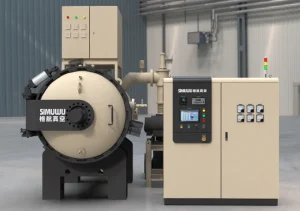
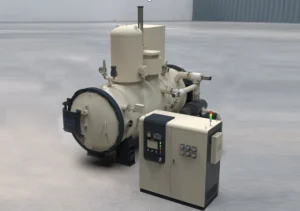
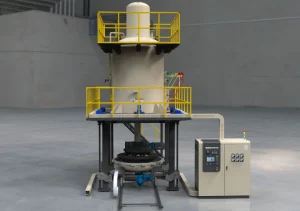
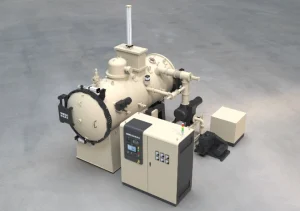
Vacuum furnaces are widely used for heat treatment, brazing, sintering, and other high-temperature thermal processes that require a clean and controlled environment. Because these systems operate under elevated temperatures and vacuum conditions, their key components are continuously exposed to thermal stress, mechanical wear, and process contamination.
Without proper maintenance, issues such as vacuum loss, temperature deviation, pump failure, and cooling inefficiency can reduce product quality and increase downtime. Understanding the most common failure mechanisms is essential for maintaining reliable furnace performance and extending equipment life.
1. Heating Element Degradation
Heating elements are among the most critical components inside a vacuum furnace. Depending on the operating temperature, manufacturers commonly use molybdenum or tungsten heating elements due to their excellent high-temperature stability.
Over time, repeated thermal cycling and exposure to residual gases can gradually reduce the cross-sectional area of the heating element. As the element becomes thinner, electrical resistance increases and temperature control becomes less stable. Local overheating may accelerate deterioration and eventually lead to element failure.
To extend service life:
- Maintain the recommended vacuum level throughout the heating cycle.
- Inspect heating elements regularly for deformation, thinning, or discoloration.
- Monitor electrical resistance and power consumption trends.
- Replace damaged elements before temperature uniformity is affected.
2. Vacuum Seal Leakage
Vacuum integrity directly affects furnace performance. Even minor leaks can introduce oxygen and moisture into the chamber, leading to oxidation, discoloration, decarburization, or inconsistent process results.
Common leakage sources include:
- Aging O-rings and door seals.
- Flange connections exposed to repeated thermal cycling.
- Damaged feedthroughs and instrumentation ports.
- Improper maintenance procedures.
Routine leak detection should be part of every preventive maintenance program. Helium mass spectrometer testing remains one of the most effective methods for locating small leaks that are difficult to identify through pressure-rise testing alone.
For demanding applications, metal seals may provide greater durability and lower gas permeation than conventional elastomer seals.
3. Vacuum Pump System Problems
The vacuum pump system is responsible for creating and maintaining the required operating environment inside the furnace. Mechanical pumps, Roots pumps, and turbomolecular pumps all require regular inspection and servicing.
Common issues include:
- Pump oil contamination.
- Condensation caused by process vapors.
- Insufficient backing pressure control.
- Wear of bearings and rotating components.
- Backstreaming of oil vapors into the chamber.
Recommended maintenance practices include:
- Performing regular oil changes.
- Operating gas ballast functions when processing moisture-containing loads.
- Cleaning or replacing filters and traps.
- Monitoring pump temperature and vibration levels.
- Checking vacuum performance trends for early signs of deterioration.
4. Thermocouple and Temperature Measurement Issues
Accurate temperature measurement is essential for successful heat treatment. Thermocouples operating in vacuum environments are exposed to high temperatures for extended periods, which can gradually affect measurement accuracy.
Common causes of temperature measurement drift include:
- Contamination of thermoelements.
- Deterioration of protective sheaths.
- Thermal aging caused by prolonged exposure to high temperatures.
- Mechanical damage during maintenance or loading operations.
To maintain reliable temperature control:
- Use high-purity protection tubes suitable for vacuum applications.
- Inspect thermocouples regularly for signs of damage.
- Verify calibration according to maintenance schedules.
- Replace aged sensors before significant measurement drift develops.
5. Cooling System and Heat Exchanger Maintenance
In vacuum gas quenching furnaces, the cooling system plays a critical role in achieving the required metallurgical properties. Reduced cooling efficiency can increase cycle times and negatively affect hardness, microstructure, and dimensional stability.
Common cooling system issues include:
- Heat exchanger fouling.
- Water-side scaling.
- Corrosion of cooling components.
- Insufficient coolant flow.
- Blocked filters or piping.
Regular maintenance should include:
- Monitoring water quality.
- Inspecting heat exchanger performance.
- Cleaning scale and deposits.
- Verifying flow rates and pressure levels.
- Checking for internal leakage.
6. Hot Zone Deterioration
The hot zone contains the furnace heating elements, insulation materials, support structures, and thermal shields. It is continuously exposed to extreme temperatures and repeated heating cycles.
Typical hot zone problems include:
- Warped thermal shields.
- Damaged insulation materials.
- Contamination buildup.
- Reduced temperature uniformity.
- Mechanical deformation of structural components.
To improve thermal performance:
- Replace damaged insulation components.
- Inspect and clean heat shields.
- Verify temperature uniformity periodically.
- Optimize load placement and fixture design.
- Maintain proper circulation during convection heating and gas quenching.
7. Summary of Preventive Maintenance Practices
| Component | Typical Failure Mode | Preventive Action |
| Heating Elements | Degradation and overheating | Monitor resistance, inspect condition, maintain vacuum quality |
| Vacuum Seals | Leakage and aging | Inspect regularly and replace worn seals |
| Vacuum Pumps | Oil contamination and mechanical wear | Perform scheduled maintenance and oil replacement |
| Thermocouples | Calibration drift | Verify accuracy and replace aging sensors |
| Cooling System | Scaling, fouling, and reduced efficiency | Maintain water quality and inspect heat exchangers |
| Hot Zone | Temperature non-uniformity and structural wear | Inspect insulation, shields, and heating components |
To find the right heat treatment furnace for your facility, contact our technical team to discuss your specific application.
-
Vacuum Carburizing & Oil Quenching: Key Factors Influencing Distortion in Gear Steels
2026-10-23
-
RVGQ-7710 Vacuum Gas Quenching Furnace with Top-and-Bottom Opposing Gas Flow Structure
2026-10-20
-
Machining of Precision Automotive Components: Application of High-Pressure Vacuum Gas Quenching
2026-10-16
-
How to Enhance the Surface Brightness of Vacuum Tempered Workpieces
2026-10-13
-
Production of High-Pressure Die-Casting Molds: Application of Vacuum Gas-Quenching Furnaces
2026-10-08