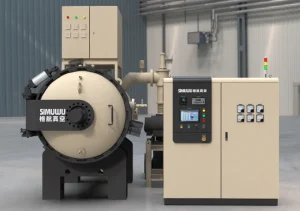
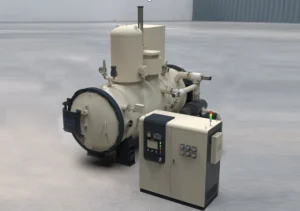
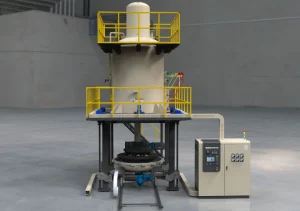
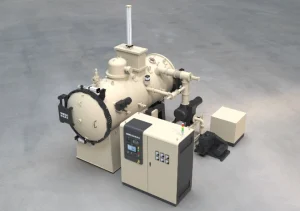
Achieving precise case depth profiles in surface-hardening applications requires absolute control over low-pressure gaseous injection systems. This technical analysis explores how partial pressure stability in vacuum carburizing directly influences carbon flux, microstructural uniformity, and repeatability across high-performance alloy batches. For engineers and technical managers, maintaining tight pressure tolerances within the furnace chamber is a fundamental prerequisite for eliminating surface defects and ensuring component reliability.
1. Fundamentals of Partial Pressure in Low-Pressure Carburizing
Low-pressure vacuum carburizing operates far from thermodynamic equilibrium, relying on the precise injection of hydrocarbon gases into an evacuated hot zone. Unlike conventional endothermic gas atmospheres that function at ambient atmospheric pressures, this process utilizes precise partial pressures typically ranging from 100 Pa to 3000 Pa (1 to 20 mbar). Acetylene (C₂H₂) or ethylene (C₂H₄) is introduced in pulses during the boost phase, dissociating directly on the heated steel surface to supply nascent carbon atoms. The stability of this environment dictates the reaction kinetics, making atmosphere management highly critical.
The absence of oxygen in a specialized Vacuum Carburizing Furnace completely removes the risk of intergranular oxidation, a common defect found in atmospheric gas processing. Because the system lacks a conventional carrier gas, carbon transfer depends entirely on the direct collision frequency of hydrocarbon molecules with the steel substrate. Consequently, any variation in the background pressure directly alters the availability of active carbon at the workpiece surface.
2. The Influence of Partial Pressure Stability in Vacuum Carburizing on Carbon Flux
Carbon flux represents the mass transfer rate of carbon atoms crossing into the steel matrix, and it is directly governed by the volumetric pressure of the reactant gas. Empirical investigations demonstrate that at a constant carburizing temperature of 950°C, the average carbon flux during the initial 30 seconds of exposure increases from 1.04×10⁻⁵ g/(mm²·s) at a pressure of 100 Pa to 1.36×10⁻⁵ g/(mm²·s) when the pressure is raised to 300 Pa. This clear correlation underscores why maintaining an optimal, steady pressure level is essential for predictable diffusion behavior.
Uncontrolled pressure drops modify the target carbon gradient, leading to a shallow case depth or insufficient surface hardness. Conversely, unexpected pressure spikes elevate the carbon flux beyond the material’s structural absorption limit, accelerating the risk of supersaturation at grain boundaries. For example, to achieve reproducible results on advanced alloys such as 18Cr2Ni4WA or 12Cr2Ni4A, it is necessary to ensure that the furnace system effectively dampens external supply pressure fluctuations.
3. Microstructural Consequences of Pressure Instability
3.1 Carbide Network Formation and Surface Soot
Pressure instability during the boost cycle causes localized carbon oversaturation, which induces the formation of brittle, intergranular carbide networks. When the partial pressure exceeds the optimized processing envelope—frequently verified around 300 Pa for acetylene—the excess hydrocarbon molecules undergo gas-phase polymerization instead of surface cracking. This undesirable secondary reaction generates significant volumes of soot and carbon black inside the heating chamber.
Soot accumulation acts as a thermal and physical barrier, masking critical component faces and leading to localized soft spots during subsequent quenching. Furthermore, excessive carbon deposits accelerate the wear on internal insulation, alloy heating elements, and vacuum pumping ports, driving up maintenance overhead. Utilizing a high-quality vacuum heat treatment furnace with dynamic gas management mitigates these risks by preventing prolonged high-pressure exposure.
3.2 Case Depth Uniformity and Phase Transitions
Fluctuations in gas distribution lead to severe variations in effective case depth across dense or complex component workloads. In blind holes, narrow internal splines, or compact gear roots, gas penetration relies heavily on maintaining a stable molecular mean free path, which is directly linked to partial pressure. If the pressure alters mid-cycle, the gas mixture balance between C₂H₂ and cracked H₂ shifts, preventing uniform oxide reduction and carbon absorption across hidden geometries.
Inconsistent carbon profiles undermine the predictability of final phase transformations during the quenching process. This variation frequently exacerbates dimensional distortions, forcing manufacturers to perform expensive post-hardening corrective grinding operations. Minimizing heat treatment distortion in vacuum furnaces requires an absolute stabilization of the surface carbon potential through rigid pressure limits.
4. Advanced Closed-Loop Pressure Controls in Modern Vacuum Furnaces
Modern industrial systems utilize high-speed, closed-loop control loops to maintain partial pressure stability within an exceptional tolerance of ±10 Pa. These setups combine mass flow controllers (MFCs) on the gas inlet lines with variable-speed throttling valves positioned ahead of the vacuum pumps. By regulating gas introduction and chamber evacuation simultaneously, the system compensates for temperature changes and instantaneous gas volume changes caused by hydrocarbon cracking.
Advanced software models the required carbon flux dynamically, transitioning smoothly between high-pressure boost pulses and low-pressure diffusion steps. This automated oversight ensures that the maximum carbon solubility limit of austenite is never exceeded, guaranteeing a clean microstructure free of proeutectoid carbides.
5. Effect
| Aspect Affected | Effect of Pressure Instability |
| Carbon flux | Deviations from optimal pressure (≈300 Pa) reduce the rate of carbon transfer to the steel surface |
| Carbide formation | Uncontrolled pressure leads to oversaturation, carbide network formation, and carbonaceous deposits |
| Case depth uniformity | Pressure fluctuations cause non-uniform carbon penetration, especially in complex geometries |
| Soot/carbon black | Excessively high or prolonged pressure generates carbon black, reducing efficiency and surface quality |
| Gas mixture balance | Instability in the C₂H₂/H₂ ratio alters free radical generation, affecting oxide removal and carbon absorption |
| Microstructural integrity | Improper pressure time parameters cause cracking of carburized layers or undesirable phase formation |
| Process reproducibility | Pressure disturbances prevent achieving target carbon profiles with high accuracy |
6. FAQ
Q: What is the optimal partial pressure for acetylene-based vacuum carburizing?
>>>A: For the majority of high-alloy steels, an operational partial pressure around 200 to 300 Pa provides the most efficient carbon flux while avoiding excessive soot formation.
Q: How does partial pressure affect gas penetration in blind holes?
>>>A: A stable low pressure increases the molecular mean free path of the gas, allowing hydrocarbon molecules to migrate deeply into tight internal geometries before dissociating.
Q: What happens if the furnace partial pressure drops below 100 Pa?
>>>A: A drop below 100 Pa significantly restricts the available carbon flux, extending the required boost cycle time and risking an insufficient case depth profile.
Q: Can old vacuum furnaces be retrofitted with closed-loop pressure controls?
>>>A: Yes, older systems can be modernized by installing digital mass flow controllers, fast-acting throttle valves, and updated PLC software to achieve a ±10 Pa control stability.
In conclusion, rigorous partial pressure stability in vacuum carburizing remains a cornerstone parameter for securing exceptional hardness profiles, microstructural purity, and absolute dimensional predictability. Minor deviations within the vacuum chamber directly alter surface mass transfer rates, causing defects ranging from intergranular carbide networks to extensive soot contamination. Industry standards published by organizations like ASM International confirm that tight atmosphere regulation is imperative for critical industrial components. To learn more about our process capabilities or to obtain a targeted quotation on an automated system, contact us to consult our engineering team, or explore.
-
RVGQ-557 vacuum gas-quenching furnace with an air-duct structure
2026-09-30
-

The Role of Nitrogen Partial Pressure in Vacuum Furnaces
2026-09-25
-
Factors Affecting the Quality of Vacuum Heat Treatment
2026-09-22
-
Application of RVGQ-557 Vacuum Gas Quenching Furnace—Gas Quenching and Tempering
2026-09-18
-
The Role and Benefits of Equipping Vacuum Furnaces with Dew Point Meters
2026-09-15