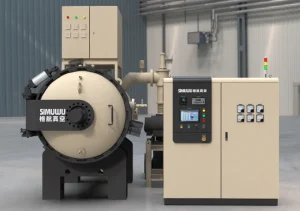
Vacuum furnaces rely on a sealed vacuum environment to perform precision processes such as heat treatment, brazing, and sintering; the airtightness of the chamber directly determines product quality and equipment lifespan. Leak detection is a core procedure in the daily operation and maintenance of vacuum furnaces—far from being a redundant task, its proper execution is crucial for ensuring production stability throughout the equipment’s entire lifecycle.
Why Perform Vacuum Furnace Leak Detection
The primary objective of vacuum furnace leak detection is to mitigate production risks and ensure process precision. In a vacuum environment, the ingress of atmospheric components like oxygen and water vapor can directly cause workpiece oxidation, decarburization, and surface discoloration, as well as defects such as brazing porosity and substandard hardness, potentially leading to the scrapping of entire batches. Furthermore, chamber leakage destabilizes the vacuum level, causing deviations in the process atmosphere and evacuation times across batches, which significantly reduces process repeatability. From an equipment perspective, persistent leakage forces vacuum pumps to operate under high loads for extended periods, leading to issues like oil emulsification and excessive mechanical wear. It can also cause electrical arcing that damages heating elements, insulation layers, and thermocouples, thereby drastically increasing maintenance costs and losses due to downtime. Thus, leak detection serves as a vital line of defense for improving quality, protecting equipment, and reducing energy consumption.
When to Perform Vacuum Furnace Leak Detection
Leak detection must be performed at critical junctures to balance efficiency and safety. Comprehensive system-wide leak detection is mandatory following new equipment installation, major overhauls, or repairs to welds and piping, ensuring the complete elimination of sealing issues introduced during these activities. Periodic checks are essential during routine production: basic inspections should be conducted weekly for high-frequency operations, while comprehensive leak tests should be performed monthly for standard production; equipment that has been idle for a long period must undergo mandatory leak testing before startup. Additionally, immediate leak detection is required if faults arise—such as significantly prolonged evacuation times, failure to reach the ultimate vacuum level, or abnormal static pressure rise rates—or if workpieces frequently exhibit oxidation defects. Targeted, localized leak testing is also necessary after replacing critical sealing components like flange gaskets, valves, bellows, or electrode seals to prevent potential micro-leaks.
How to Perform Vacuum Furnace Leak Detection
In practice, operations should follow the principle of “quantitative screening followed by precise localization,” utilizing three mainstream methods to ensure standardized procedures. The static pressure-rise method is the preferred choice for routine screening. The furnace chamber is evacuated to its standard operating vacuum level and stabilized for 10 minutes; the pumping system is then isolated, and the pressure change is recorded after a 30-minute static period to calculate the pressure-rise rate. The rate must be ≤0.1 Pa/h for high-vacuum furnaces and ≤0.5 Pa/h for medium-vacuum furnaces; this method allows for the rapid determination of whether a leak exists. If the rate exceeds the limit, helium mass spectrometry is used to pinpoint the leak location: the equipment is evacuated to a medium-vacuum state, and a handheld helium probe is used to slowly spray potential leak sites—such as flanges, welds, observation windows, and sealed interfaces—in a sequence moving from top to bottom and from critical to non-critical components, using the instrument’s peak detection to identify minute leaks. For obvious, large leaks, the soap bubble method serves as a quick preliminary check: the chamber is pressurized with low-pressure dry nitrogen, neutral soapy water is applied to suspicious areas, and leak points are identified by the formation of bubbles, enabling efficient initial troubleshooting.
Vacuum furnace leak detection does not require blind or excessive repetition, but it must be performed in strict accordance with regulations. By precisely managing the objectives, timing, and methods of leak detection—promptly repairing issues such as seal degradation or weld cracks and maintaining accurate test records—operators can stabilize the vacuum process environment, minimize product defects and equipment failures, and ensure the efficient, stable operation of the production line.
-
Production of High-Pressure Die-Casting Molds: Application of Vacuum Gas-Quenching Furnaces
2026-10-08
-
RVGQ-557 vacuum gas-quenching furnace with an air-duct structure
2026-09-30
-

The Role of Nitrogen Partial Pressure in Vacuum Furnaces
2026-09-25
-
Factors Affecting the Quality of Vacuum Heat Treatment
2026-09-22
-
Application of RVGQ-557 Vacuum Gas Quenching Furnace—Gas Quenching and Tempering
2026-09-18