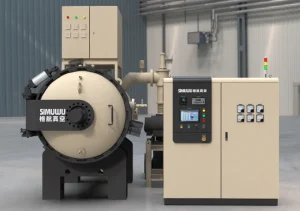
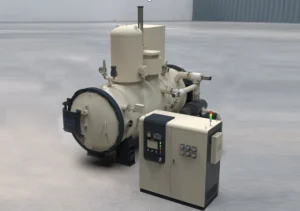
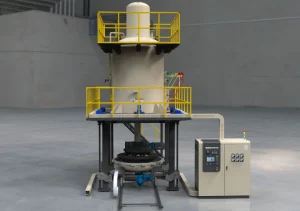
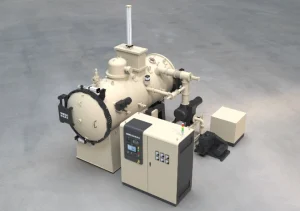
As the mold manufacturing industry increasingly demands superior material properties, machining precision, and extended service life, vacuum furnace heat treatment has emerged as a vital process for mold steels, thanks to its cleanliness, efficiency, and controllability. Compared to traditional heat treatment methods, a vacuum environment effectively minimizes issues such as oxidation and decarburization during heating. It also improves surface quality, establishing a foundation of stable performance for subsequent machining and operational use.
Vacuum heat treatment involves performing heating, soaking, and cooling stages in an environment with pressure below atmospheric levels. Depending on the material and process requirements, it enables treatments such as vacuum quenching, annealing, and tempering, as well as chemical heat treatments like carburizing and nitriding when combined with appropriate media. Precise control over furnace temperature, pressure, and cooling conditions allows the process to meet specific requirements for hardness, strength, wear resistance, and dimensional stability across various mold steel grades.
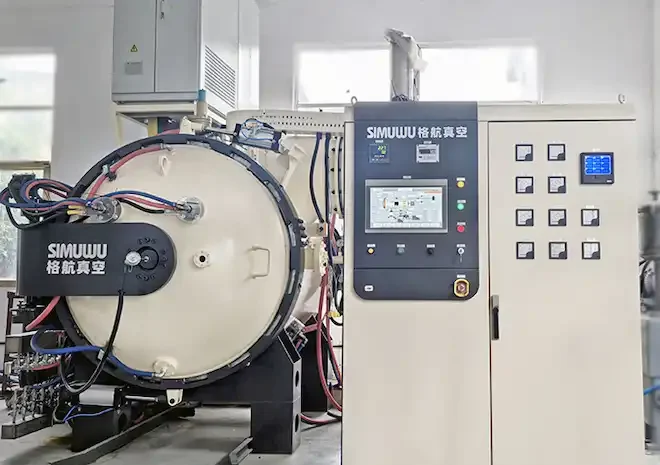
What are the advantages of vacuum furnace heat treatment?
First, the vacuum environment offers excellent degreasing and cleaning capabilities. During heating, contaminants such as surface oils and lubricants volatilize or decompose and are evacuated via the vacuum system, thereby reducing surface pollution. However, pre-cleaning workpieces is still recommended in actual production to minimize the impact of oil residues on the furnace structure and vacuum system.
Second, vacuum furnaces help improve the gas state within and on the surface of the material. Metal materials may contain dissolved gases—such as hydrogen, oxygen, and nitrogen—from smelting and processing; appropriate vacuum heating facilitates the release and timely removal of these gases, enhancing the stability of the material’s microstructure and properties.
Furthermore, vacuum heat treatment effectively reduces the risk of oxidation and decarburization. In a low-pressure environment, the concentration of reactive gases inside the furnace is significantly reduced, preventing the formation of the oxide scale commonly seen in traditional heat treatment. Treated parts typically exhibit superior surface finishes, thereby reducing the need for subsequent cleaning and machining.
However, vacuum heat treatment is not without limitations. As temperatures rise, the vapor pressure of certain alloying elements increases; elements such as manganese and chromium may volatilize under specific vacuum conditions, potentially altering the material’s composition. Consequently, production processes require carefully determined parameters—based on steel grade, heating temperature, and furnace pressure—with atmospheric conditions adjusted during the high-temperature stage when necessary. Additionally, when oil cooling is employed after vacuum heating, improper process control can lead to surface carburization. When a high-temperature workpiece enters the quenching oil, gases generated by oil cracking may react with the active surface; therefore, the timing of immersion, furnace pressure, and the quenching process itself must be carefully controlled to minimize adverse effects.
For vacuum furnace equipment, both stable performance and standardized operation are crucial. The vacuum, heating, temperature control, and cooling systems must be maintained in good working order, and scientifically sound heating, holding, and cooling protocols must be established based on the specific material of the workpiece. Only through the coordinated control of equipment and processes can the full advantages of vacuum heat treatment be realized.
Overall, vacuum heat treatment plays a vital role in enhancing the surface quality of mold steels, reducing oxidation-related defects, and improving comprehensive performance. As mold manufacturing evolves toward higher precision, longer service life, and greater stability, the adoption of optimized, standardized vacuum heat treatment processes will become a key pathway to improving both product quality and production efficiency.
-
Production of High-Pressure Die-Casting Molds: Application of Vacuum Gas-Quenching Furnaces
2026-10-08
-
RVGQ-557 vacuum gas-quenching furnace with an air-duct structure
2026-09-30
-

The Role of Nitrogen Partial Pressure in Vacuum Furnaces
2026-09-25
-
Factors Affecting the Quality of Vacuum Heat Treatment
2026-09-22
-
Application of RVGQ-557 Vacuum Gas Quenching Furnace—Gas Quenching and Tempering
2026-09-18