Material Properties of M2 High-Speed Steel
M2 is a quintessential general-purpose high-speed steel of the tungsten-molybdenum series. Due to its high proportion of alloying elements—including tungsten (W), molybdenum (Mo), chromium (Cr), and vanadium (V)—it achieves exceptional hardness while simultaneously possessing excellent toughness and “red hardness” (the ability to retain cutting performance in high-temperature cutting environments). Consequently, it is widely utilized in the manufacture of precision metal-cutting tools—such as twist drills, taps, and milling cutters—as well as wear-resistant cold-stamping dies.
Significance of Vacuum Annealing for M2 Components
The fundamental significance of vacuum annealing for M2 steel lies in its ability to eliminate lattice distortions and induce complete spheroidization of the microstructure within an oxygen-free, high-temperature environment. While effectively reducing the hardness of the powder—thereby facilitating subsequent compaction and forming processes—this treatment simultaneously prevents material oxidation or decarburization, thereby safeguarding the foundation of the material’s superior strength and toughness.
M2 Vacuum Annealing Process Phases
Regarding the vacuum annealing of M2 high-speed steel metal powder, this constitutes not merely a simple heating process, but a critical step for controlling powder hardness, eliminating work hardening, and preparing the material for subsequent compaction and forming:
- Phase 1: Evacuate the furnace chamber to a vacuum level of 10–1 Pa, raise the temperature to 600°C, and hold for 1–2 hours;
- Phase 2: Raise the temperature to 1100°C and hold for 2 hours;
- Phase 3: Cool to 800°C and hold for 4 hours;
- Phase 4: Cool at a rate of 10°C/min down to 500°C to prevent the generation of secondary stresses;
- Phase 5: Once the temperature has dropped to 200°C, remove the material from the furnace.
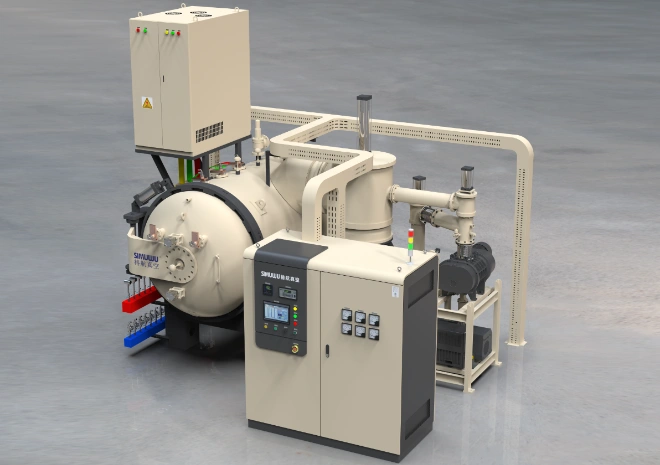
Technical Specifications of SIMUWU RVA-8812 Furnace
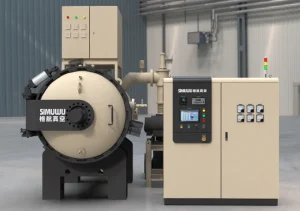
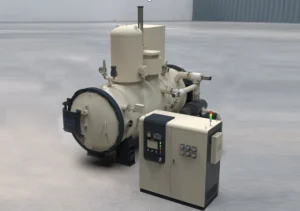
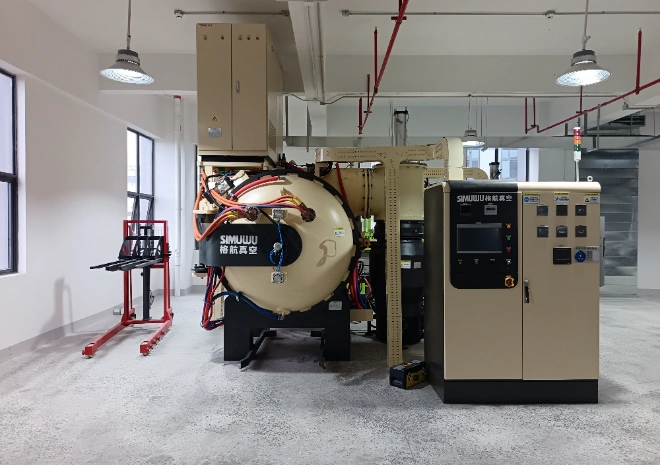
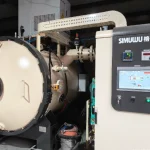
The process library of the SIMUWU RVA-8812 vacuum annealing furnace encompasses tens of thousands of processes and is capable of perfectly executing the vacuum annealing of M2 steel. Its main technical parameters are as follows:
| Furnace type | Horizontal , single room, internal circulation |
| Loading method | Front loading |
| Max. loading weight | 1000kg (Including jig) |
| Working vacuum | 1×10- 1 pa |
| Time required to vacuum the work | ≤40 min (after diffusion pump preheating, empty furnace, cold state) |
| Power supply | 3 Phase 380V (±5% );50Hz |
| Pressure rise rate (cold and empty furnace) | ≤ 0.5 Pa/h |
| Effective working zone ( WxHxL ) | 800×800×1200mm |
| Max.design temperature | 1300℃ |
| Working temperature | 500-1250 ℃ |
| Temperature uniformity | 9 points temp testing (±5℃) |
| Temperature control accuracy (℃) | S type thermocouple ≤ ±1 ℃ |
| Temperature control instrument accuracy (℃) | ≤ 0.1 ℃ |
| Heating zone | 3 Zones separate temperature control |
| Empty furnace heating rate | 0~25℃ /min (adjustable and controllable rate) |
| Time to heat the workpiece to the required temperature | ≤ 60 min |
| Temperature uniformity (vacuum, empty furnace, 500-1250℃) | ± 5 ℃ |
| Temperature control method | Intelligent programmable temperature controller for automatic temperature control |
| Control method | PLC automatic/manual interlock protection control |
| Max. inflation pressure | <2 bar(absolute pressure) |
| Cooling method | Air cooling/natural cooling |
| Cooling gas | Nitrogen or argon (purity: 99.99% or 99.999%) |
| Cooling rate (empty furnace 1200℃~150℃) | ≤ 30 min |
| Partial pressure pressure | 50-2000Pa manual and automatic control |
| Operation model | Manual/Automatic control |
| Equipment color | Customized |
If you have any questions, please feel free to contact us. SIMUWU is dedicated to serving you.
-
Production of High-Pressure Die-Casting Molds: Application of Vacuum Gas-Quenching Furnaces
2026-10-08
-
RVGQ-557 vacuum gas-quenching furnace with an air-duct structure
2026-09-30
-

The Role of Nitrogen Partial Pressure in Vacuum Furnaces
2026-09-25
-
Factors Affecting the Quality of Vacuum Heat Treatment
2026-09-22
-
Application of RVGQ-557 Vacuum Gas Quenching Furnace—Gas Quenching and Tempering
2026-09-18