17-4PH is one of the most widely used precipitation hardening stainless steels for micro-transmission components. Featuring outstanding strength, corrosion resistance and heat treatability, it has been mass-produced for MIM parts such as micro gears, planet carriers and transmission shafts.
Full MIM Process Route
The MIM production of 17-4PH follows the classic four-stage framework, with special control requirements for each parameter.
Feedstock Preparation
17-4PH pre-alloyed powder is compounded with wax-based or polymer-based binder by kneading. The powder loading is controlled at 58%–62% by volume. Powder particle size is preferred at D90 ≤ 16 μm to ensure sufficient sintering activity and green density. The homogeneity of feedstock directly determines the stability of subsequent injection molding.
Injection Molding
The injection temperature is set at 160–200°C, and the mold temperature is kept at 80–120°C. 17-4PH feedstock boasts favorable flowability, suitable for forming complex tooth profiles. The injection pressure is adjusted according to part wall thickness. For thin-walled gears, the injection speed can be moderately increased to guarantee complete cavity filling. The priority of this process is to maintain uniform green density and avoid sintering deformation caused by density gradient.
Debinding
Catalytic debinding or the combined process of solvent debinding plus thermal debinding can be adopted. Catalytic debinding is performed at 110–140°C with a debinding rate above 95%. The heating rate must be strictly controlled during thermal debinding, especially within the range of 200–500°C. Excessively fast heating will easily crack the green body. After debinding, the part forms a porous interconnected structure, ready for sintering densification.
Sintering
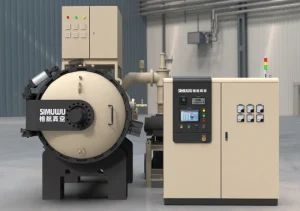
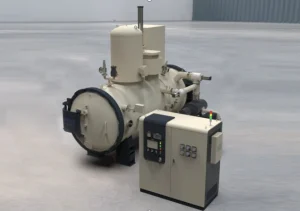
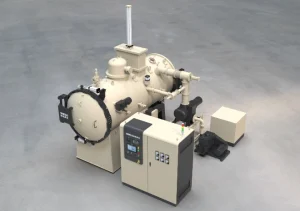
Sintering is the core procedure determining the final mechanical properties of components. The sintering temperature window for 17-4PH is 1300–1380°C with a holding time of 1–3 h. High-purity hydrogen or vacuum is preferred as the sintering atmosphere to maintain a reducing environment.
Key control parameters: the heating rate is set at 3–5°C/min; the sintering temperature is selected according to target density. Sintering at 1380°C achieves a density of no less than 98% of theoretical density. However, the temperature uniformity inside the furnace must be well controlled, since a fluctuation of merely ±5°C will lead to deviation in sintering shrinkage rate. Fast cooling is applied in the cooling stage to suppress carbide precipitation and obtain an ideal matrix for subsequent heat treatment.
Heat Treatment
Sintered parts require solution treatment plus aging. Solution treatment is carried out at 1040°C, followed by rapid cooling (oil quenching or gas quenching). Aging is performed at 480°C (H900 condition) with 4 h holding time then air cooling. The hardness after heat treatment can steadily exceed 30 HRC. For precision gears, the dimensional variation induced by heat treatment shall be compensated in advance at the mold design stage.
Effects of Sintering Parameters on Properties
Sintering Temperature and Relative Density
At 1360°C, the relative density reaches approximately 95%–96%. When raised to 1380°C, the relative density can exceed 98%. Each 1% increase in relative density improves the tensile strength by roughly 50 MPa. Nevertheless, excessive sintering temperature will cause grain coarsening and deteriorate the overall mechanical performance.
Selection of Sintering Atmosphere
- – Hydrogen (H₂): The most suitable atmosphere. Its strong reducibility removes oxides of chromium and silicon and improves interfacial bonding strength between powder particles. The dew point must be kept below -40°C to prevent oxidation.
- – Vacuum: Volatile impurities can be effectively eliminated. For 17-4PH, however, high vacuum (<10⁻² mbar) triggers volatilization of high-vapor-pressure elements including copper and chromium, altering surface composition. Partial pressure sintering is widely adopted: a small amount of argon is introduced at high temperature to restrain alloy element volatilization and achieve superior dimensional accuracy.
- – Nitrogen prohibition: Nitrogen is strictly forbidden during sintering and cooling. At high temperature, nitrogen readily dissolves into the 17-4PH matrix and forms austenite, which cannot transform into martensite after cooling. The final hardness will drop below 20 HRC, and this defect cannot be remedied by post heat treatment. Besides, nitrogen precipitates Cr₂N phases, resulting in grain boundary chromium depletion and catastrophic deterioration of corrosion resistance.
Holding Time
One hour of holding is sufficient for basic densification. Extending the holding time to 2–3 h further homogenizes the microstructure, yet the performance gain diminishes gradually. Production efficiency shall be balanced in mass production.
Process Difficulties and Countermeasures
- – Shrinkage control: The sintering shrinkage of 17-4PH is about 15%–17%. Precise shrinkage compensation is required in mold design. For mass production, furnace temperature uniformity is critical to consistent part dimensions.
- – Carbon control: Carbon is highly sensitive to the hardness and corrosion resistance of 17-4PH. The residual carbon content after debinding shall be controlled below 0.03%. Excessive residual carbon causes carbide precipitation at grain boundaries.
- – Deformation control: Reasonable support structures are designed for thin-walled gears. Contoured fixtures are adopted when necessary to reduce sintering deformation.
Typical Application Scenarios of MIM 17-4PH
The value of MIM 17-4PH derives from both material properties and the design freedom brought by the MIM process.
Medical Devices: Orthodontic Brackets
This is one of the most classic and high-volume applications of MIM 17-4PH.
Design challenge: Each bracket weighs less than 0.5 g, with a sophisticated structure integrating archwire slot, tie wings and base mesh, and bears continuous orthodontic load.
Comparison with conventional processes: Early brackets were assembled by machined bases and stamped tie wings via welding. Weld joints are prone to galvanic corrosion and fracture.
Advantages of MIM solution: Near-net-shape integrated forming eliminates weak weld joints. H900-tempered 17-4PH delivers high hardness, preventing archwire slot expansion under long-term friction and ensuring stable transmission of orthodontic force. Though nickel-containing, its corrosion resistance in oral environment meets biocompatibility test requirements.
Surface treatment: Electrochemical polishing is commonly used to reduce bacterial adhesion and improve wearing comfort.
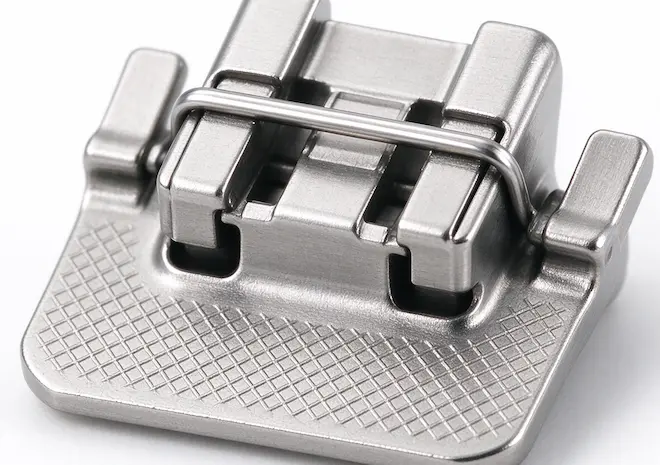
Automotive Industry: Turbocharger Wastegate Components
Service conditions: Operate continuously above 300°C in corrosive exhaust gas with reciprocating motion, requiring good wear, heat and corrosion resistance.
Material selection rationale: 17-4PH retains high yield strength at 316°C (600°F), making it suitable for wastegate connecting rods, bushings and other parts. Compared with Inconel superalloys, it features lower cost and better machinability at green state.
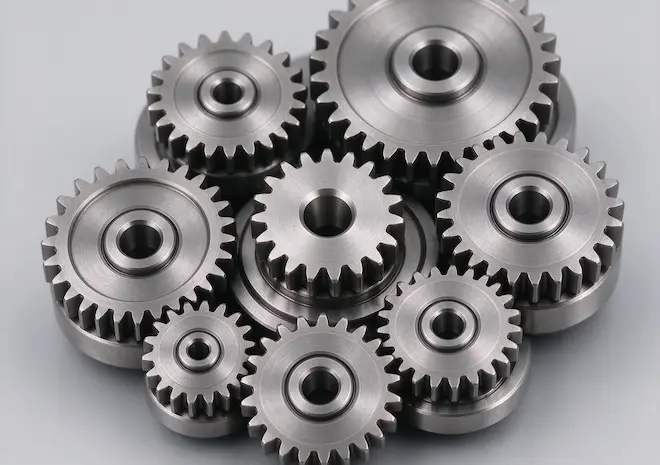
Consumer Electronics: Charging Port Rings and Hinges
Applications: Smartphone charging port rings and folding display hinge shafts.
Property utilization: Ferromagnetism is a distinctive feature of 17-4PH, which is applied in magnetic charging ports and magnetic latching mechanisms — a function unavailable for 316L stainless steel. Its high strength after heat treatment withstands frequent plugging, unplugging and repeated bending.
-
Applications of High-Temperature Vacuum Brazing Furnaces — Brazing of Stainless Steel
2026-11-23
-
Challenges in the Heat Treatment of Precision MIM Components
2026-11-20
-
SIMUWU Vacuum Furnaces: Stable and Excellent Furnace Temperature Uniformity
2026-11-16
-
Material Hardenability and Vacuum Quenching Furnaces
2026-11-13
-
Applications of Vacuum Annealing Furnaces – Titanium Crystallization Annealing Furnaces
2026-11-10