Nitride hardening performed in a vacuum environment—often referred to as vacuum nitriding—is a sophisticated thermochemical surface engineering process designed to enhance the hardness, wear resistance, fatigue life, and corrosion resistance of metal components.
By diffusing nitrogen atoms into the surface of alloy steels under controlled sub‑atmospheric pressure, manufacturers can achieve a high‑performance case while maintaining the core toughness and dimensional integrity of the base material. Compared with conventional methods such as salt bath or atmospheric gas nitriding, vacuum‑based systems provide a cleaner processing environment and more precise control of surface metallurgy.
1. Fundamentals of Nitride Hardening in Vacuum
Nitride hardening relies on the diffusion of nitrogen into a metal surface to form hard nitrides such as iron nitrides or alloy nitrides. In vacuum nitriding, the workpiece is placed in a sealed furnace chamber where oxygen and contaminants are removed through vacuum pumping before nitriding gases are introduced. This environment allows for the total elimination of oxygen and impurities, ensuring that nitrogen atoms have direct access to the active metal surface.
Typical process characteristics include:
- Operating temperature: about 400 – 600 °C, depending on the alloy and process design.
- Vacuum preparation: the furnace chamber is evacuated to remove oxygen and surface contaminants.
- Reactive atmosphere: nitrogen‑containing gases such as ammonia or nitrogen‑hydrogen mixtures are introduced at sub‑atmospheric pressures.
- Diffusion mechanism: active nitrogen atoms diffuse into the metal surface and form nitrides that increase hardness.
This diffusion‑based process produces a hardened surface layer while preserving the ductility and toughness of the material’s core.
2. The Vacuum Nitriding Process
2.1 Process Flow
Although specific parameters vary depending on material type and furnace design, the typical nitride hardening sequence in a vacuum furnace follows several stages:
- Vacuum evacuation: The chamber is evacuated to remove air and contaminants, which prevents oxidation and ensures a clean surface for nitrogen diffusion.
- Heating stage: The workpiece is heated to nitriding temperature, typically around 520–560 °C for many alloy steels. Many advanced furnace solutions now include a pre‑oxidation step, creating a thin porous oxide film that acts as a catalyst for faster and more uniform nitrogen diffusion.
- Gas introduction and diffusion: Nitrogen‑containing gases (e.g., ammonia) are introduced at controlled pressure. Nitrogen atoms dissociate at the metal surface (NH₃ → [N] + 3/2H₂) and diffuse into the metal lattice, forming nitrides.
- Holding stage: The furnace maintains temperature and pressure for several hours to achieve the desired nitriding depth and hardness.
- Controlled cooling: After diffusion is complete, the parts are cooled under vacuum or protective gas, ensuring they remain bright and free of scale.
2.2 Key Technical Parameters
To ensure consistent metallurgical results, the following parameters are strictly monitored:
- Temperature Range: 480 °C – 580 °C (staying below the Ac1 transformation point to avoid core softening).
- Typical Case Depth: 0.1 mm to 0.6 mm (or 20–80 µm depending on process), depending on the alloy composition and soak time.
- Surface Hardness: Can reach 600 to 1100 HV (and up to 1500 HV for specialized alloys), depending on the grade of steel (e.g., H13, 42CrMo, or specialized nitriding steels).
3. Microstructural Mechanism of Nitride Hardening
The performance improvement from vacuum nitriding comes from the formation of stable nitride phases in the surface region of the metal. During nitriding:
- Nitrogen atoms diffuse into the steel surface.
- Nitrogen reacts with alloy elements such as Fe, Cr, Al, or Mo.
- Hard nitride compounds form within the diffusion layer.
These microstructural changes create high surface hardness, compressive residual stresses, improved wear resistance, and enhanced fatigue life. The compressive stress layer helps suppress crack initiation and propagation during cyclic loading.
4. Advantages of Vacuum Nitriding
The transition from traditional methods to vacuum technology offers several critical advantages:
- Minimal Distortion: Because the process operates at relatively low temperatures and does not require a liquid quench, internal stresses and dimensional changes are kept to an absolute minimum.
- Superior Fatigue Resistance: The nitrided layer introduces compressive residual stresses on the surface, which significantly inhibits the initiation and propagation of fatigue cracks.
- No Post‑Processing Required: The vacuum environment prevents decarburization and oxidation. Parts emerge “bright,” often eliminating the need for expensive grinding or polishing.
- Precise “White Layer” Control: Modern vacuum systems allow engineers to control or even eliminate the brittle compound (white) layer, which is essential for components subject to high impact or edge loading.
- Controlled Atmosphere and Clean Surface: Oxidation and contamination are minimized, producing a uniform nitrided layer.
- Environmental Benefits: The process avoids toxic salt baths and reduces harmful emissions associated with traditional nitriding technologies.
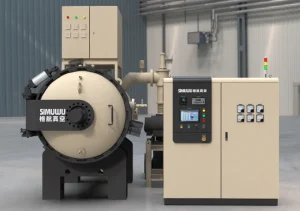
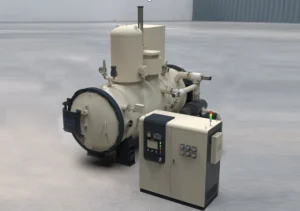
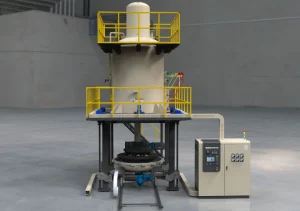
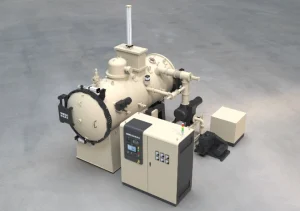
5. Vacuum Nitriding Furnace Technology
Modern vacuum nitriding systems combine several critical subsystems:
- Vacuum pumping systems (to achieve high vacuum and remove impurities).
- Multi‑zone temperature control (for thermal uniformity).
- Gas flow and pressure control (to maintain precise nitrogen potential).
- Programmable process control (for recipe management and repeatability).
The furnace first evacuates the chamber to remove oxygen and impurities before introducing nitriding gases under controlled pressure and temperature conditions. Precise control of gas composition and pressure ensures uniform nitrogen diffusion and consistent case depth across all treated parts.
6. Industrial Applications
Nitride hardening vacuum is the preferred manufacturing solution for industries requiring precision and durability:
- Automotive: Gears, crankshafts, camshafts, and transmission parts that require high surface fatigue resistance.
- Tool & Die: Aluminum extrusion dies, plastic injection molds, and H13 hot‑work tools to prevent erosion and wear.
- Aerospace: Actuator components and fasteners where dimensional stability is critical.
- Industrial Machinery: Bearings, shafts, cutting tools, precision spindles, hydraulic cylinders, and high‑load bearings.
These components benefit from improved wear resistance, reduced friction, and extended service life under cyclic loads.
7. FAQ
Q: Can I nitride parts that have already been hardened and tempered?
A: Yes. However, to maintain core properties, the nitriding temperature must be at least 20 °C – 30 °C below the previous tempering temperature.
Q: Is quenching necessary after the process?
A: No. Unlike carburizing, the hardness in nitriding comes from the formation of hard nitrides, not a martensitic transformation, making quenching unnecessary.
Q: How does vacuum nitriding affect corrosion resistance?
A: The formation of a dense nitrided layer, particularly when combined with post‑oxidation, significantly improves the salt‑spray resistance of carbon and low‑alloy steels.
Selecting the right nitriding process requires balancing technical performance with long‑term production goals. Vacuum nitriding remains a cornerstone of modern metallurgy for precision parts, offering enhanced wear resistance, fatigue strength, and dimensional stability. At SIMUWU, we provide customized vacuum heat treatment solutions designed to meet the most rigorous industrial standards. For in‑depth technical guidance or a tailored equipment quote, please contact our engineering team today.
-

How Much Does an Industrial Vacuum Furnace Cost?
2026-03-11
-
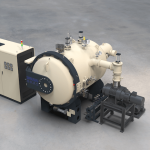
SIMUWU Up-and-Down Air-Blowing Structure Furnace: Meeting Rigorous Heat Treatment Requirements
2026-03-10
-
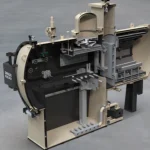
How Advanced Vacuum Control Systems Reduce Vacuum Furnace Energy Consumption
2026-03-09
-
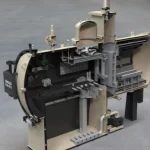
Vacuum vs. Conventional Heat Treatment Comparison
2026-03-06
-

Brief Description of Vacuum Quenching Process for H13 Aluminum Extrusion Dies
2026-03-05