Vacuum post-oxidation is a controlled thermochemical surface treatment performed immediately after vacuum nitriding to enhance corrosion resistance, surface stability, and functional performance. By forming a thin, stable magnetite (Fe₃O₄) layer, this process effectively “seals” the nitrogen-enriched surface, providing a robust defense against environmental degradation without compromising the underlying hardness.
1. Understanding Vacuum Post-Oxidation
Vacuum post-oxidation represents a critical advancement in multi-functional surface treatment, serving as a final-stage conversion process within a controlled furnace environment. Unlike naturally occurring rust (Fe₂O₃), which is porous and non-adherent, the magnetite layer produced in a vacuum is highly stable and tightly bonded to the component. This thin, stable oxide film typically ranges from 1 to 3 μm in thickness, ensuring that dimensional changes remain negligible for most industrial tolerances.
The primary objective of this treatment is to transform the outermost portion of a nitrided compound layer into a dense protective barrier. This process ensures repeatable surface quality by minimizing uncontrolled reactions common in atmospheric oxidation. Because it is a conversion layer rather than a coating, there is no risk of peeling or flaking, making it ideal for precision engineering applications.
2. Process Mechanism: From Nitrides to Oxides
Vacuum post-oxidation relies on the controlled introduction of oxygen after the nitriding stage to transform iron nitrides into a stable oxide structure. The primary chemical transformation involves converting ε and γ’ nitrides into Fe₃O₄, also known as magnetite. Depending on the specific temperature used, partial formation of Fe₂O₃ may occur, though the process is optimized to prioritize the protective magnetite phase.
The role of the vacuum environment is fundamental to the stability and consistency of this transformation. A low oxygen background prevents premature oxidation during the nitriding phase, while precise oxygen dosing ensures a uniform oxide layer across complex geometries. This level of control provides a clean surface that improves layer adhesion compared to conventional atmospheric methods.
3. The Three-Layer Surface Architecture
A successful vacuum post-oxidation cycle results in a sophisticated three-layer system that balances hardness, wear resistance, and corrosion protection.
- Layer 1 (Diffusion Zone): The deepest layer, which provides critical structural support and enhances the fatigue resistance of the base metal.
- Layer 2 (Compound Zone): Consisting of iron nitrides, this intermediate layer delivers high hardness, wear resistance, and anti-galling properties.
- Layer 3 (Oxide Zone): The outermost Fe₃O₄ layer provides the critical corrosion barrier and a uniform aesthetic black finish.
The synergy between these layers allows components to withstand harsh environments. The oxide layer effectively “seals” the surface against moisture and corrosive agents, while the underlying nitride zones maintain the mechanical integrity required for high-load applications.
4. Process Parameters and Technical Control
Precise management of process parameters is essential to prevent defects such as oxide layer spallation or the formation of less protective Fe₂O₃.
| Parameter | Typical Range / Value |
|---|---|
| Temperature | 350–450°C |
| Time | 30–120 minutes |
| Oxide Thickness | 1–3 μm |
| Atmosphere | Controlled Oxygen Potential |
Exceeding the recommended temperature or duration can degrade the surface by causing the oxide layer to become too thick or brittle. Optimization is always material-dependent and must account for the specific alloy composition and the depth of the prior nitriding stage.
5. Functional Benefits for Industrial Components
The most significant functional benefit of vacuum post-oxidation is the dramatic improvement in corrosion resistance. Depending on the material and process parameters, parts can achieve salt spray resistance exceeding 200 hours. The chemically stable magnetite surface reduces electrochemical activity, protecting the steel from moisture and mild corrosive media.
Furthermore, the Fe₃O₄ layer modifies the tribological behavior of moving parts. Magnetite has a lower coefficient of friction than pure iron nitrides, providing a “self-lubricating” property that reduces the initial wear rate during the break-in period. Additionally, post-oxidized surfaces often exhibit lower brittleness compared to untreated nitride layers, improving overall sliding behavior in mechanical systems.
6. Industrial Applications and Material Suitability
Vacuum post-oxidation is especially effective for alloy steels containing Chromium (Cr), Molybdenum (Mo), or Aluminum (Al), such as AISI 4140, which support stable nitride and oxide formation. It is widely adopted for components requiring both high surface hardness and environmental protection.
Typical applications include:
- Hydraulic rods, cylinders, and piston rods.
- Automotive transmission parts and mechanical shafts.
- H13 aluminum extrusion dies, where the oxide layer protects against harsh thermal and chemical cycles.
- Molds and tooling components requiring high surface integrity.
While most effective on low-alloy and tool steels, specialized vacuum cycles can be adapted for high-chromium stainless steels, which naturally form passive layers but may require specific activation.
7. Equipment Considerations: Integrated Vacuum Systems
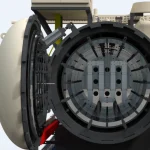
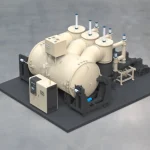
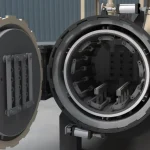
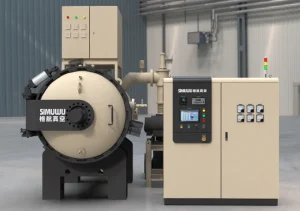
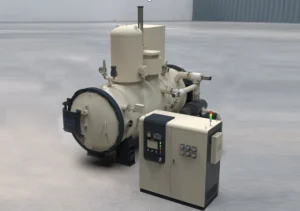
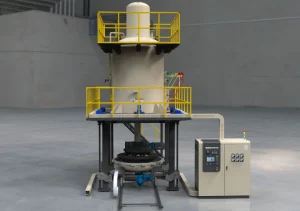
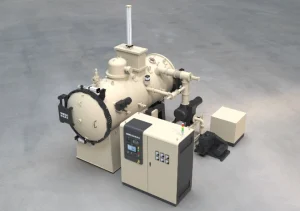
To achieve the best results, post-oxidation should be integrated directly into the cooling phase of the nitriding cycle. Modern Vacuum Nitriding Furnaces and Vertical Structure PIT Type Gas Nitriding Furnaces are designed to handle these multi-stage processes in a single load. These systems offer precise atmosphere control and uniform treatment across complex geometries, reducing the risk of contamination.
While adding an oxidation stage increases cycle complexity, the value added through increased part longevity and the potential to replace expensive coatings (like chrome plating) often outweighs the incremental costs associated with gas delivery systems. For more information on maintaining these specialized environments, see our guide on Vacuum Level, Leak Rate, and Control in Vacuum Furnaces.
8. FAQ
Q: What is the main purpose of vacuum post-oxidation?
A: It primarily enhances corrosion resistance and reduces friction by forming a dense, stable Fe₃O₄ oxide layer on previously nitrided surfaces.
Q: Does post-oxidation affect the dimensional accuracy of parts?
A: Dimensional changes are generally negligible (1–3 microns), though they should be accounted for in ultra-precision aerospace applications.
Q: Is post-oxidation possible without a nitriding stage?
A: No. A pre-formed nitride compound layer is mandatory to provide the chemical basis for the stable oxide formation.
Q: Can vacuum post-oxidation replace traditional chrome plating?
A: In many applications, it serves as a more environmentally friendly alternative that provides excellent corrosion and wear resistance.
Q: Which materials are best suited for this process?
A: Low-alloy and tool steels containing Cr, Mo, or Al (such as AISI 4140 or H13) are the most effective candidates for integrated nitriding and oxidation.
Vacuum post-oxidation is a vital tool for engineers looking to maximize the durability of high-performance steel components. By leveraging the precision of vacuum technology, manufacturers achieve consistent surface protection that meets modern industrial standards. For deeper technical insights into oxidation mechanisms, refer to the MDPI Coatings Journal. To optimize your surface treatment results, explore our technical guide on How Vacuum Levels Are Measured.