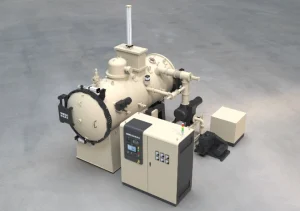
Maintaining a precise Vacuum Level, Leak Rate, and Control in Vacuum Furnaces is the fundamental requirement for successful thermal processing in oxygen-sensitive environments. Vacuum levels determine the purity of the atmosphere, while the leak rate dictates the system’s ability to exclude contaminants over time. Understanding how to monitor and control these variables is critical to ensuring metallurgical integrity and preventing surface oxidation in high-precision manufacturing.
1. Vacuum Level Fundamentals and Units
Vacuum level refers to the degree of gas rarefaction or pressure achieved inside a furnace chamber during evacuation and heat treatment cycles. It determines the amount of residual gas molecules—such as oxygen or water vapor—that remain available to interact with the workpiece surface. In industrial heat treatment, vacuum levels are typically measured in Millibar (mbar), Torr, or Pascal (Pa), with categories ranging from rough vacuum (1000 to 1 mbar) to high vacuum (10⁻³ to 10⁻⁷ mbar).
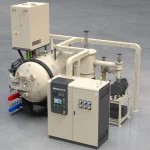
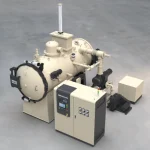
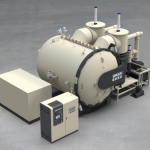
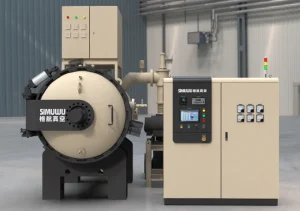
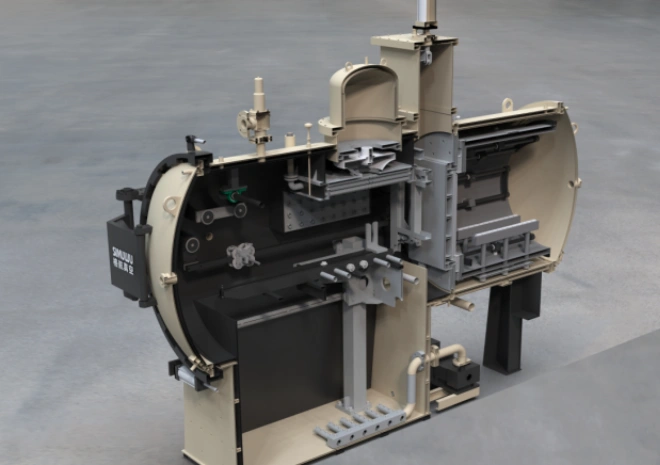
Achieving an appropriate vacuum level is essential for processing aerospace alloys or specialty steels where surface integrity is critical. High-performance systems, such as the [Vacuum Gas Quenching Furnace], often operate in the medium to high vacuum range to ensure bright, oxide-free finishes. Proper staged pumping helps mitigate the effects of gas desorption from internal surfaces as the temperature rises.
2. Understanding Leak Rate in Vacuum Furnaces
Leak rate quantifies how quickly external gases enter the vacuum chamber through imperfections in seals, fittings, or connections. It is the primary indicator of a furnace’s structural integrity and is measured as the rate of pressure rise over time once the chamber is isolated from the pumps. Common units for expressing this include Pa/h, mbar·l/s, or microns per hour.
The relationship between vacuum level and leak rate is vital because a high-speed pumping system cannot compensate for the chemical reactions caused by a constant air leak. For specialized applications like [High Temperature Vacuum Brazing], maintaining a leak rate below 0.67 Pa/h (approx. 5 microns/hour) is often mandatory. If the leak rate exceeds industry standards, the mechanical properties and surface quality of the parts will invariably degrade.
3. Factors Influencing Leakage and System Integrity
Leakage in vacuum systems typically originates from two distinct sources: real leaks and virtual leaks. Real leaks involve physical openings in the vacuum boundary, such as worn O-rings, cracked bellows, or faulty weld joints. Virtual leaks result from the gradual release of trapped gases from porous materials, blind holes, or contaminants inside the chamber.
Outgassing significantly impacts the perceived leak rate, especially at high temperatures where volatile contaminants evaporate from insulation or the workload. To minimize these effects, vacuum furnaces should be maintained, referring to the [Vacuum annealing furnace maintenance and operation guide] to ensure the chamber remains clean. Regular “bake-out” cycles effectively remove moisture and oils, thereby improving the attainable vacuum level and reducing virtual leak signals.
4. Advanced Vacuum Control and Monitoring Methods
Effective Vacuum Level, Leak Rate, and Control in Vacuum Furnaces relies on an integrated strategy of sensing and automated sequencing. Modern systems use sophisticated PLCs to coordinate the transition between mechanical roughing pumps and high-vacuum diffusion or turbomolecular pumps. This automation prevents pump damage while optimizing cycle times for high-volume production.
- Integrated Sensing: Using multiple gauge types, such as Pirani and Penning gauges, ensures accuracy across the entire pressure spectrum.
- Partial Pressure Control: In processes like [Vacuum Carburizing], controlled amounts of process gas are introduced while maintaining specific vacuum thresholds.
- Automated Testing: Many furnaces include a pre-process leak test sequence that must pass before heating elements can be energized.
- Helium Leak Detection: Using a tracer gas to pinpoint micro-leaks is the industry standard for precise localization of leaks in flanges and feedthroughs.
5. Practical Impacts on Process Quality
Maintaining proper vacuum parameters directly affects the metallurgical outcomes of the heat treatment process. Insufficient vacuum control elevates the risk of intergranular oxidation and decarburization, which degrades material hardness and fatigue life. Consistent vacuum stability also improves energy efficiency by reducing the unnecessary gas load on the pumping systems.
For engineers, balancing vacuum system design and sealing technology is necessary to meet stringent requirements in aerospace and medical manufacturing. Achieving superior results often requires advanced thermal management, as discussed in our article on [How Multi-zone Heating Achieves Superior Thermal Uniformity Control]. Proper control ensures that alloy compositions remain unchanged and parts emerge with the required mechanical specifications.
6. FAQ
Q: How is leak rate measured in vacuum furnaces?
A: Leak rate is measured by isolating the chamber from the vacuum pumps after a clean pump-down and recording the pressure increase over a specific interval, typically expressed in microns per hour or Pa/h.
Q: What leak rates are acceptable for industrial vacuum furnaces?
A: General heat treatment processes often tolerate leak rates around 10 microns/hour. However, sensitive high-precision processes, such as sintering or brazing, often require 5 microns/hour or lower to prevent contamination.
Q: Can a vacuum pump compensate for a high leak rate?
A: No. While a larger pump might maintain the target pressure, it cannot prevent oxygen molecules from a leak from reacting with the hot metal surface, which leads to oxidation and quality failure.
Q: Why is vacuum level important in a vacuum furnace?
A: The vacuum level determines the amount of residual gas available to react with the workpiece. Lower pressure reduces the risk of oxidation and ensures the reproducibility of mechanical properties.
Q: What is the difference between a real leak and a virtual leak?
A: A real leak is a physical hole in the furnace shell or a failed seal. A virtual leak is the slow release of gas trapped inside the chamber, such as air trapped in a blind screw hole or moisture in the insulation.
Mastering Vacuum Level, Leak Rate, and Control in Vacuum Furnaces is fundamental for ensuring consistent quality and reliable performance in thermal processing. By implementing rigorous maintenance and utilizing advanced monitoring hardware, SIMUWU vacuum furnace can eliminate oxidation risks and adhere to global standards.
For further technical insights into vacuum science and standards, consult the [American Vacuum Society (AVS)] resources.
If you are evaluating equipment, our guide on [How to Select the Best Vacuum Furnace Systems for Your Factory] provides essential criteria for decision-makers.
You can also read more about [Why is Temperature Control So Important in a Vacuum Furnace?] to see how vacuum and temperature work together.
[Contact us] to discuss your specific vacuum requirements.