1. Material Characteristics
SS420 is a martensitic stainless steel. Its main characteristics are high hardness, high strength, and good wear resistance after heat treatment, but its corrosion resistance is moderate (better than low-chromium steel, but not as good as 304) and it is magnetic. Hardness can be significantly increased to HRC50-55 through quenching and tempering. It is suitable for manufacturing precision parts requiring high hardness and wear resistance, such as surgical instruments, cutlery, molds, and bearings.
To achieve these superior mechanical properties while maintaining surface integrity, the vacuum hardening of SS420 stainless steel has become the preferred industrial standard, offering significant advantages over traditional heat treatment methods.
2. Advantages of Vacuum Oil Quenching
2.1 Bright and Clean Product Surface
Phenomenon: After being removed from the furnace, the parts have a metallic luster (silver/bright finish), with no oxide scale, no decarburization, and no carbon buildup. This is especially suitable for products with high appearance requirements (such as medical devices, precision tools, and aerospace parts), which is the biggest selling point.
2.2 Minimal Deformation
The SIMUWU vacuum quenching furnace has a furnace temperature uniformity of ±5℃ and a temperature control accuracy of ±1℃. The cooling gas pressure and speed are adjustable and controllable. Vacuum heating is uniform, and the direction and speed of gas cooling are more controllable than liquid cooling. This means that the quenched parts require almost no straightening or grinding, ensuring the dimensional accuracy of complex-shaped parts.
2.3 No Surface Corrosion / Hydrogen Embrittlement
The SIMUWU vacuum quenching furnace can be equipped with a two-stage or three-stage pump according to customer requirements, ensuring the vacuum degree required for different customer product processes. In a vacuum environment, there is no oxygen to prevent oxidation, and no moisture to prevent hydrogen embrittlement. This extends the fatigue life of the parts, especially suitable for spring steel, bearing steel, and high-strength steel.
2.4 Reduced Volatilization of Alloying Elements
By controlling the vacuum degree and filling with inert gas (nitrogen/argon), the loss of easily volatile elements such as chromium (Cr) and aluminum (Al) is prevented. This ensures that the rust resistance of stainless steel (such as SS420, 440C) does not decrease.
2.5 Elimination of Cleaning Process
After oil quenching, alkaline washing, water washing, and drying are usually required; otherwise, residual oil stains will lead to rust. Quenched parts can be directly tempered or packaged after being removed from the furnace, saving cleaning equipment and labor costs.
2.6Simplified Polishing and Electroplating
With no oxide layer on the surface, polishing efficiency is increased by more than 30%; adhesion is better during electroplating, and blistering is less likely.
2.7 Reduced Grinding Amount
Due to minimal deformation, the subsequent machining allowance can be designed to be smaller, saving on expensive raw materials.
2.8 Environmentally Friendly and Clean Workshop Environment
There are no oil fume emissions and no waste oil disposal problems, complying with ISO 14000 environmental standards. Vacuum furnace workshops are typically clean and bright, without the pungent odors and oil stains of traditional heat treatment workshops.
3. Vacuum hardening of SS420 stainless steel
Step 1: Preheating
Temperature: Approximately 650°C.
Purpose: To eliminate thermal stress and prevent cracking. Preheating is crucial due to the rapid cooling during gas quenching.
Step 2: Austenitizing Heating
Temperature: Approximately 1060°C
Reason: Increasing the temperature increases the stability of austenite, compensating for the slower cooling rate of gas quenching.
Vacuum and Atmosphere:
Maintain a low vacuum or slightly positive pressure (with a small amount of nitrogen) during heating to prevent chromium volatilization.
Quenching Gas: High-purity nitrogen is recommended.
Step 3: Gas Quenching
Gas Pressure: Pressurize to approximately 10 Bar.
Loading Method:
Must be placed vertically: The tools must be inserted vertically into fixtures, leaving sufficient gaps between the blades (at least 2-3 times the blade thickness).
Stacking is strictly prohibited: Tools must not be laid flat or stacked, otherwise the contact surfaces will not cool properly, leading to soft spots.
Cooling Endpoint: Must be cooled to below 100°C before removal from the furnace. If cooling is stopped at a higher temperature, the residual heat will cause self-tempering, reducing hardness.
Step 4: Deep Cryogenic Treatment
Temperature: -70°C to -100°C.
Time: Hold for 2 hours.
Reason: The relatively slow cooling rate of gas quenching results in more retained austenite compared to oil quenching. Without deep cryogenic treatment, the tool hardness will be lower (possibly HRC 48-52), and the dimensions will be unstable.
Step 5: Tempering
Temperature: 180°C – 200°C.
Number of cycles: Twice.
Time: At least 2 hours each time.
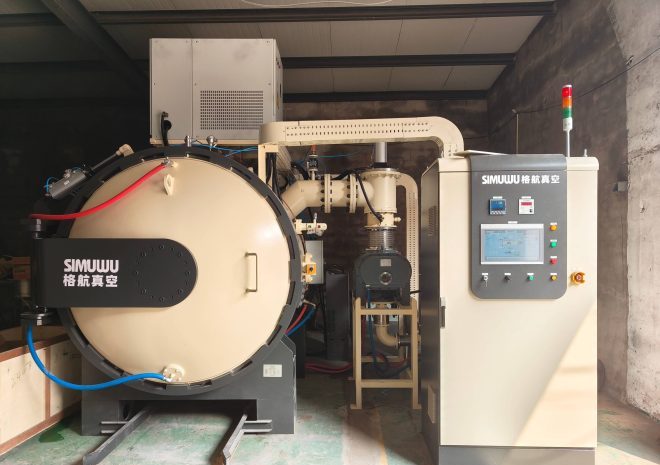
4. High-Quality Vacuum Heat Treatment for Tool & Mold Steels
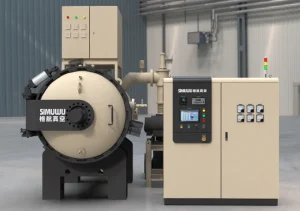
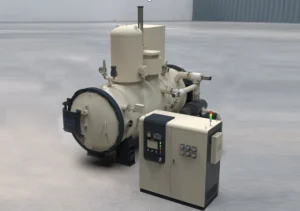
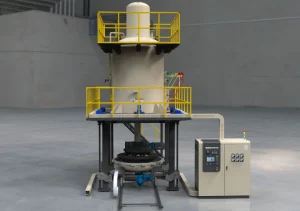
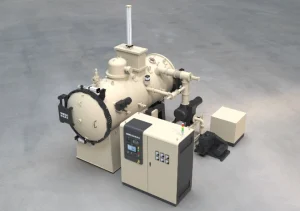
SIMUWU’s RVGQ series vacuum gas quenching furnaces are high-quality products for vacuum heat treatment processes of materials such as tool steel, mold steel, high-speed steel, and ultra-high-strength steel. Excellent temperature control accuracy and uniformity ensure the effective execution of the vacuum gas quenching process. SIMUWU specializes in the manufacture of vacuum furnaces, with over ten years of experience and a strong reputation in the field. The product line includes vacuum gas quenching furnaces, vacuum oil quenching furnaces, and vacuum brazing furnaces, which are widely sold in developed and developing countries. For detailed technical information, please click the website link below:
If you would like to learn more about vacuum furnace equipment, please send your requirements to kevin.liu@vacfurnace.com, and our company will provide you with a satisfactory solution.
-
How Much Does an Industrial Vacuum Furnace Cost?
2026-03-11
-
SIMUWU Up-and-Down Air-Blowing Structure Furnace: Meeting Rigorous Heat Treatment Requirements
2026-03-10
-
How Advanced Vacuum Control Systems Reduce Vacuum Furnace Energy Consumption
2026-03-09
-
Vacuum vs. Conventional Heat Treatment Comparison
2026-03-06
-
Brief Description of Vacuum Quenching Process for H13 Aluminum Extrusion Dies
2026-03-05