Vacuum brazing joint quality is determined by a complex interplay of physical metallurgy, surface chemistry, and furnace atmosphere control. Achieving high-integrity bonds requires a precise understanding of how molten filler metals interact with base materials in the absence of atmospheric pressure. By mastering the dynamics of capillary flow and managing the evolution of gases during the heating cycle, engineers can produce assemblies that meet the rigorous standards of the aerospace and medical industries.
1. Capillary Flow Dynamics in Vacuum Brazing Joints
Capillary flow dynamics in vacuum brazing joints serve as the primary engine for distributing molten filler metal throughout the assembly. In a vacuum environment, the absence of air molecules removes the aerodynamic resistance typically found in torch or induction brazing, allowing surface tension and wetting forces to dominate the process. This enhanced mobility ensures that the filler metal can penetrate deep into narrow clearances and complex internal geometries that are otherwise inaccessible.
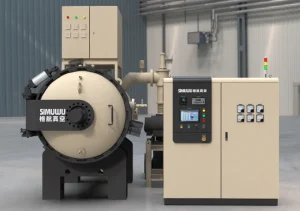
The efficiency of this flow is governed by the Young-Laplace equation, where the balance between adhesive forces (filler to substrate) and cohesive forces (internal filler attraction) determines the wetting angle. A high-quality High Temperature Vacuum Brazing Furnace facilitates this by actively dissociating surface oxides, lowering the contact angle and promoting rapid, uniform spreading of the liquid phase.
2. Outgassing Behavior in Vacuum Brazing Joints
Managing outgassing behavior in vacuum brazing joints is a critical phase of the thermal cycle that prevents joint contamination. Outgassing refers to the release of absorbed moisture, volatile contaminants, or dissolved gases from the base metal and filler materials as they are heated under vacuum. If these gases are not properly evacuated before the filler metal reaches its liquidus temperature, they can become trapped, leading to localized pressure zones that impede fluid flow.
Effective outgassing requires a well-calculated “soak” period during the heating ramp to allow the vacuum pumps to maintain a stable pressure. Failure to control this behavior often results in erratic wetting and surface “blistering,” where the gas pressure forces the molten filler away from the joint interface. Understanding the relationship between vacuum levels and gas evolution is vital.
3. Brazing Joint Clearance Design Principles
Strict adherence to brazing joint clearance design principles is necessary to ensure the capillary forces remain effective throughout the cooling process. The “clearance” is the gap between the mating surfaces of the parts to be joined, and it must be optimized based on the specific thermal expansion coefficients of the materials involved. If the gap is too narrow, the filler metal may experience excessive friction or become blocked by surface roughness; if too wide, the capillary pressure drops, preventing the filler from bridging the distance.
In vacuum processes, optimal clearances usually range between 0.025 mm and 0.1 mm. Engineers must also consider the “3T Rule” for lap joints—where the overlap length should be at least three times the thickness of the thinner component—to ensure the joint’s mechanical strength exceeds that of the parent metal. This geometric precision ensures that the vacuum environment’s benefits, such as oxide-free surfaces, are fully utilized for maximum bond integrity.
4. Void Formation Mechanisms in Brazed Joints
Identifying void formation mechanisms in brazed joints is essential for troubleshooting structural failures and leak paths. Voids are internal cavities or pores that reduce the effective load-bearing area of the joint. In vacuum brazing, these typically arise from three primary sources: trapped outgassing products, shrinkage during solidification, and insufficient wetting due to residual surface oxides.
Shrinkage voids occur when the joint clearance is too large, causing the molten alloy to pull away from the walls as it cools and contracts. Conversely, gas-driven voids are often the result of insufficient vacuum levels or rapid heating rates that cause volatile elements in the filler (such as zinc or cadmium) to boil or “fume.” To prevent these defects, the thermal cycle must be designed with sufficient dwell times to ensure complete gas evacuation and isothermal solidification.
5. Equipment Synergy: Impact of Furnace Control
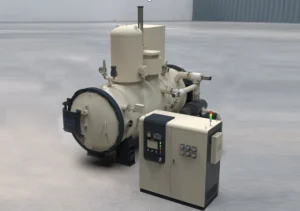
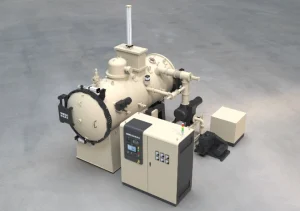
The successful integration of these principles depends heavily on the capabilities of the furnace. Modern systems like the Low Temperature Vacuum Brazing Furnace provide the refined temperature uniformity needed to prevent localized overheating, which can exacerbate void formation. By synchronizing the vacuum level with the heating ramp, manufacturers can precisely control the transition from the outgassing phase to the capillary flow phase.
Ultimately, vacuum brazing joint quality is a measure of how well the designer has accounted for fluid dynamics and gas behavior. By optimizing joint geometry and leveraging advanced vacuum technology, it is possible to achieve near-perfect metallurgical bonds that are free of oxidation and structural defects.
6. FAQ
How does vacuum affect capillary flow compared to atmosphere?
Vacuum removes surface oxides and air resistance, significantly lowering the wetting angle and allowing the filler metal to flow faster and deeper into joint clearances.
What is the most common cause of outgassing in brazing?
The most common causes are surface contaminants like oils and greases, or moisture absorbed in the grain boundaries of the base metal.
Can void formation be eliminated entirely?
While “zero voids” is difficult to guarantee, they can be minimized to negligible levels through proper joint clearance design and controlled vacuum heating cycles.
Why is joint clearance different for different materials?
Because different metals expand at different rates when heated, the “room temperature” clearance must account for the change in gap size at the actual brazing temperature.
Does the vacuum level impact outgassing?
Yes, a deeper vacuum level (lower pressure) reduces the boiling point of contaminants and volatile elements, accelerating the outgassing process but also increasing the risk of alloy evaporation.
-

Important Applications of Low-Temperature Vacuum Aluminum Brazing Furnace
2026-04-02
-
The Role of Partial Pressure Control in High-Temperature Vacuum Sintering
2026-04-01
-
40Cr Vacuum Oil Quenching Process
2026-03-31
-
Comprehensive Guide to Industrial Furnace Classification
2026-03-30
-
Vacuum vs Atmospheric Furnace Environment Comparison
2026-03-27