1. Principles of Gas Flow in Vacuum Environments
Gas flow in vacuum environments operates differently than in atmospheric conditions due to the significantly reduced molecular density. In a industrial vacuum furnace, the control system must account for the transition between viscous flow and molecular flow, where the mean free path of gas molecules increases as pressure drops. This makes the behavior of the gas less predictable without active, high-precision metering systems.
Advanced pressure control systems are typically developed to operate in the critical range of 1 Pa to 133 Pa (approximately 0.0075 to 1 Torr). Maintaining stability within this window is essential for surface reactions while avoiding excessive gas consumption.
Achieving precision in gas delivery requires high-performance hardware that can handle the specific challenges of vacuum metallurgy. Modern systems integrate several key components to provide real-time adjustments based on sensor feedback.
2. The Role of Thermal Mass Flow Controllers (MFCs)
Thermal Mass Flow Controllers (MFCs) serve as the primary devices for metering, working alongside regulated gas introduction valves and controlled circulation fans. These components must manage the “leak rate” and outgassing of the chamber to maintain a pure atmosphere.
Thermal MFCs are the industry standard for gas metering because they operate based on thermal transfer principles, making them independent of temperature and pressure fluctuations. These devices measure the temperature difference or the power required to maintain a constant temperature across a heated tube, which directly correlates with the mass flow rate rather than volumetric flow.
Unlike traditional rotameters, which are highly sensitive to the changing pressures found in vacuum cycles, MFCs provide consistent accuracy. It is important to note that MFCs must be calibrated for specific gas species using gas correction factors, as thermal properties vary significantly between nitrogen, argon, hydrogen, and ammonia.
3. Optimizing Flow for Nitriding, Carburizing, and Brazing
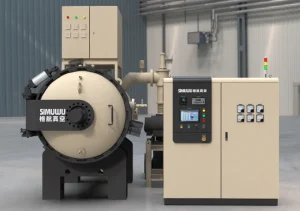
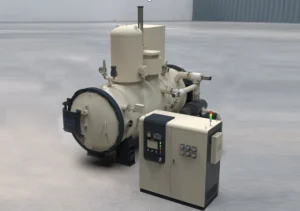
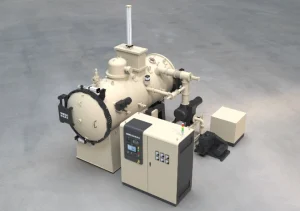
The specific metallurgical application dictates the requirements for gas flow stability and response time. For example, in vacuum nitriding, maintaining a precise ammonia-to-hydrogen ratio is vital for controlling the nitriding potential and the thickness of the white layer. This level of control is a hallmark of the Vacuum Nitriding Furnace.
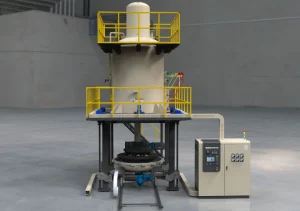
Similarly, in vacuum carburizing, the gas flow system must deliver precise pulses of hydrocarbons to ensure uniform carbon absorption without soot formation. In brazing and sintering applications, the gas flow helps manage the partial pressure of the environment, preventing the evaporation of alloying elements while assisting in the removal of binders during the dewaxing phase.
4. Enhancing Cooling Uniformity in Gas Quenching
Gas flow control significantly influences the cooling rates during the quench phase. By increasing the gas flow rate and pressure, the heat transfer coefficient is increased, allowing for the rapid and uniform cooling required for high-alloy tool steels. This is particularly critical in systems like the Vacuum Gas Quenching Furnace.
Properly engineered nozzle placement and controlled circulation minimize temperature gradients across the workload. Without precise flow control, parts at the center of a dense load may cool slower than those on the periphery, leading to inconsistent hardness and potential distortion. Automation in these sequences reduces human error and ensures that every batch meets the same metallurgical standards.
5. Automation and Integrated Pressure Management
Modern vacuum furnaces utilize microprocessor-based controllers to balance pumping rates against gas introduction. This automated synergy allows for complex process sequences involving deep vacuum, gas backfill, and controlled circulation. Automation not only improves repeatability but also enables the system to log data for quality assurance and aerospace compliance.
Implementing a robust strategy for vacuum furnace gas flow control is essential for any facility aiming for high-grade heat treatment standards. By integrating high-accuracy MFCs with advanced pressure management, manufacturers can achieve superior metallurgical results and operational efficiency.
-
Vacuum vs Atmospheric Furnace Environment Comparison
2026-03-27
-
Double Chamber Vacuum Oil Quenching Furnace with Gas Quenching Function
2026-03-26
-
Introduction to the Vacuum Oil Quenching Carburizing Process
2026-03-24
-
Precise Methods to Measure the Wetting Angle of Metals Under Vacuum
2026-03-23
-
Vacuum Annealing Process for Inconel 718 Nickel-Based High-Temperature Alloy
2026-03-20