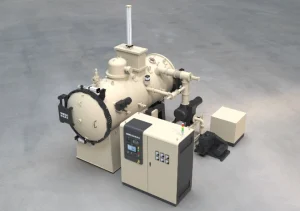
Understanding the technical distinctions in muffle furnace vs vacuum furnace applications. While both systems are designed to reach high temperatures, they differ fundamentally in atmosphere control, heating mechanisms, and the resulting material properties. This guide provides a detailed technical comparison to assist in decision-making for industrial heat treatment requirements.
1. Defining Muffle Furnaces and Vacuum Furnaces
A muffle furnace is a heating device where the subject material is isolated from the fuel and all products of combustion by a refractory chamber, known as a muffle. In modern electric versions, the muffle separates the heating elements from the workload to ensure a cleaner environment at atmospheric pressure. These furnaces are primarily used for ashing, calcining, and general laboratory heat treatment where exposure to air or a basic protective gas at high temperatures is acceptable.
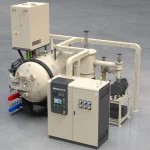
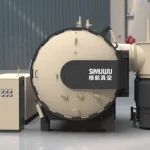
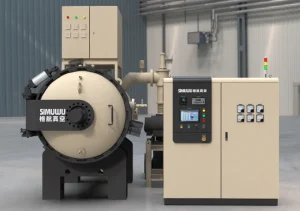
In contrast, a vacuum furnace is an airtight vessel that removes air and other gases from the chamber before the heating cycle begins. This creates a low-pressure environment that prevents oxidation, decarburization, and contamination. For high-value industries like aerospace and medical manufacturing, the muffle furnace vs vacuum furnace debate is usually settled by the material’s sensitivity to oxygen. Vacuum systems are essential for processing reactive metals and achieving high-density bonding.
2. Muffle furnace vs vacuum furnace: Technical Differences
The primary technical distinction between these two systems lies in the physics of the heating environment. While a muffle furnace relies on a hot-wall refractory design, most industrial vacuum furnaces utilize a cold-wall design with internal water cooling to maintain structural integrity and allow for rapid processing.
2.1 Atmosphere and Environment Control
Atmosphere control is the most critical factor in the muffle furnace vs vacuum furnace comparison. Muffle furnaces operate under ambient atmospheric pressure; although they can be purged with inert gases like Nitrogen or Argon, achieving high purity is difficult due to residual oxygen and moisture in the refractory. This environment often leads to surface oxidation or scale formation on metal parts.
Vacuum furnaces utilize advanced pumping systems to reach pressures as low as to . This near-total absence of gas molecules ensures that the chemical composition of the material remains unchanged. For processes like [Vacuum Annealing Furnace] treatments, this environment is mandatory to prevent hydrogen embrittlement or surface discoloration, resulting in a “bright” finish.
2.2 Heating Mechanisms and Thermal Mass
Heat transfer in a muffle furnace occurs through a combination of radiation and convection from the heated refractory walls. Because the refractory brick or fiber has high thermal mass, these furnaces are slow to heat up and even slower to cool down. This limits their productivity in high-volume industrial environments where fast cycle times are required.
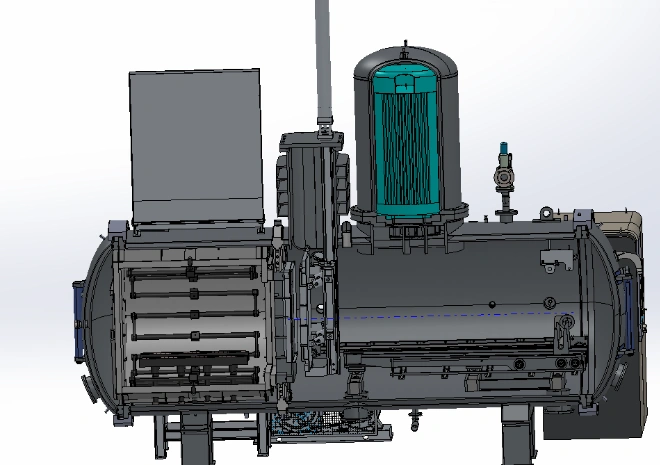
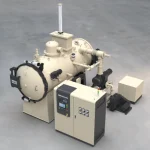
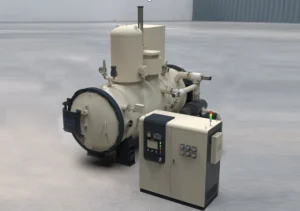
Vacuum furnaces rely exclusively on radiation for heating since there is no air medium for convection. However, they excel in cooling efficiency. Specialized systems, such as the [Vacuum Gas Quenching Furnace], introduce high-pressure inert gas (up to 15 bar or higher) after the heating cycle. Powerful fans circulate this gas through internal heat exchangers, allowing for rapid and uniform cooling that is impossible to achieve in a muffle furnace.
3. Material Outcomes and Surface Integrity
The choice between these furnaces directly impacts the mechanical properties and surface quality of the final product. Muffle furnaces are typically limited to stable alloys, ceramics, and glass where surface integrity is not the primary concern. Any oxidation that occurs in a muffle furnace usually requires secondary processes like pickling, sandblasting, or machining to remove the “scale” layer.
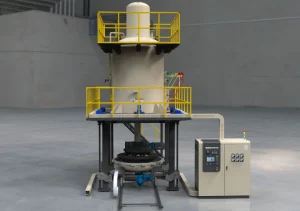
Vacuum processing eliminates the need for these secondary steps. By heating materials in a vacuum, surface oxides are often reduced or prevented from forming entirely. This is particularly vital for [High Temperature Vacuum Brazing Furnace] applications, where the vacuum environment acts as a cleaning agent, allowing the filler metal to flow and bond with high precision. Vacuum sintering also results in higher density and superior tensile strength compared to atmospheric methods.
| Feature | Muffle Furnace | Vacuum Furnace |
|---|---|---|
| Pressure Control | Atmospheric / Purge only | High Vacuum ( to mbar) |
| Max Temperature | Typically 1200°C – 1700°C | Up to 3000°C (with Graphite/Moly) |
| Oxidation Risk | High (due to air/moisture) | Zero to Minimal |
| Cooling Speed | Slow (Natural Convection) | Fast (Force Gas Quenching) |
| Surface Finish | Oxidized / Scaled | Bright / Clean |
4. Industrial Applications and Equipment Selection
Selecting the right equipment involves evaluating the material type, part geometry, and required standards (such as AMS2750). Muffle furnaces are cost-effective for simple hardening of tool steels or ashing in a lab. However, for large-scale production of engine components, medical implants, or aerospace fasteners, a vacuum system is the industry standard for reliability and repeatability.
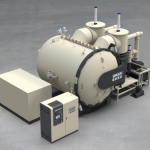
For high-volume manufacturing, the [Dual-chamber Vacuum Gas Quenching Furnace] offers a significant advantage by separating the heating and cooling chambers, thereby increasing throughput. For more specific guidance on investment, technical managers should consult resources on [How to Select the Best Vacuum Furnace Systems for Your Factory] to understand the total cost of ownership, including energy savings and reduced scrap rates.
5. FAQ
Q: Can I achieve a bright finish in a muffle furnace?
A: It is very difficult. Even with high-purity inert gas purging, residual oxygen in the porous refractory lining usually causes some level of discoloration or oxidation on metal surfaces.
Q: Why is vacuum furnace maintenance perceived as more complex?
A: Vacuum furnaces involve sophisticated pumping systems, high-vacuum seals, and water-cooling jackets. While the maintenance requires more technical skill, it ensures a much higher level of process control and part quality than a muffle furnace.
Q: Is vacuum sintering faster than muffle furnace sintering?
A: Generally, yes. While the “soak” time may be similar, the ability of a [Vacuum Dewaxing & Sintering Furnace] to utilize rapid gas cooling significantly reduces the total cycle time compared to a muffle furnace.
Q: What materials absolutely require a vacuum furnace?
A: Reactive metals like Titanium, Zirconium, and Tantalum, as well as many superalloys used in aerospace, must be processed in a vacuum to prevent catastrophic embrittlement and oxidation.
Explore our comprehensive catalog of [Vacuum Heat Treatment Furnace] solutions to find the perfect fit for your high-precision manufacturing needs. For detailed technical standards on heat treating, refer to the [ASM International Materials Information Society].