1. What is the 3T Rule for Brazing?
The 3T rule for brazing is a fundamental engineering guideline used to calculate the optimal overlap length required for high-strength lap joints. By defining the relationship between component thickness and bond area, this rule ensures that the final assembly achieves maximum mechanical reliability while preventing the excessive use of filler metal. Understanding the application of the 3T rule is essential for achieving predictable results in advanced manufacturing processes such as vacuum furnace brazing.
2. Mechanical Logic: Joint Strength vs. Base Metal
The 3T rule for brazing establishes the minimum overlap length required for a lap joint to achieve its full theoretical strength. In this calculation, the variable “T” represents the thickness of the thinner component in the assembly. The rule dictates that the total overlap length must be at least three times the thickness of that thinner member.
This principle is widely recognized by the American Welding Society (AWS) and originates from extensive empirical testing of joint reliability. These tests consistently demonstrate that once the overlap reaches the 3T threshold, the joint strength typically surpasses the strength of the base materials themselves. Consequently, failure under stress is directed into the base metal rather than the brazed connection.
The primary objective of the 3T rule for brazing is to compensate for the fact that filler metals often possess lower tensile strength than the base metals they join. By increasing the total shear area of the joint, engineers can ensure the bond is capable of carrying a load that would otherwise cause the thinner component to fail. This mechanical constraint creates a complex stress state that enhances the overall durability of the assembly.
3. Optimizing Overlap: The 3T to 4T “Sweet Spot”
Effective load distribution is the mechanical catalyst for this transition in failure points. Research indicates that overlaps shorter than 2T frequently result in failures within the filler metal layer itself. However, once the overlap exceeds approximately 2.3T, the point of failure moves predictably into the base metal. The 3T standard incorporates a practical safety margin into this transition to ensure structural integrity across various multi-axial loading conditions.
While 3T serves as the recommended minimum, the industry-standard “sweet spot” for most industrial applications is an overlap between 3T and 4T. This range provides a balance of full mechanical strength, leak-tight sealing, and high fatigue resistance. Maintaining this range ensures that the capillary action remains reliable even if thermal expansion causes minor variations in joint clearance during the heating cycle.
4. Risks of Excessive Overlap in Joint Design
However, exceeding the 6T or 7T overlap threshold can introduce significant manufacturing risks without improving joint performance. Excessively long overlaps increase the likelihood of void formation and trapped gas pockets, which can create hidden leak paths or weak points in the structure. Furthermore, long overlaps result in higher filler metal consumption and increased production costs without adding meaningful strength to the joint.
5. Material Variations: Aluminum Brazing Overlap Requirements
The 3T rule for brazing behaves differently when applied to aluminum due to the specific metallurgical characteristics of the material. Because aluminum brazing occurs at temperatures very close to the base metal’s melting point, intense interdiffusion occurs between the filler and the substrate. This rapid diffusion reduces the requirement for long capillary flow paths.
For aluminum joints utilizing wire-fed or preform fillers, the recommended overlap is often reduced to a range of 1T to 3T. Engineers must evaluate these material-specific behaviors rather than strictly adhering to the general 3T minimum for all metals. This specialized approach ensures that the diffusion zone does not negatively impact the mechanical properties of the aluminum components.
6. The Role of Vacuum Furnaces in Ensuring 3T Joint Integrity
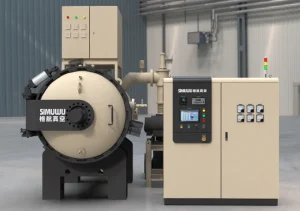
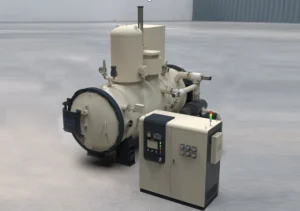
The precision of a High Temperature Vacuum Brazing Furnace significantly enhances the reliability of joints designed according to the 3T rule. A high vacuum environment ensures that the entire overlap area is thoroughly cleaned of oxides, promoting superior “wetting” and a perfect bond across the 3T surface. This cleanliness is vital for precision parts where flux contamination must be avoided.
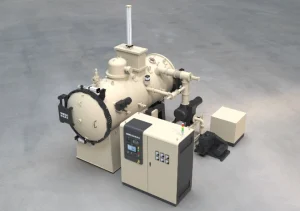
Vacuum cycles also support the 3T rule by providing necessary outgassing paths for surface impurities. Proper overlap design ensures there is sufficient surface area for the filler metal to bridge the gap while allowing these impurities to escape before the joint seals. Additionally, the uniform heating provided by a Low Temperature Vacuum Brazing Furnace minimizes thermal distortion, helping to maintain the critical clearances required for capillary flow.
7. Common Engineering Pitfalls and Implementation Best Practices
Engineering failures often occur when the 3T rule for brazing is misapplied or ignored during the design phase. Using an insufficient overlap (below 3T) is the most common error, which often leaves the joint as the weakest link in the assembly. Conversely, designing for excessively long overlaps leads to wasted materials and increased manufacturing complexity.
Neglecting joint clearance and material-specific behavior can also compromise the effectiveness of the 3T rule. A 100% void-free joint is difficult to guarantee even in high-vacuum environments, but the 3T overlap is designed to compensate for small voids by providing a large enough bonded area to meet structural requirements. Successful outcomes require the simultaneous consideration of joint geometry, material compatibility, and furnace process parameters.
Adhering to the 3T rule for brazing allows manufacturers to produce assemblies with high structural margins of safety and consistent mechanical properties. By combining these sound design principles with advanced furnace technology, engineers can achieve superior results in the aerospace, medical, and precision manufacturing sectors. For further technical specifications regarding joint testing and filler metals, consult the standards of American Welding Society (AWS). Contact us today to learn more about our custom vacuum furnace solutions.
-
Capillary Action in Vacuum Brazing
2026-03-16
-

What Is Vacuum Nitride Hardening?
2026-03-13
-

How Much Does an Industrial Vacuum Furnace Cost?
2026-03-11
-
SIMUWU Up-and-Down Air-Blowing Structure Furnace: Meeting Rigorous Heat Treatment Requirements
2026-03-10
-
How Advanced Vacuum Control Systems Reduce Vacuum Furnace Energy Consumption
2026-03-09