The Evolution of H13 Die Heat Treatment
As industrial aluminum profiles upgrade towards complex cross-sections, high precision, and long lifespan, H13 aluminum extrusion dies, as core components of aluminum processing, directly determine the precision and production efficiency of profile products through their heat treatment quality.
Vacuum air quenching furnaces have gradually replaced traditional salt furnaces and oil quenching furnaces, becoming the core equipment for heat treatment of H13 aluminum extrusion dies. With its advantages of no oxidation, low deformation, and high precision, it effectively addresses long-standing industry pain points such as easy die cracking, short lifespan, and poor surface quality, injecting new momentum into the high-quality development of the aluminum processing industry.
H13 hot work die steel, due to its excellent hot strength, toughness, and wear resistance, is currently the mainstream material for aluminum extrusion dies, widely used in the extrusion production of complex profiles such as industrial heat sinks, motor housings, and architectural aluminum formwork. However, in traditional heat treatment processes, salt furnace heating easily leads to die surface oxidation and decarburization, while oil quenching suffers from serious pollution, uneven cooling, and large die deformation. Especially for dies with complex cross-sections, problems such as tooth breakage, bridging, and cracking often occur, not only increasing die replacement and repair costs but also seriously affecting production continuity.
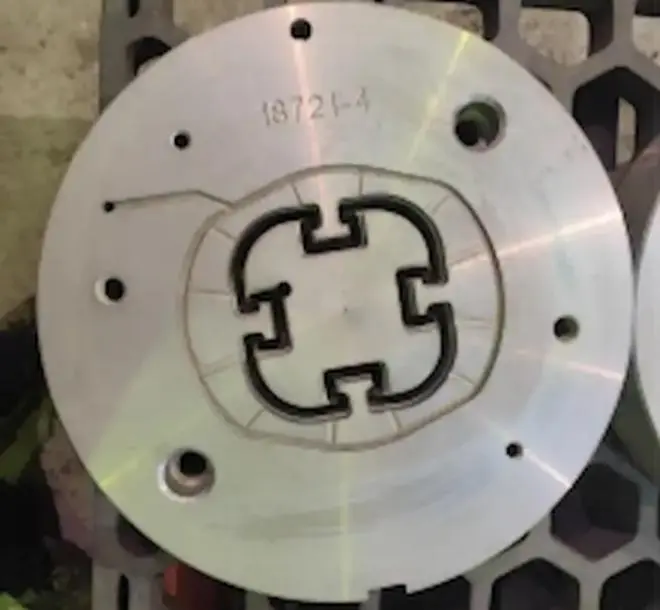
I. Detailed Process Parameters
- 1. Vacuum preheating: Eliminates stress, reduces quenching distortion, and ensures a small temperature difference between the core and surface. Preheat to approximately 850℃ and hold for 1–2 hours; vacuum degree 10–30 Pa.
- 2. Vacuum quenching heating (austenitization): 1020–1050℃, holding time determined according to mold size; vacuum degree 1–10 Pa.
- 3. High-pressure gas quenching: Cooling medium: High-purity nitrogen (N₂, 99.999%), pressure 4-8 bar; furnace exit temperature: ≤80℃ (to prevent residual heat tempering/cracking).
II. Key Process Points and Quality Control
- Furnace loading and placement: Loosely place to ensure uniform airflow; use special tooling for complex molds. Thick-walled/cavity-dense areas should face the airflow direction.
- Vacuum degree control: Preheating/heating: 1–30 Pa, to prevent oxidation and decarburization.
- Gas quenching: First break the vacuum, then fill with high-purity N₂ to avoid contamination.
- Cooling uniformity: Use bidirectional/multidirectional airflow + Powerful stirring; Thick and large parts can be cooled under staged pressure (high pressure first, then low pressure); Sufficient preheating and uniform cooling can control deformation within 0.1–0.3%.
III. Advantages of Vacuum Air Quenching:
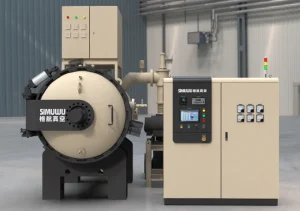
- 1. Vacuum Environment: Achieves zero oxidation, zero decarburization, and zero carburization. SIMUWU vacuum air quenching furnaces are equipped with two-stage and three-stage vacuum pump sets, with domestic and internationally renowned brands available, ensuring the vacuum level meets customer requirements. This results in a smooth product surface and high dimensional accuracy, which is unattainable with ordinary electric furnaces, salt bath furnaces, and oil quenching furnaces.
- 2. Precise Temperature Control: Ensures uniform H13 austenitization. The SIMUWU RVGQ type vacuum air quenching furnace features multi-zone temperature control and adjustable heating rate, enabling three-stage preheating + precise quenching temperature. This avoids problems such as localized overheating, coarse grains, uneven hardness, and early cracking.
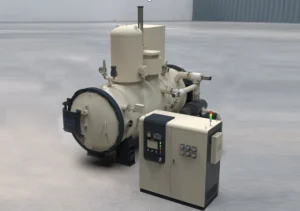
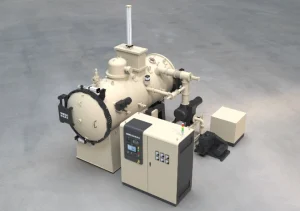
- 3. High-Pressure Gas Quenching: Provides controllable, uniform, and low-deformation cooling. The SIMUWU RVGQ vacuum quenching furnace supports 6/10/15 bar options and 360° high-pressure nitrogen cooling. It is particularly suitable for aluminum extrusion dies with complex cavities, thin walls, and high precision.
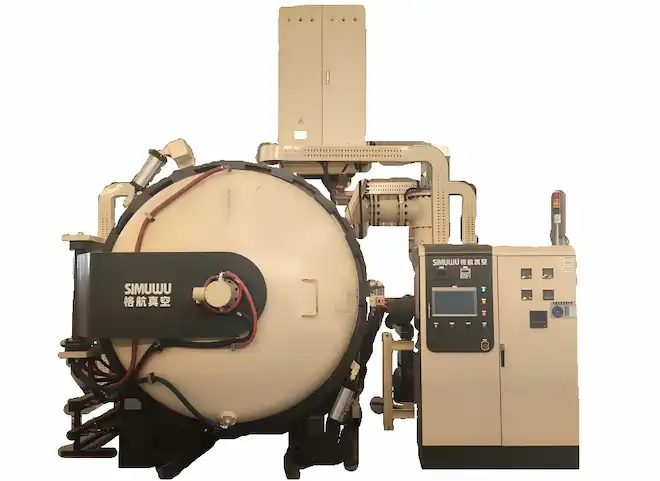
The SIMUWU vacuum quenching furnace, with its technological advantages of “zero oxidation, controllable, and highly uniform,” provides mold companies with a comprehensive solution from process design to equipment operation. In the future, SIMUWU will continue to deepen its vacuum heat treatment technology and develop customized processes for more specialized steels, helping the mold industry break through manufacturing bottlenecks and move toward a new stage of high-quality development.
For detailed equipment specifications or customized quenching solutions, please visit the SIMUWU vacuum furnace official website or contact us by email at kevin.liu@vacfurnace.com.
-
The Difference Between Solution and Anneal in Heat Treatment
2026-03-04
-
How Vacuum Levels Are Measured: Vacuum Gauge and Sensors
2026-03-02
-

Operation & Maintenance of Industrial Vacuum Furnaces
2026-02-28
-
The role of magnesium getters in vacuum aluminum brazing stability
2026-02-27
-
Application of vacuum sintering furnace in titanium alloy
2026-02-26