1. Introduction
Overview of Lithium Battery Cathode Materials
Lithium-ion batteries, which power everything from smartphones to electric vehicles, rely on high-performance cathode materials. These materials must be precisely manufactured to achieve optimal efficiency and long cycle life. Key materials include lithium cobalt oxide (LiCoO2), nickel manganese cobalt (NMC), and lithium iron phosphate (LiFePO4).
Role of Sintering in Lithium Battery Manufacturing
Sintering is a heat treatment process that densifies powdered cathode materials, improving their conductivity and electrochemical stability. It is a crucial step in the production of cathodes for lithium-ion batteries.
2. Understanding the Sintering Process
What is Sintering?
Sintering involves heating the material to just below its melting point, causing particles to bond together and form a solid structure. This increases the material’s density and mechanical properties, which are essential for the performance of battery cathodes.
Why Use a Vacuum Furnace for Sintering?
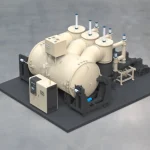
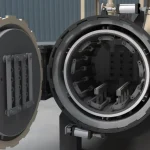
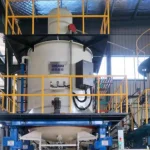
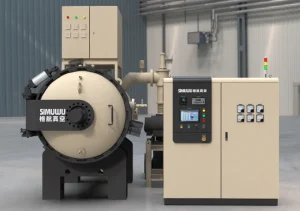
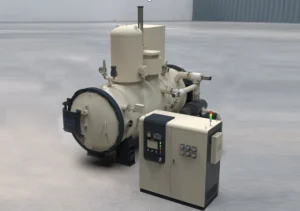
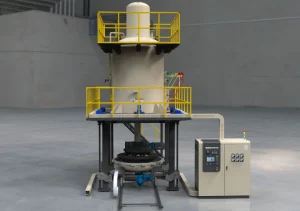
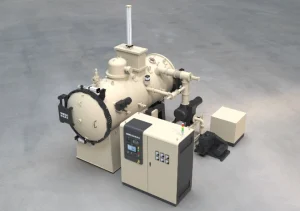
Vacuum furnaces provide a controlled, low-oxygen environment that prevents oxidation during the sintering process. This is crucial because oxidation can degrade the performance of the cathode materials and, by extension, the entire battery.
3. Advantages of Using Vacuum Furnaces in Sintering
High-Precision Temperature Control
Vacuum furnaces offer precise temperature regulation, which is critical when sintering high-performance materials like lithium cobalt oxide or nickel manganese cobalt.
Prevention of Oxidation
A vacuum environment prevents unwanted chemical reactions, such as oxidation, which could compromise the purity and performance of the cathode material.
Enhanced Material Purity
The ability to control the atmosphere allows for higher-purity sintering, which results in improved electrochemical properties, such as higher energy density and longer cycle life.
4. Key Applications of Vacuum Furnaces in Lithium Battery Cathode Manufacturing
Sintering of Lithium Cobalt Oxide (LiCoO2)
LiCoO2 is one of the most commonly used cathode materials for high-energy-density batteries. Sintering in a vacuum furnace ensures that the material achieves optimal crystallinity and density.
Sintering of Nickel Manganese Cobalt (NMC) Cathode Materials
NMC cathodes are widely used in electric vehicle batteries due to their balanced performance. Vacuum furnaces help optimize the sintering process, improving the thermal stability and cycle life of the material.
Sintering of Lithium Iron Phosphate (LiFePO4)
LiFePO4 is known for its safety and stability but requires precise sintering conditions to ensure high performance. Vacuum furnaces are ideal for producing high-quality LiFePO4 cathodes.
5. Impact of Vacuum Furnace Technology on Battery Performance
Effects on Energy Density
The sintering process in vacuum furnaces contributes to more uniform particle bonding, which enhances the energy density of the final battery product.
Effects on Cycle Life and Thermal Stability
By preventing oxidation and ensuring high purity, vacuum furnaces help improve the cycle life and thermal stability of the cathode materials, leading to batteries that last longer and perform better under high temperatures.
6. Challenges in Using Vacuum Furnaces
Equipment and Maintenance Costs
While vacuum furnaces offer many benefits, their initial cost and ongoing maintenance can be expensive. This is a key consideration for manufacturers looking to scale production.
Energy Consumption
The energy requirements for operating a vacuum furnace can be high, which impacts the overall cost of production. Efficiency improvements in furnace design are ongoing.
Scaling Challenges for Mass Production
While vacuum furnaces are ideal for producing high-quality cathodes, scaling the process for mass production of batteries remains a challenge due to the complexity and costs involved.
7. Future Trends and Innovations
Advancements in Vacuum Furnace Technology
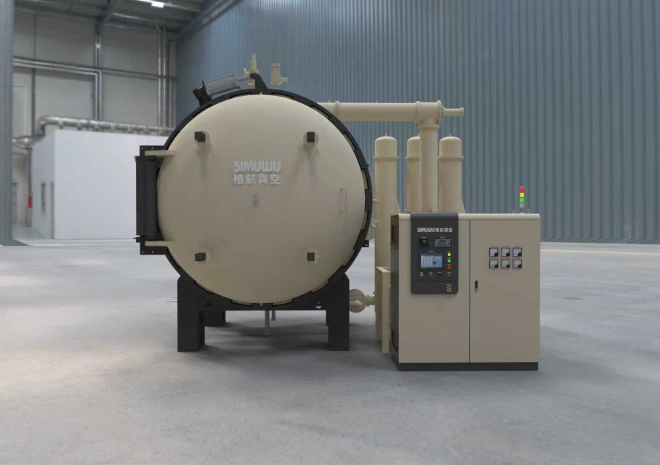
Future innovations may include more energy-efficient furnaces, improved automation for sintering processes, and greater scalability to meet the growing demand for lithium-ion batteries.
Integration with Next-Generation Cathode Materials
As new cathode materials are developed, vacuum furnaces will play a key role in ensuring these materials are processed to achieve the highest performance possible.
8. Summary
Vacuum furnaces are a crucial technology in the sintering of lithium battery cathode materials. By providing a controlled environment that prevents oxidation and allows for precise temperature control, they ensure that high-performance cathode materials are produced to meet the rigorous demands of modern batteries. Despite some challenges, vacuum furnace technology continues to evolve and remains essential for the future of lithium-ion battery manufacturing.